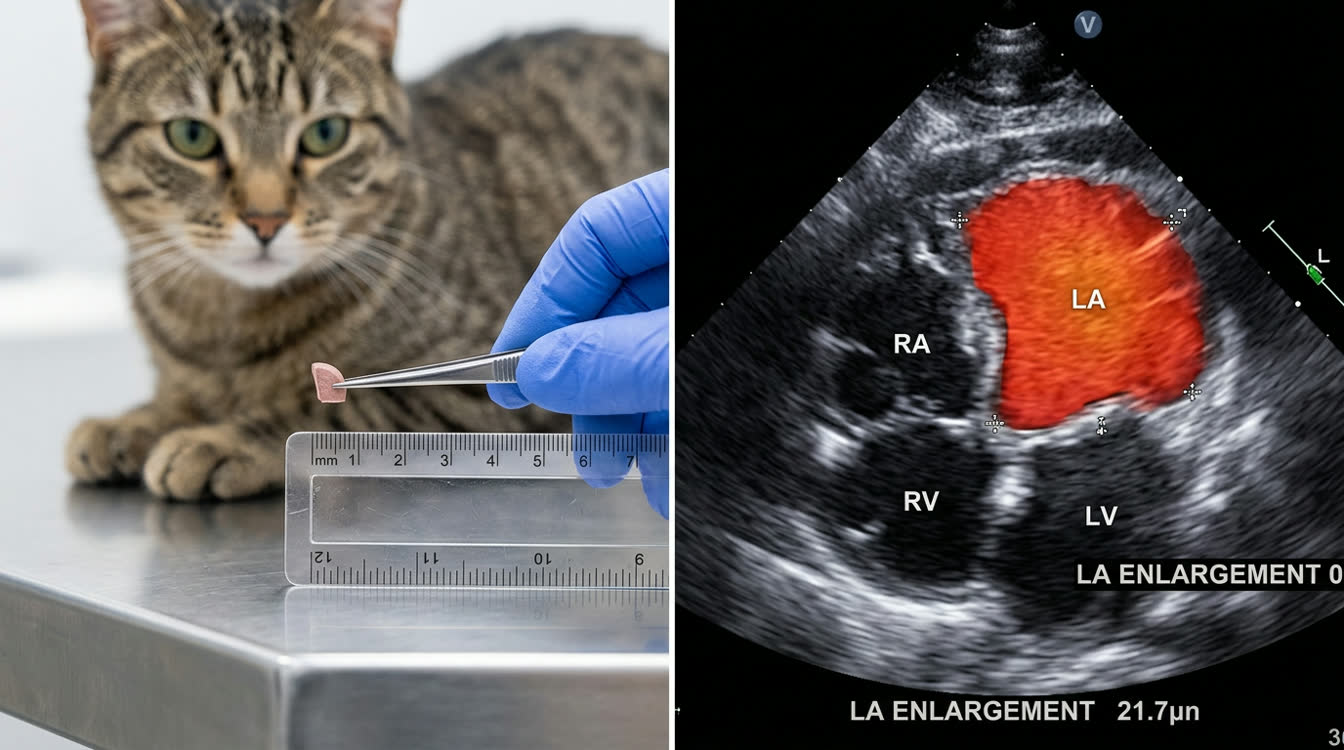
Quick Answer
Clopidogrel is the first-line antiplatelet agent for secondary prevention of aortic thromboembolism in cats with HCM. This guide covers the FATCAT study evidence, dosing protocol, drug interactions, side effects, and practical monitoring.
Key Takeaways
- ✓Clopidogrel 18.75 mg/cat PO once daily is the first-line antiplatelet agent for ATE prevention in cats, based on the FATCAT clinical trial.
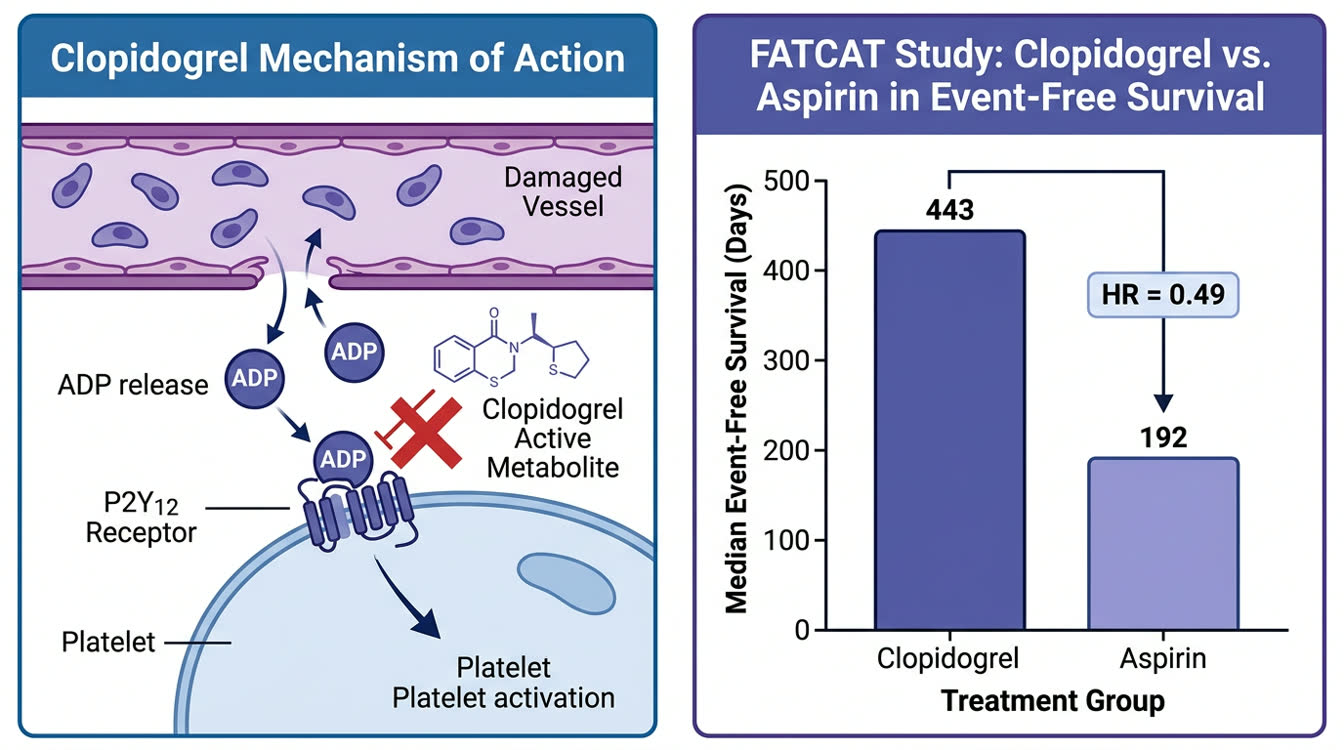
- ✓The FATCAT study showed clopidogrel doubled median event-free survival (443 days) compared to aspirin (192 days) in cats with prior ATE.
- ✓Avoid omeprazole with clopidogrel — it inhibits CYP2C19 activation of the prodrug; use famotidine instead for gastroprotection.
- ✓There is no reversal agent for clopidogrel; platelet transfusion is required for serious bleeding complications.
- ✓Initiate clopidogrel in all cats with prior ATE and in HCM Stage B2 cats (LA:Ao >1.5) for primary prevention.
- ✓Generic clopidogrel 75 mg tablets quartered with a pill splitter are bioequivalent to brand-name Plavix and cost-effective.
Mechanism of Action and FATCAT Clinical Trial Evidence
Clopidogrel is a thienopyridine antiplatelet agent. Its active metabolite irreversibly inhibits the P2Y12 ADP receptor on platelets, blocking ADP-mediated platelet activation and aggregation. Unlike aspirin, which inhibits thromboxane A2 via COX inhibition, clopidogrel works through a different pathway, providing complementary antiplatelet activity.
Why Platelet Inhibition Matters in Feline ATE:
- Left atrial (LA) enlargement creating blood stasis and turbulent flow
- Endothelial dysfunction in the dilated LA
- A hypercoagulable state (elevated thromboxane, decreased antithrombin in some cats)
The FATCAT Study (Hogan et al., 2015): This prospective, randomized, blinded multicenter clinical trial compared clopidogrel vs aspirin for secondary prevention of ATE in cats with cardiomyopathy and a prior ATE event.
Key Results:
- Clopidogrel group: median time to first recurrent event = 443 days
- Aspirin group: median time to first recurrent event = 192 days
- Hazard ratio: 0.49 favoring clopidogrel (statistically significant)
- No significant difference in adverse event rates between groups
This is the strongest published evidence for any drug to prevent recurrent ATE in cats.
Dosing:
- Clopidogrel: 18.75 mg/cat PO once daily (one-quarter of a standard 75 mg human tablet)
- Administer with or without food
- The drug is a prodrug; it requires hepatic CYP2C19 activation to its active thiol metabolite
- Onset of platelet inhibition: 3–5 days (reaches steady-state by day 5–7)
Tablet splitting guidance:
- 75 mg tablets can be quartered with a pill splitter
- Compounded 18.75 mg capsules or oral suspensions available from compounding pharmacies for cats that resist tablets
- Avoid crushing and mixing with food if possible — active metabolite is unstable
Monitoring, Side Effects, Drug Interactions and When to Stop
Routine Monitoring:
- CBC: platelet count at baseline and every 6–12 months (rare thrombocytopenia)
- Stomatitis, oral lesions: reported rarely
- Gastrointestinal signs (vomiting, anorexia): most common side effects in cats
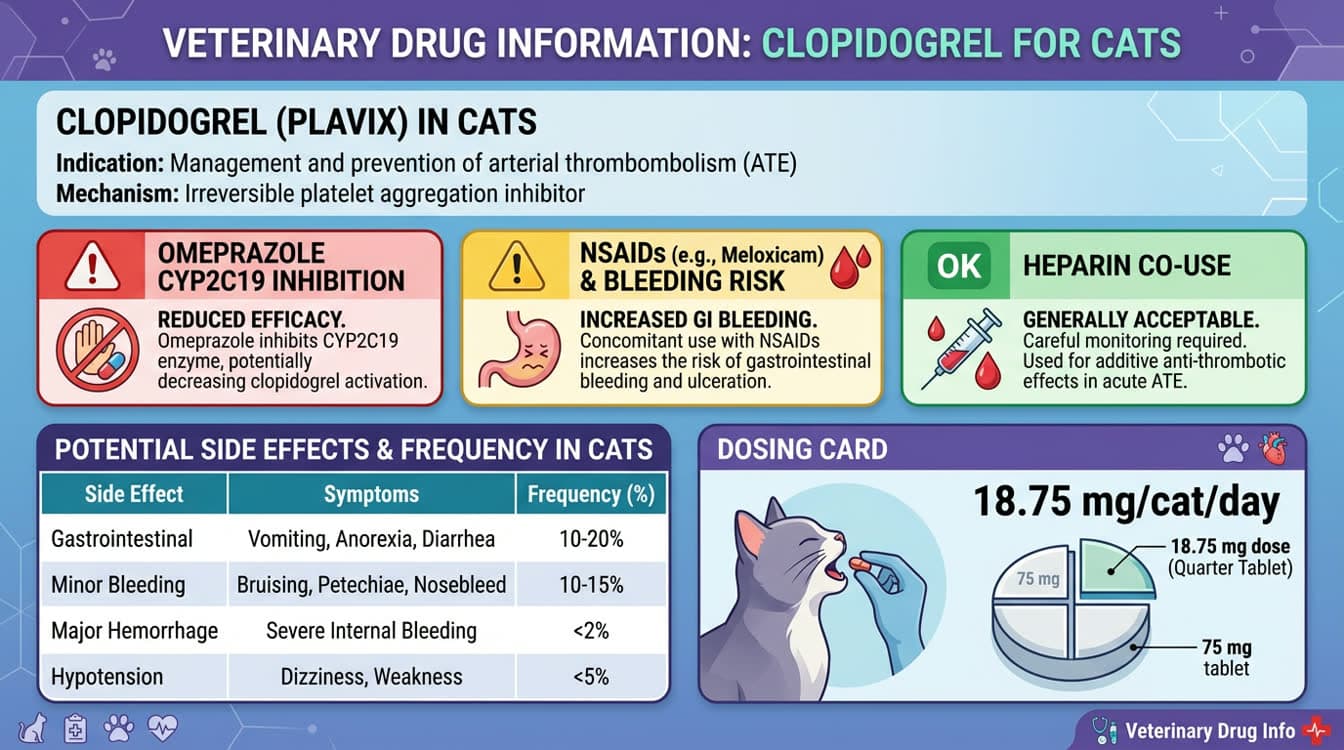
Side Effects in Cats:
| Side Effect | Frequency | Management |
|---|---|---|
| Vomiting / inappetence | ~5–10% | Administer with a small amount of food; consider compounded form |
| Oral ulceration / stomatitis | Rare | Discontinue; switch to aspirin |
| Bleeding (minor) | Rare | Reduce dose; use clinical judgment |
| Severe hemorrhage | Very rare | Discontinue; no reversal agent (platelet transfusion if severe) |
There is no reversal agent for clopidogrel. Platelet transfusion (fresh whole blood or platelet-rich plasma) is the only option in cases of severe bleeding.
Drug Interactions:
- Omeprazole / PPIs: CYP2C19 inhibition by omeprazole reduces clopidogrel bioactivation; use famotidine (H2 blocker) instead of omeprazole when gastroprotection needed alongside clopidogrel
- NSAIDs: increased bleeding risk (NSAIDs rarely used in cats with cardiac disease anyway)
- Heparin: can be co-administered in the acute ATE period
- Warfarin: significantly increased bleeding risk; avoid combination
Starting Clopidogrel After Acute ATE:
- Begin after the acute phase is stabilized (typically 24–48 hours post-event)
- Heparin can bridge until clopidogrel reaches steady-state inhibition (5–7 days)
- Continue for life unless severe side effects develop
Aspirin as an Alternative:
- 5 mg/cat PO q72h (every 3 days)
- Lower efficacy than clopidogrel per FATCAT
- Use if clopidogrel not tolerated or not available
- Do NOT give aspirin q24h in cats — severe GI toxicity risk
Primary Prevention (before a first ATE event):
- ACVIM 2020 recommends clopidogrel for cats with LA:Ao >1.5 (Stage B2 HCM)
- Evidence for primary prevention is less robust than secondary prevention but risk:benefit ratio supports treatment
Practical Clinical Guide: When to Start, Combine, and Discontinue
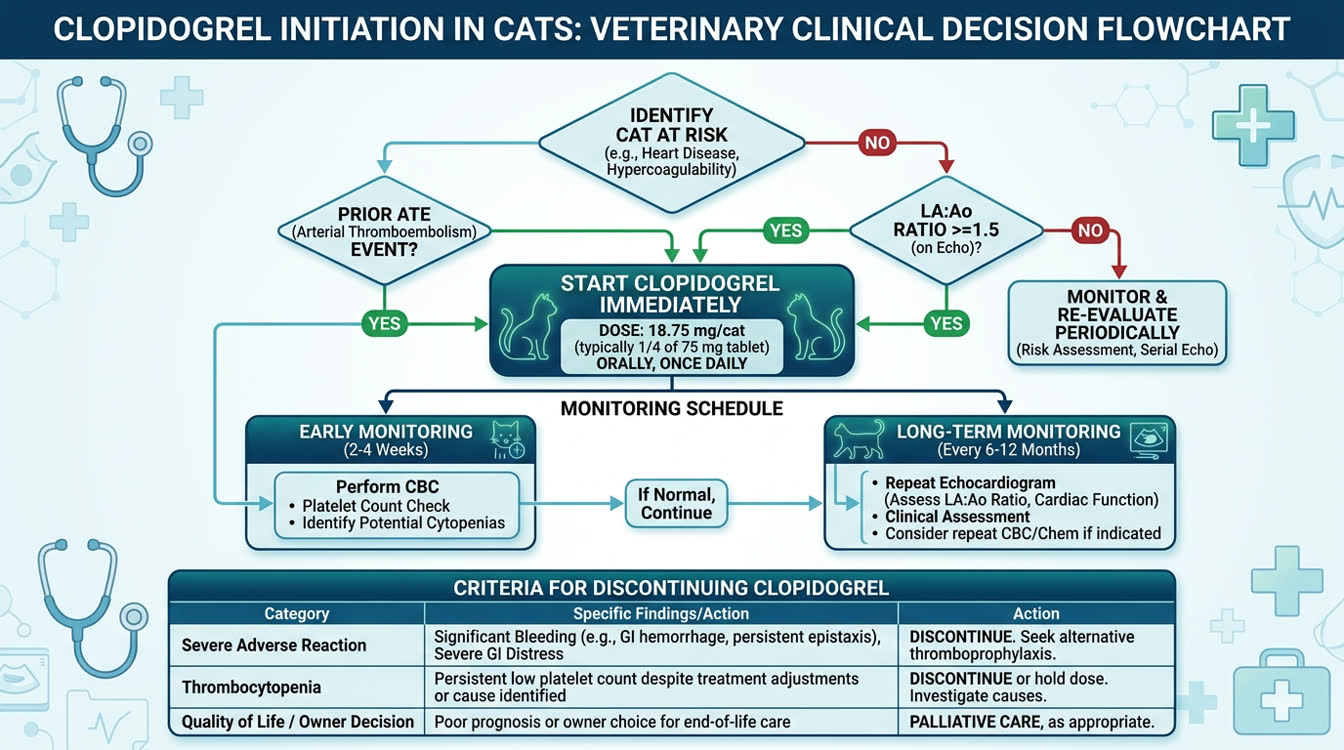
Decision Framework for Clopidogrel in Cats:
Initiate clopidogrel when:
- Prior ATE event (secondary prevention — strongest indication)
- LA:Ao ratio >1.5 on echocardiography (Stage B2 HCM or higher)
- Any cardiomyopathy with spontaneous echocardiographic contrast ("smoke") in LA
- Left atrial thrombus visualized on echocardiography
Continue indefinitely:
- Risk of ATE recurrence persists as long as the underlying cardiac disease and LA enlargement remain
- Annual echocardiography to reassess disease stage
Consider discontinuing clopidogrel if:
- Severe gastrointestinal side effects not controlled with dietary modification or compounding
- Oral ulceration or stomatitis attributable to clopidogrel
- Pre-surgical bleeding concern: discontinue 5–7 days before elective surgery; resume post-operatively when hemostasis is secure
- End-stage disease with quality-of-life concerns outweighing prevention benefit
Client Communication Tips:
- Explain that clopidogrel reduces risk but does not eliminate it — recurrence is still possible
- Tablet quartering with a pill splitter is generally reliable; compounding preferred for difficult cats
- Emphasize: never give aspirin AND clopidogrel simultaneously without cardiology guidance (double antiplatelet therapy increases bleeding risk)
- Remind owners to notify all treating veterinarians and surgeons about clopidogrel use
Generic vs Brand: Generic clopidogrel (75 mg tablets) is widely available and bioequivalent to Plavix. Compounded 18.75 mg capsules from licensed compounding pharmacies offer precise dosing for cats.
Monitoring Schedule:
- Recheck CBC at 2–4 weeks (baseline platelet count verification)
- Echocardiogram every 6–12 months to monitor disease progression
- Clinical signs at every visit: bleeding, bruising, GI signs
Frequently Asked Questions
What is the correct dose of clopidogrel for cats?
The evidence-based dose from the FATCAT trial is 18.75 mg/cat PO once daily. This is one-quarter of a standard 75 mg human clopidogrel tablet. Compounded 18.75 mg capsules are also available.
Can I use clopidogrel and aspirin together in a cat?
Dual antiplatelet therapy (clopidogrel plus aspirin) is generally not recommended in cats. The FATCAT trial showed clopidogrel alone is superior to aspirin; combining them increases bleeding risk without established additional benefit. Use clopidogrel as monotherapy.
Does clopidogrel require monitoring in cats?
Routine coagulation monitoring is not required. A baseline CBC to document platelet count is recommended. Recheck CBC at 2–4 weeks and then every 6–12 months. Monitor for GI signs, oral ulceration, and unusual bruising at every visit.
What if my cat vomits after clopidogrel?
Try administering with a small amount of food. If vomiting persists, consider a compounded formulation (flavored capsule or oral suspension). Persistent GI side effects may require switching to aspirin 5 mg/cat q72h as an alternative.
Can clopidogrel be used in cats with CKD?
Yes, clopidogrel is safe in cats with CKD and is hepatically metabolized, not renally cleared. No dose adjustment is needed for renal impairment. Monitor for GI signs, which may be more prominent in cats with CKD.
References
- Hogan DF, et al. (2015). Secondary prevention of cardiogenic arterial thromboembolism in the cat: FATCAT study. J Vet Cardiol. 17(Suppl 1):S306–S317.
- Luis Fuentes V, et al. (2020). ACVIM consensus guidelines for management of cardiomyopathies in cats. J Vet Intern Med. 34(3):1062–1077.
- Smith SA, et al. (2003). Inhibition of platelet aggregation by use of the antiplatelet drug clopidogrel hydrochloride in cats. Am J Vet Res. 64(1):35–39.