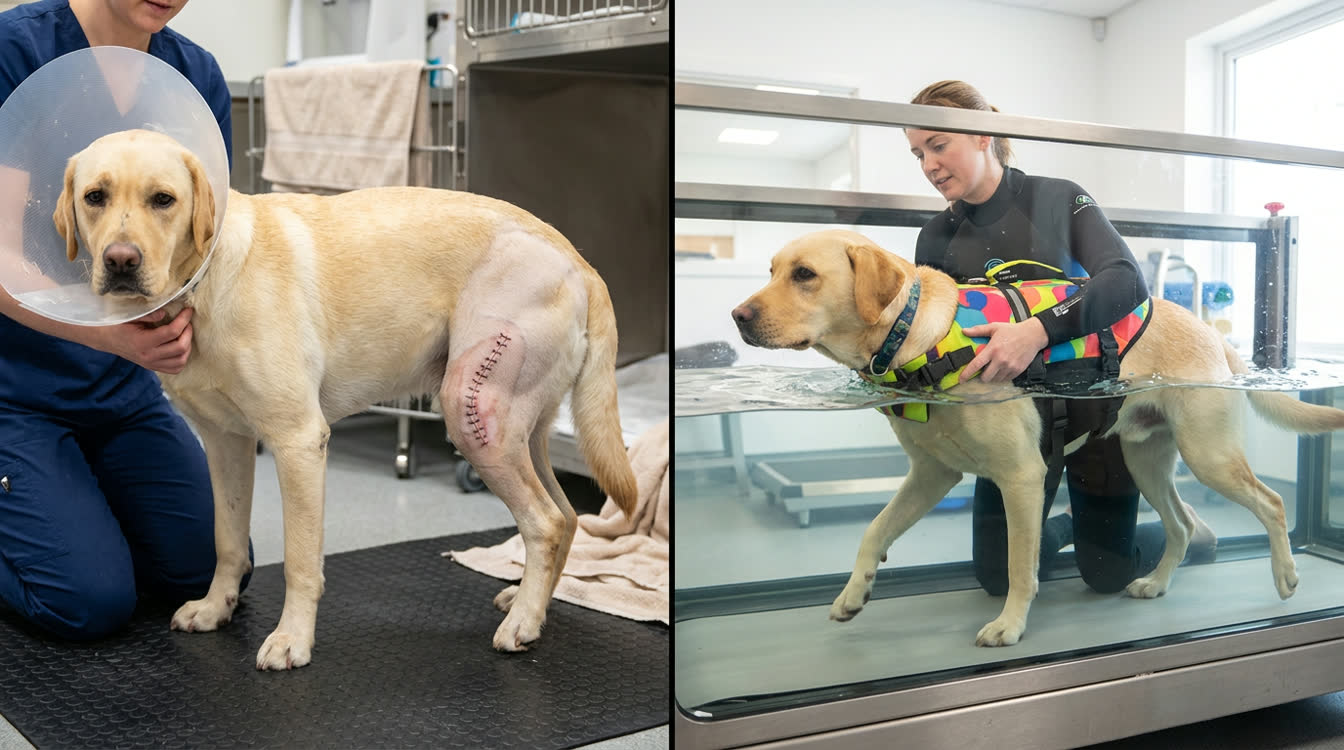
Quick Answer
A practical veterinary guide to post-operative management after tibial plateau levelling osteotomy (TPLO) in dogs, covering exercise restriction protocols, physiotherapy and hydrotherapy schedules, complication monitoring, return-to-function milestones, and long-term osteoarthritis management.
Key Takeaways
- ✓TPLO is the gold standard surgical treatment for CrCL rupture in dogs over 15 kg; tibial plateau angle is reduced to approximately 5 degrees to neutralise cranial tibial thrust.
- ✓Multi-modal analgesia (NSAID + gabapentin + cryotherapy) is initiated immediately post-operatively; strict lead-walk-only exercise restriction lasts 4 weeks.
- ✓Hydrotherapy (underwater treadmill) begins at weeks 4-6 post-operatively; 6-8 week radiographs assess osteotomy healing before advancing activity.
- ✓Full unrestricted activity is achieved at 16-20 weeks; high-impact activities (ball fetch, agility) delayed to 14-20 weeks minimum.
- ✓40-60% of dogs develop contralateral CrCL rupture within 2 years — monitor the unoperated limb throughout recovery.
- ✓All TPLO dogs develop progressive stifle OA; long-term management includes bedinvetmab (Librela) or grapiprant alongside weight management and physiotherapy.
TPLO Procedure Overview and Immediate Post-Operative Care
Tibial plateau levelling osteotomy (TPLO) is the most commonly performed surgical procedure for cranial cruciate ligament (CrCL) rupture in dogs. The procedure involves cutting the tibial plateau with a curved osteotomy and rotating the tibial plateau segment to reduce the tibial plateau angle (TPA) to approximately 5 degrees, thereby neutralising the cranial tibial thrust that causes cranial drawer movement in the CrCL-deficient stifle.
TPLO vs alternatives:
- TPLO provides superior outcomes to extracapsular repair (lateral fabellotibial suture/TightRope) in large and giant breeds and active dogs.
- Tibial tuberosity advancement (TTA): alternative technique; similar outcomes to TPLO in medium and large breed dogs; some evidence of higher complication rates.
- TPLO is the current gold standard for dogs >15 kg.
Anaesthetic and immediate post-operative care:
- Systemic analgesia: multi-modal is essential. Provide opioids intraoperatively (methadone 0.2-0.4 mg/kg IV) and transition to:
- Cryotherapy: ice pack to stifle 15-20 minutes every 4-6 hours for first 48-72 hours — reduces post-operative oedema and pain.
- Hospitalisation: typically 1-2 nights post-TPLO. Assess weight-bearing, wound, and comfort before discharge.
- E-collar mandatory throughout recovery.
Immediate post-operative examination:
- Assess limb perfusion (toe-pinch, capillary refill) immediately post-anaesthesia and at 4-hour intervals for first night.
- Wound: check for excessive swelling, heat, or seroma formation.
- Weight-bearing: most dogs begin toe-touching within 24-48 hours; 3-4/5 weight-bearing by day 5-7 is a good prognostic indicator.
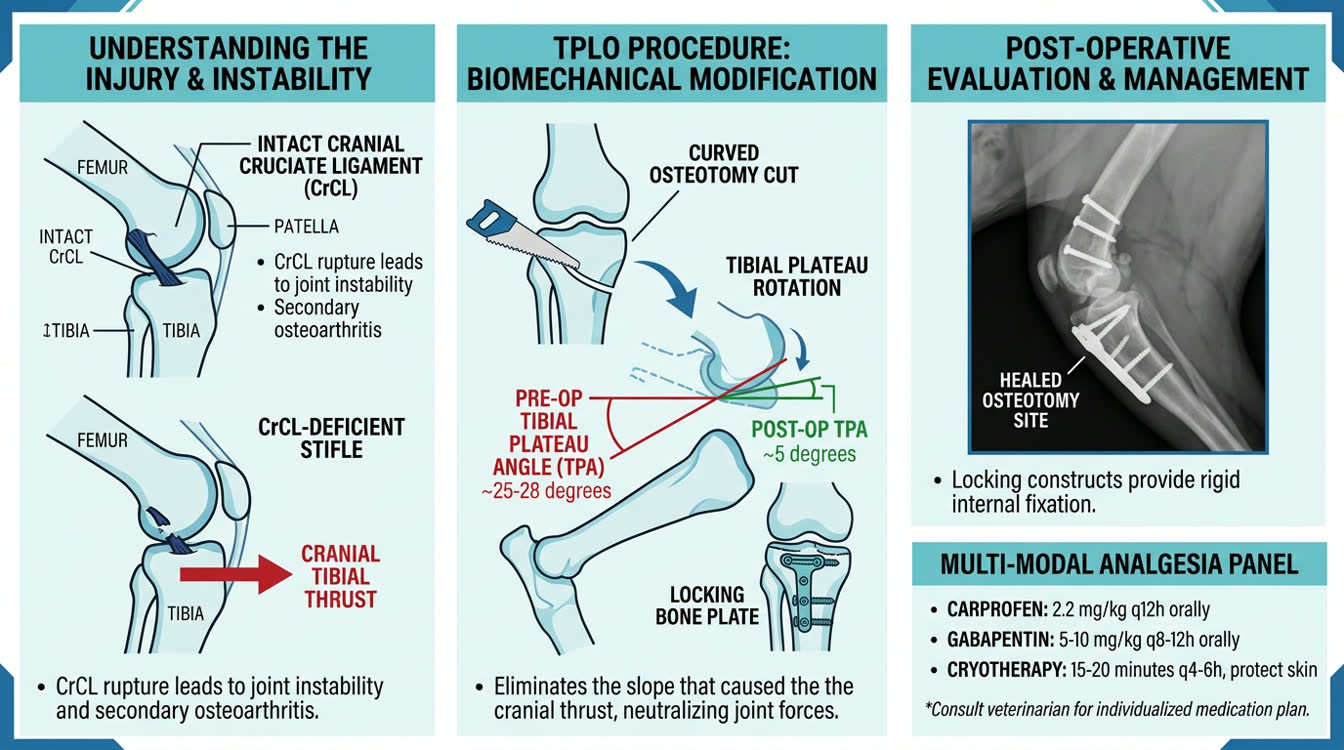
Week-by-Week Rehabilitation Protocol
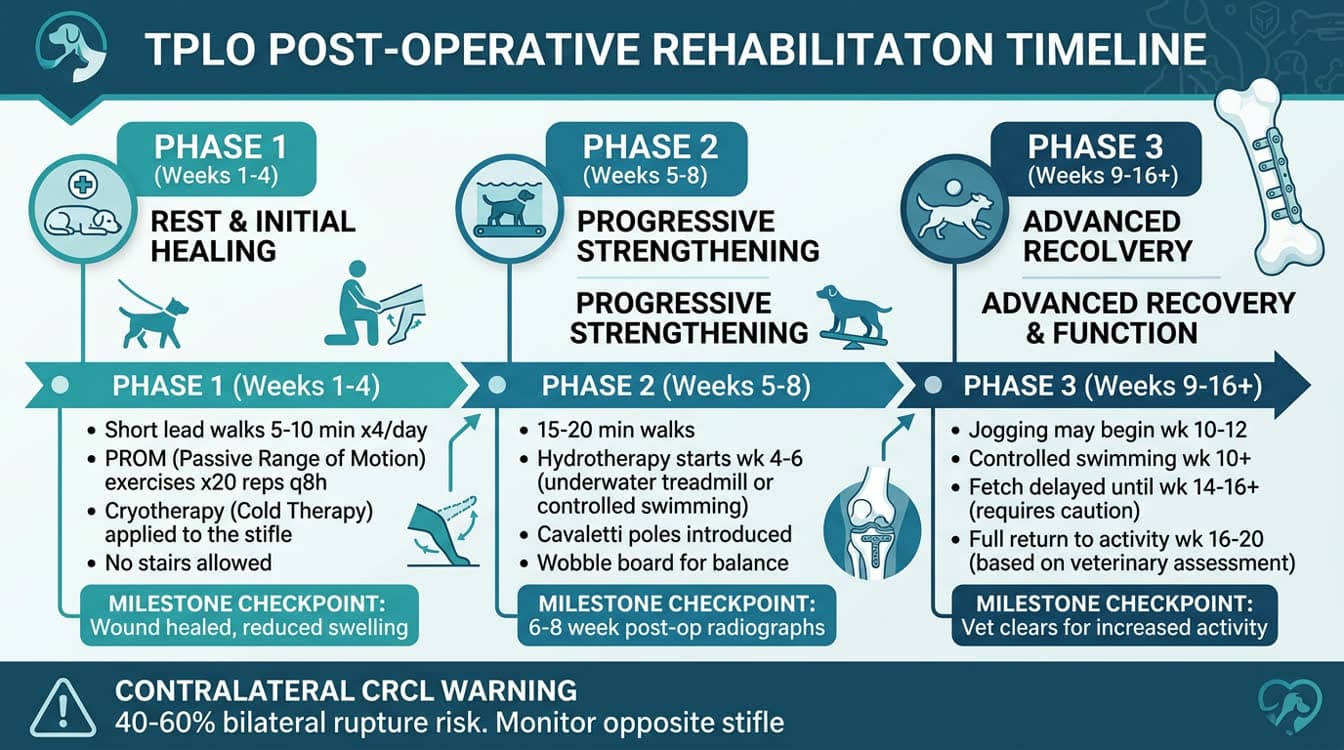
TPLO rehabilitation is divided into three phases: early (weeks 1-4), intermediate (weeks 5-8), and late/return-to-function (weeks 9-16+).
Phase 1 — Early rehabilitation (weeks 1-4):
Exercise restriction: strict lead walking only, on a short lead (1-1.5 m), 5-10 minutes 3-4 times daily on flat surfaces. No running, jumping, off-lead activity, stair climbing (use ramp), or rough play.
Physiotherapy (from day 3-5 if wound secure):
- Passive range of motion (PROM): 15-20 gentle repetitions of stifle flexion and extension Q8-12h. Maintain normal range throughout recovery.
- Sit-to-stand exercises: 5-10 repetitions 2-3 times daily — encourages early weight-bearing and quadriceps activation.
- Muscle massage: gentle effleurage to quadriceps and hamstring muscle groups to reduce tension and oedema.
- Cryotherapy: continue for first 2 weeks post-operatively.
- Wound check: staples or sutures removed at 10-14 days.
Phase 2 — Intermediate rehabilitation (weeks 5-8):
Exercise: increase lead walks to 15-20 minutes Q8-12h. Begin gentle hills and uneven terrain from week 6. Short stair use with support. Still no off-lead.
Physiotherapy additions:
- Hydrotherapy (underwater treadmill): typically begin at weeks 4-6. Water level at mid-abdomen (reduces load while maintaining normal gait pattern). Start 10-minute sessions 1-2x per week, progressively increasing duration and water level.
- Cavaletti poles: walking over low poles placed on the ground encourages high-stepping and proprioceptive input.
- Balance board/wobble board: sit or stand on board 30-60 seconds, 3-5 sets daily — improves proprioception and limb muscle activation.
- Strengthening exercises: begin therapist-assisted resistance exercises and weight-shifting from week 6.
Radiographic assessment: 6-8 week post-operative radiographs assess osteotomy healing (bone bridging), implant position, and confirm no complications.
Phase 3 — Return to function (weeks 9-16+):
Exercise: progressively increase off-lead activity from week 10-12 if radiographic healing confirmed and clinical function excellent. Begin gentle jogging on lead at week 10-12.
Activities to reintroduce carefully:
- Jogging: weeks 10-12 (15 minutes, 3x/week initially)
- Swimming: week 10+ (unloaded cardiovascular exercise)
- Ball chasing/fetch: delay until week 14-16 minimum — high impact; risk of re-injury to contralateral CrCL
Full return to unrestricted activity: typically 16-20 weeks for most dogs. Working dogs and high-performance athletes: 6+ months.
Contralateral limb monitoring:
- 40-60% of dogs with CrCL rupture develop rupture of the contralateral CrCL within 2 years.
- During TPLO recovery, the contralateral limb bears significantly increased load — monitor for signs of contralateral stifle pain (weight-bearing shifts, resistance to bearing full weight on operated side may indicate contralateral discomfort).
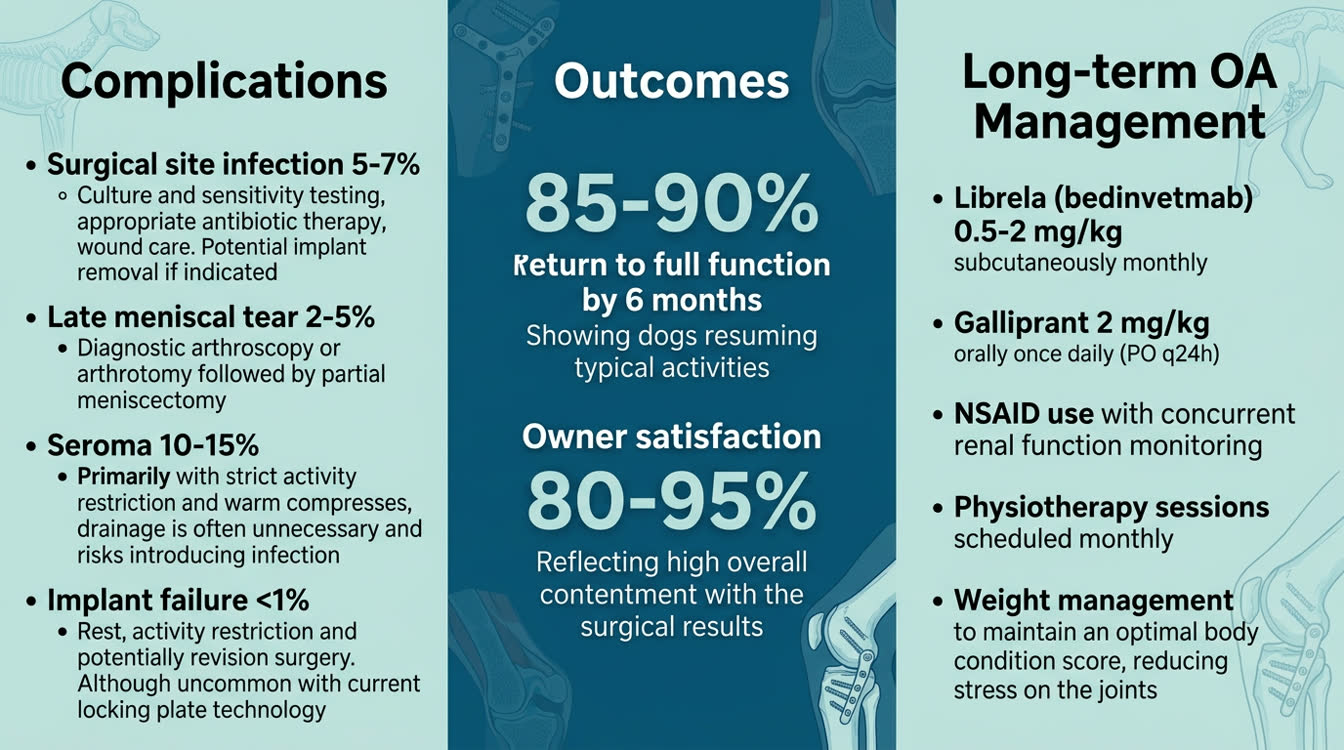
Complications, Long-Term Outcomes and OA Management
Complications of TPLO:
Early complications (0-8 weeks):
- Infection (surgical site infection): 5-7% of cases. Treat with appropriate antibiotics based on wound culture/sensitivity; superficial infections may resolve with topical treatment; deep infections (osteomyelitis) require implant removal.
- Meniscal injury (late meniscal tear): 2-5% of dogs develop late meniscal tears after TPLO due to altered joint mechanics. Signs: acute worsening of lameness after initial improvement, pain on stifle manipulation, clicking. Requires arthroscopic or open meniscal evaluation.
- Implant failure (plate/screw loosening or fracture): rare with modern implants (<1%). Presents as acute non-weight-bearing with worsening radiographic findings.
- Seroma formation: common (10-15%); usually self-limiting; aspiration and bandaging if large.
- Osteotomy healing failure (non-union): rare (<1%); requires revision surgery.
Late complications:
- Osteoarthritis progression: CrCL rupture and TPLO surgery both accelerate stifle OA progression. Most dogs show OA radiographically by 2 years post-TPLO.
- Fibular fracture: uncommon; usually heals conservatively.
Long-term outcomes:
- 85-90% of dogs return to full or near-normal function by 6 months post-TPLO.
- Owner-reported outcome studies: 80-95% of owners satisfied or very satisfied with TPLO outcome.
- Performance dogs (agility, hunting): return rates to previous performance level approximately 70-80%.
- Prognosis worsens with concurrent medial meniscal tears (which are present in 50-70% of CrCL ruptures at surgery) and pre-existing OA severity.
Long-term osteoarthritis management:
- NSAID therapy: carprofen 2.2 mg/kg PO Q12h or meloxicam 0.1 mg/kg PO Q24h for OA pain flares. Renal and hepatic monitoring Q6-12 monthly with chronic use.
- Bedinvetmab (Librela) 0.5-2 mg/kg SQ Q28 days: anti-NGF monoclonal antibody; approved for canine OA; improves mobility and reduces pain without NSAID GI side effects. Excellent adjunct or alternative for dogs with GI sensitivity.
- Grapiprant (Galliprant) 2 mg/kg PO Q24h: EP4 prostaglandin receptor antagonist; alternative NSAID-free OA analgesia with improved GI safety profile.
- Physiotherapy and hydrotherapy: ongoing 1-2x monthly maintenance sessions.
- Weight management: critical — each kilogram of excess weight dramatically increases joint load and OA progression rate.
- Omega-3 fatty acid supplementation: EPA/DHA 50-75 mg/kg/day; moderate anti-inflammatory effect on OA.
- Joint supplements (glucosamine/chondroitin): limited evidence base but well tolerated; may be offered as adjunctive support.
Frequently Asked Questions
How long does TPLO recovery take in dogs?
Full return to unrestricted activity after TPLO typically takes 16-20 weeks for most dogs. The initial strict rest phase (short lead walks only) lasts 4 weeks. Hydrotherapy begins at weeks 4-6, and longer lead walks progress through weeks 5-8. Off-lead activity is generally introduced from weeks 10-12 once 6-8 week radiographs confirm good bone healing. High-impact activities (ball chasing, agility, competitive work) should be delayed until weeks 14-20. Working and athletic dogs may need 6+ months before returning to full performance.
When can hydrotherapy start after TPLO?
Underwater treadmill hydrotherapy typically begins at 4-6 weeks post-TPLO, once the surgical wound is fully healed, sutures are out, and incision integrity is confirmed. Hydrotherapy provides excellent early rehabilitation: water buoyancy reduces limb load while maintaining normal gait pattern, encouraging muscle activation and range of motion. Sessions start at 10 minutes 1-2 times per week, progressively increasing duration. Swimming (pool hydrotherapy) is usually introduced slightly later, from week 10+.
What is the risk of the other knee rupturing after TPLO?
40-60% of dogs with CrCL rupture will develop rupture of the contralateral (opposite) cranial cruciate ligament within 2 years. This high bilateral rate reflects the underlying degenerative nature of CrCL disease in most dogs — it is not purely a traumatic injury but a progressive ligament degeneration. Weight management, avoiding obesity, appropriate muscle conditioning, and monitoring the contralateral stifle during TPLO recovery (where increased load is placed on the unoperated limb) are important to delay or reduce contralateral CrCL rupture risk.
What are the signs of a post-TPLO late meniscal tear?
A late meniscal tear after TPLO presents as acute worsening of lameness following initial post-operative improvement — typically occurring weeks to months after surgery. Other signs include: pain or palpable click on stifle flexion/extension (McMurray sign), joint effusion, resistance to weight-bearing, and sometimes an audible clicking sound during normal walking. Late meniscal tears occur in 2-5% of TPLO cases and are thought to result from altered stifle mechanics. Diagnosis is confirmed by arthroscopy or exploratory surgery. Treatment is meniscal debridement (partial meniscectomy).
What is the best long-term pain management for dogs after TPLO with osteoarthritis?
Multi-modal OA management after TPLO includes: NSAIDs (carprofen 2.2 mg/kg PO Q12h or meloxicam 0.1 mg/kg PO Q24h) for pain flares with regular renal/hepatic monitoring; bedinvetmab (Librela) 0.5-2 mg/kg SQ Q28 days as an anti-NGF monoclonal antibody for ongoing pain management without NSAID GI effects; grapiprant (Galliprant) 2 mg/kg PO Q24h as an NSAID-free OA analgesic; ongoing physiotherapy; strict weight management; and EPA/DHA omega-3 supplementation (50-75 mg/kg/day). Weight is the single most modifiable factor affecting OA progression.
References
- Wucherer KL, et al. Short-term and long-term outcomes for overweight dogs with cranial cruciate ligament rupture treated surgically or nonsurgically. J Am Vet Med Assoc. 2013;242(10):1364-1372.
- Gordon-Evans WJ, et al. Comparison of veterinary surgeon- and owner-assessed outcomes after tibial plateau levelling osteotomy. Vet Comp Orthop Traumatol. 2011;24(5):348-351.
- Duerr FM, et al. Risk factors for excessive tibial plateau angle in large-breed dogs with cranial cruciate ligament disease. J Am Vet Med Assoc. 2007;231(11):1688-1691.