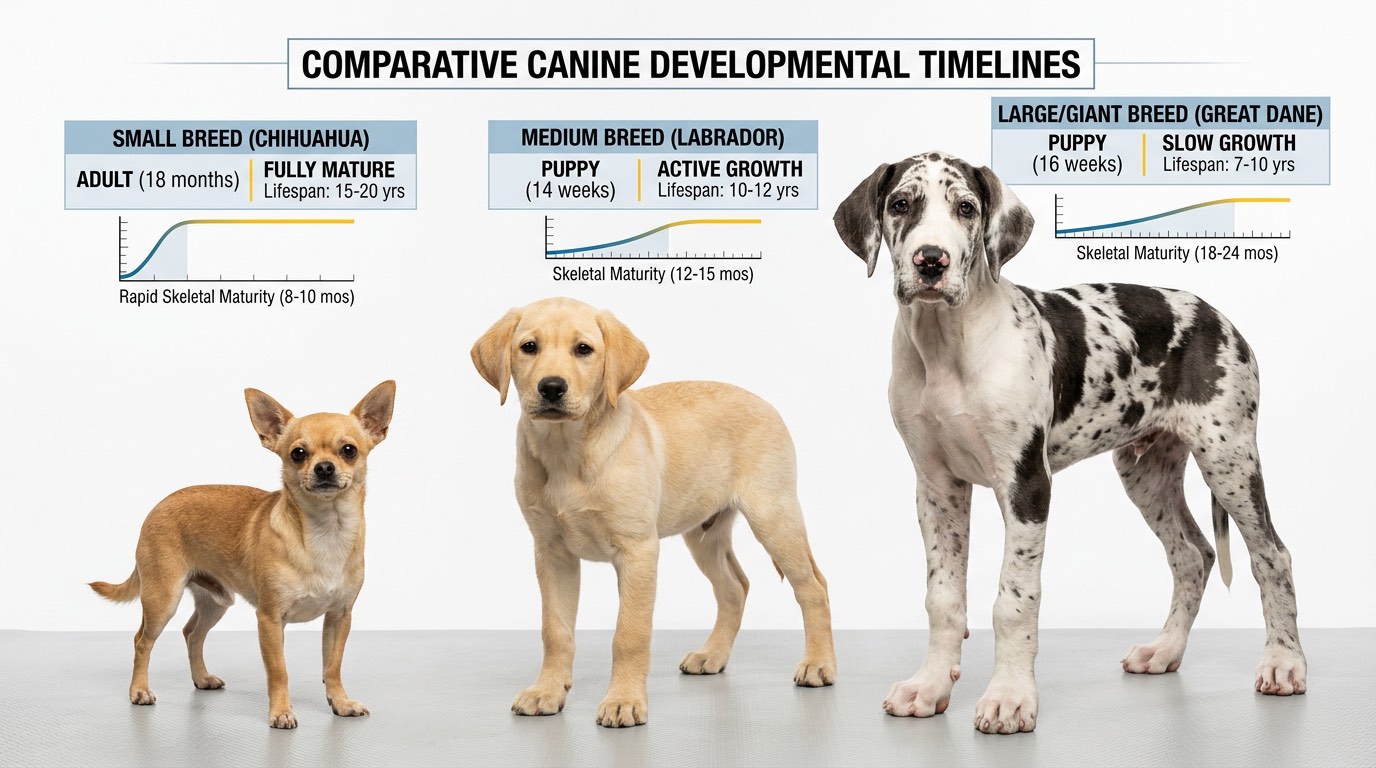
Quick Answer
The optimal age for spay/neuter in dogs depends on breed size, sex, and individual risk factors. This guide summarizes evidence on joint disorders (CCL rupture, hip dysplasia), hormone-dependent cancers, and behavioral effects, with current breed-specific recommendations from the UC Davis population study.
Key Takeaways
- ✓Early gonadectomy (before 6 months) delays growth plate closure in large/giant breeds, increasing CCL rupture and hip dysplasia risk by 2–4x compared to delayed neutering.
- ✓Small breeds (<10 kg) show no significant increase in orthopedic disease with early spay/neuter and benefit from spaying before first heat for mammary cancer prevention.
- ✓Spaying before first heat reduces lifetime mammary carcinoma risk to approximately 0.5%; this benefit decreases sharply with each subsequent heat cycle.
- ✓Golden Retrievers, Rottweilers, and Vizslas have breed-specific evidence supporting delayed gonadectomy at 12–24 months to minimize cancer and orthopedic risk.
- ✓Behavioral effects of gonadectomy on fear aggression are inconsistent in the literature; testosterone-driven behaviors (roaming, urine marking, intermale aggression) are reliably reduced by castration.
- ✓Current best practice is individualized, breed-specific timing based on body size, sex, and lifestyle factors rather than a universal early-age-neutering policy.
Sex Hormones and Musculoskeletal Development
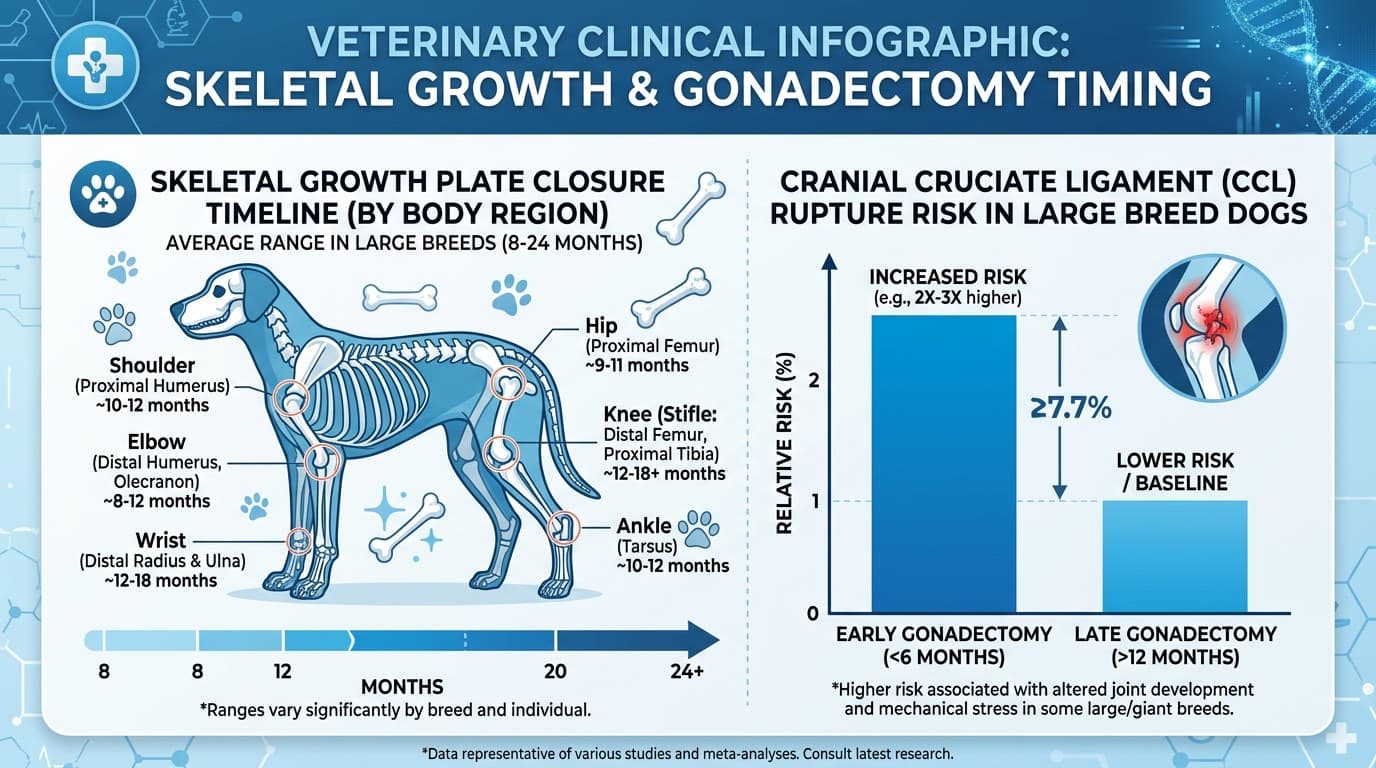
Sex hormones play critical roles in skeletal closure of growth plates, muscle mass, and ligament integrity. Gonadectomy before growth plate closure delays closure, resulting in longer limb bones, altered joint geometry, and increased biomechanical stress on cranial cruciate ligaments (CCL) and hip joints.
Growth Plate Closure Timeline
| Plate Location | Approximate Closure Age |
|---|---|
| Distal femur | 8–11 months |
| Distal tibia | 10–12 months |
| Distal radius | 9–12 months |
| Pelvis (acetabulum) | 12–18 months |
Early neutering (before 6 months) delays closure of all plates, contributing to longer, lighter bones with different joint angles that predispose large breeds to CCL rupture and hip dysplasia.
Evidence from the UC Davis Population Study (Hart et al., 2020)
This landmark study of 35 breeds found significant breed and sex-based differences in joint disorder risk following early gonadectomy:
| Breed Group | Male Early Neuter Risk | Female Early Spay Risk |
|---|---|---|
| Large breeds (>22 kg) | Significantly increased CCL, hip dysplasia | Increased CCL |
| Giant breeds (>40 kg) | Markedly increased joint disorders | Markedly increased joint disorders |
| Small breeds (<10 kg) | No significant increase | No significant increase |
Clinical Implication For large and giant breeds, delaying gonadectomy until after growth plate closure (12–18 months in large breeds, 18–24 months in giant breeds) substantially reduces orthopedic complication rates.
Cancer Risk: Hormone-Dependent and Hormone-Independent Tumors
The relationship between gonadectomy timing and cancer risk is bidirectional: some tumors increase with early spay/neuter while others increase with remaining intact.
Tumors Reduced by Gonadectomy
| Tumor Type | Notes |
|---|---|
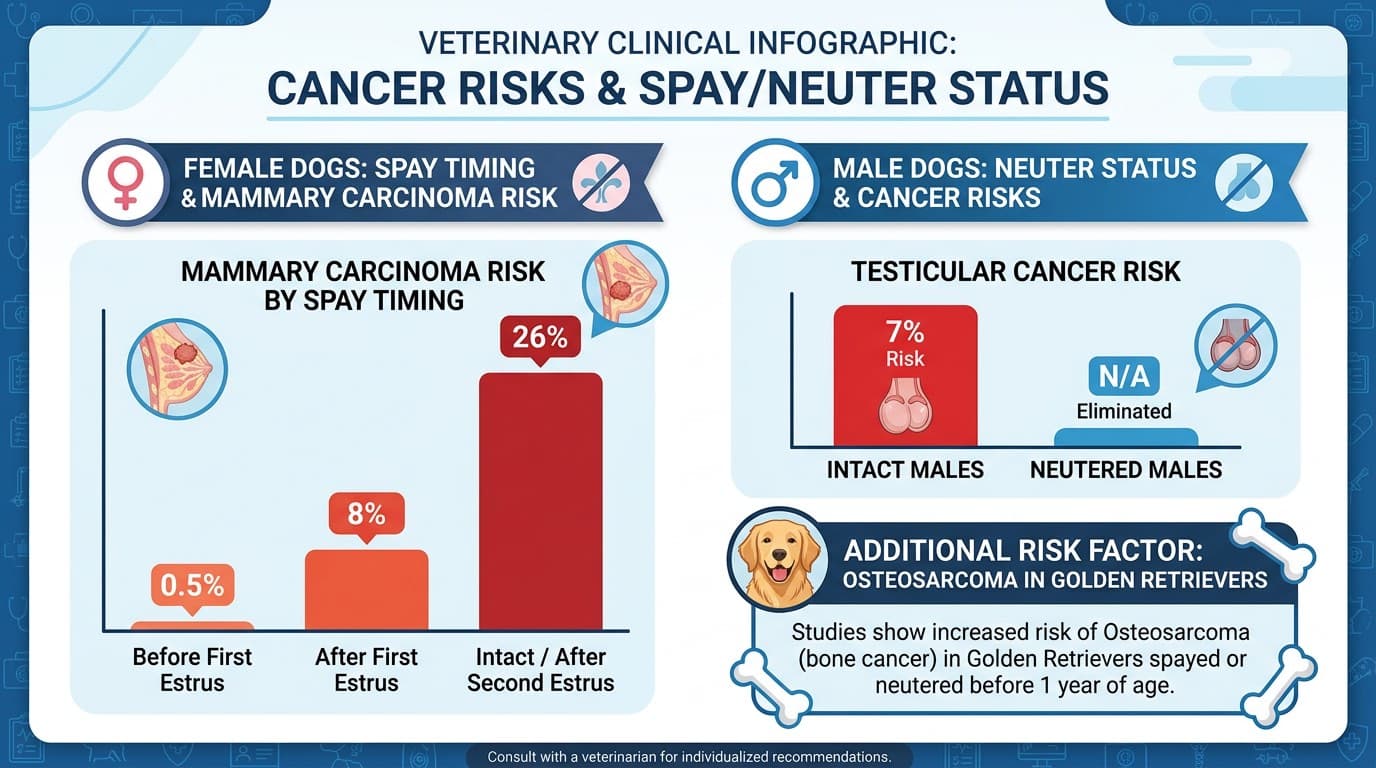
| Mammary carcinoma (females) | Risk approaches zero if spayed before first heat; increases with each subsequent heat cycle |
| Testicular cancer | Eliminated by castration; risk in intact males ~7% lifetime |
| Perianal adenoma | Testosterone-driven; largely prevented by castration |
| Transmissible venereal tumor | Prevented by castration |
Tumors Potentially Increased by Early Gonadectomy
| Tumor Type | Affected Breeds | Evidence Level |
|---|---|---|
| Osteosarcoma | Golden retrievers, Rottweilers, Irish wolfhounds | Moderate |
| Hemangiosarcoma (cardiac/splenic) | Golden retrievers, Vizslas | Moderate |
| Mast cell tumor | Golden retrievers, Boxers | Moderate |
| Transitional cell carcinoma (bladder) | All breeds (females) | Moderate |
| Lymphoma | Golden retrievers (males castrated <1 year) | Low-moderate |
Breast Cancer Prevention Context
- Spayed before 1st heat: mammary carcinoma risk ~0.5% lifetime
- Spayed after 1st heat: 8% risk
- Spayed after 2nd heat: 26% risk
- Intact: approximately 26% risk by age 10
For small breeds where orthopedic risk from early gonadectomy is low, the mammary cancer prevention argument strongly favors early spay (before first heat, around 5–6 months).
Breed-Specific Timing Recommendations and Shared Decision-Making
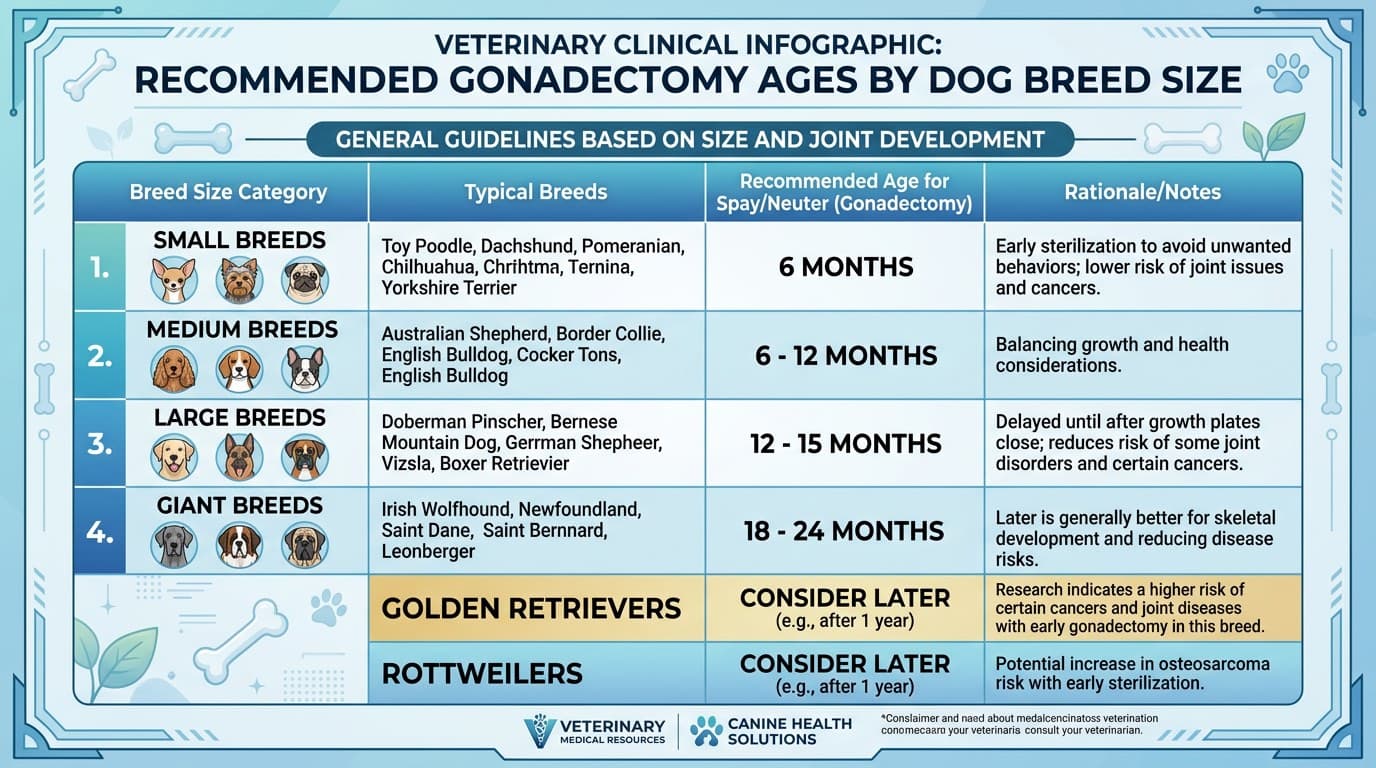
Current evidence supports individualized, breed-specific timing rather than a universal early-age policy. The following recommendations synthesize the UC Davis study and ACVS/ACVIM guidance as of 2024.
Recommended Gonadectomy Age by Breed and Sex
| Breed/Size | Males | Females |
|---|---|---|
| Small breeds <10 kg (chihuahua, maltese, pug) | 6 months | 6 months (before first heat) |
| Medium breeds 10–22 kg (beagle, cocker spaniel) | 6 months | 6 months (before first heat) |
| Large breeds 22–40 kg (labrador, German shepherd) | 12–15 months | 12 months (after first heat is acceptable) |
| Giant breeds >40 kg (Great Dane, Saint Bernard, Irish Wolfhound) | 18–24 months | 18–24 months |
| Golden Retrievers | 12–15 months | 12 months |
| Rottweilers | 18–24 months | Consider leaving intact or spaying after 18 months |
| Vizslas | 12 months | 12 months |
Behavioral Considerations
- Testosterone in intact males: increased roaming, urine marking, intermale aggression — castration at 6–12 months reduces these behaviors if done before establishment
- Fear aggression and anxiety: no consistent evidence that spay/neuter worsens fear; some studies suggest mild increase in fearfulness after early spay — not a primary reason to delay
Shared Decision-Making Points to Discuss with Owners 1. Breed size and specific joint disorder risk 2. Lifestyle — indoor vs outdoor, roaming access, other dogs in household 3. Owner commitment to responsible intact dog management 4. Mammary tumor prevention value in females 5. Population control contribution
Frequently Asked Questions
At what age should a large breed dog be neutered?
For large breeds (22–40 kg), current evidence recommends waiting until 12–15 months for males and at least 12 months for females. Giant breeds (>40 kg) benefit from delaying to 18–24 months to allow full growth plate closure and reduce CCL and hip dysplasia risk.
Does spaying before the first heat prevent mammary cancer in dogs?
Yes. Spaying before the first heat reduces lifetime mammary carcinoma risk to approximately 0.5% compared to 8% after first heat, 26% after second heat, and up to 26% in intact females by age 10. For small breeds, this strongly supports spaying at 5–6 months.
Does early neutering cause joint problems in dogs?
In large and giant breeds, neutering before growth plate closure (typically before 12 months) significantly increases risk of CCL rupture and hip dysplasia compared to delayed neutering. This effect is minimal in small breeds (<10 kg).
Should Golden Retrievers be neutered later?
Yes. The UC Davis study found significantly increased rates of CCL rupture, hip dysplasia, hemangiosarcoma, and mast cell tumors in Golden Retrievers neutered before 12 months. Current recommendations are 12–15 months for males and approximately 12 months for females.
Can a dog be left intact instead of being spayed or neutered?
Leaving a dog intact is a valid option for responsible owners who can prevent unwanted breeding. Intact females carry elevated mammary tumor risk and pyometra risk. Intact males are at risk for testicular cancer, prostatic disease, and perianal tumors. The decision should be individualized by breed, lifestyle, and owner commitment.
References
- Hart BL, Hart LA, Thigpen AP, Willits NH. Assisting decision-making on age of neutering for 35 breeds of dogs: associated joint disorders, cancers, and urinary incontinence. Front Vet Sci. 2020;7:388.
- Schneider R, Dorn CR, Taylor DO. Factors influencing canine mammary cancer development and postsurgical survival. J Natl Cancer Inst. 1969;43(6):1249-1261.
- Torres de la Riva G, Hart BL, Farver TB, et al. Neutering dogs: effects on joint disorders and cancers in golden retrievers. PLoS One. 2013;8(2):e55937.