Quick Answer
Long-term prednisone use causes predictable, manageable adverse effects. This guide covers all side effects from acute to chronic including iatrogenic Cushing's syndrome, GI ulceration risk, HPA axis suppression, and practical monitoring strategies for veterinary professionals.
Key Takeaways
- ✓PU/PD and polyphagia are universal warn owners before starting; they begin within days
- ✓ALP elevation occurs in ~80% of dogs on 2+ weeks of prednisone expected and not a reason to stop
- ✓NSAIDs + prednisone combination is contraindicated severe GI ulceration risk
- ✓Urine culture (not UA alone) every 48 weeks at immunosuppressive doses UTI often subclinical
- ✓Iatrogenic Cushing's: calcinosis cutis is pathognomonic for chronic steroid exposure
- ✓Never abruptly discontinue taper 2550% every 24 weeks; stress dose during surgery/illness
Acute and Dose-Dependent Side Effects
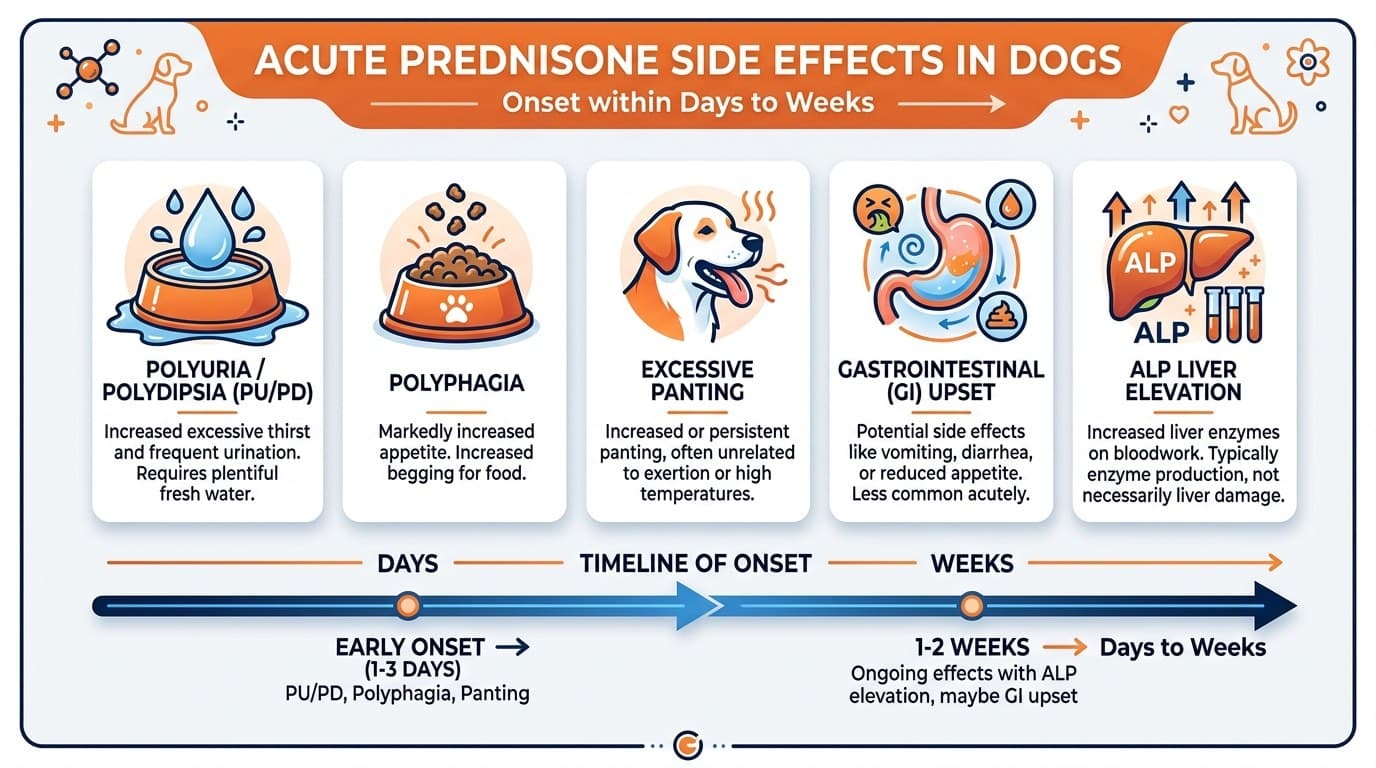
Prednisone side effects are predictable, dose-dependent, and duration-dependent. Most acute effects begin within days of starting therapy.
Polyuria/Polydipsia (PU/PD) The most universal and earliest sign occurs in virtually all dogs on >7 days of anti-inflammatory to immunosuppressive doses. Glucocorticoids reduce ADH sensitivity in renal tubules causing obligatory polyuria, compensatory polydipsia. USG typically 1.0081.018. Ensure constant water access. Owners must be warned before starting therapy.
Polyphagia and Weight Gain Glucocorticoids stimulate hypothalamic appetite centers. Dogs become ravenous. Weight gain begins within 12 weeks. Long-term: obesity, worsened joint disease, insulin resistance. Measure body weight at every recheck.
GI Side Effects
- Nausea, vomiting, diarrhea give with food
- GI ulceration: Rare with steroids alone; dramatically increased with concurrent NSAID use. Combination of steroid + NSAID is contraindicated. Signs of GI hemorrhage: melena, hematemesis, acute collapse.
- GI protectants: If combination unavoidable, add misoprostol 35 g/kg PO TID or omeprazole 0.71 mg/kg/day PO
Hepatopathy ALP elevation in ~80% of dogs after 2+ weeks. Mechanism: hepatic glycogen accumulation hepatomegaly, vacuolar hepatopathy. Expected not a reason to stop therapy unless ALT significantly elevated or clinical hepatopathy present. Hepatomegaly on palpation is common. Resolves with steroid discontinuation.
Panting Common, especially at night. Mechanism not fully understood. Usually not dose-limiting. Resolves with dose reduction.
Chronic Use: Iatrogenic Cushing's and Muscle Wasting
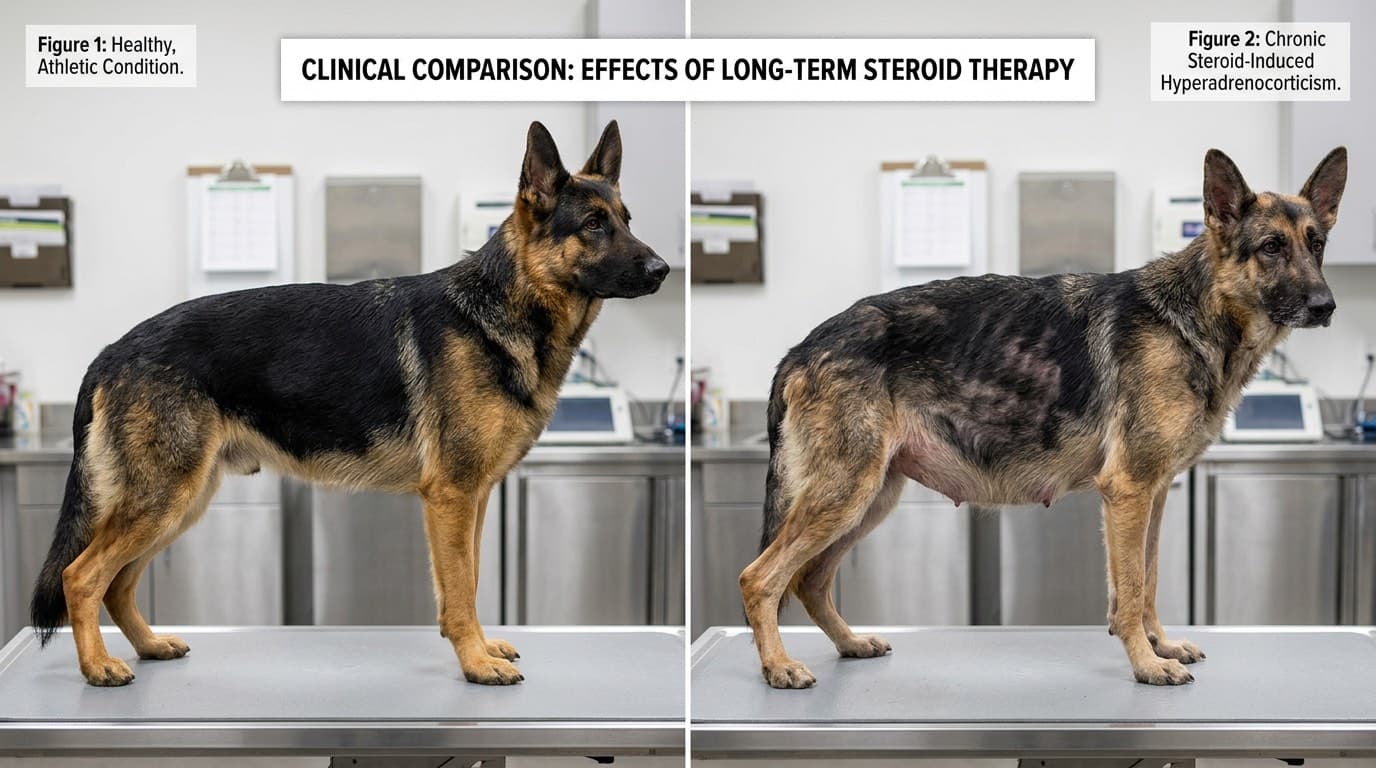
With months of immunosuppressive prednisone, the full picture of iatrogenic hyperadrenocorticism emerges clinically identical to spontaneous Cushing's syndrome.
Signs of Iatrogenic Cushing's
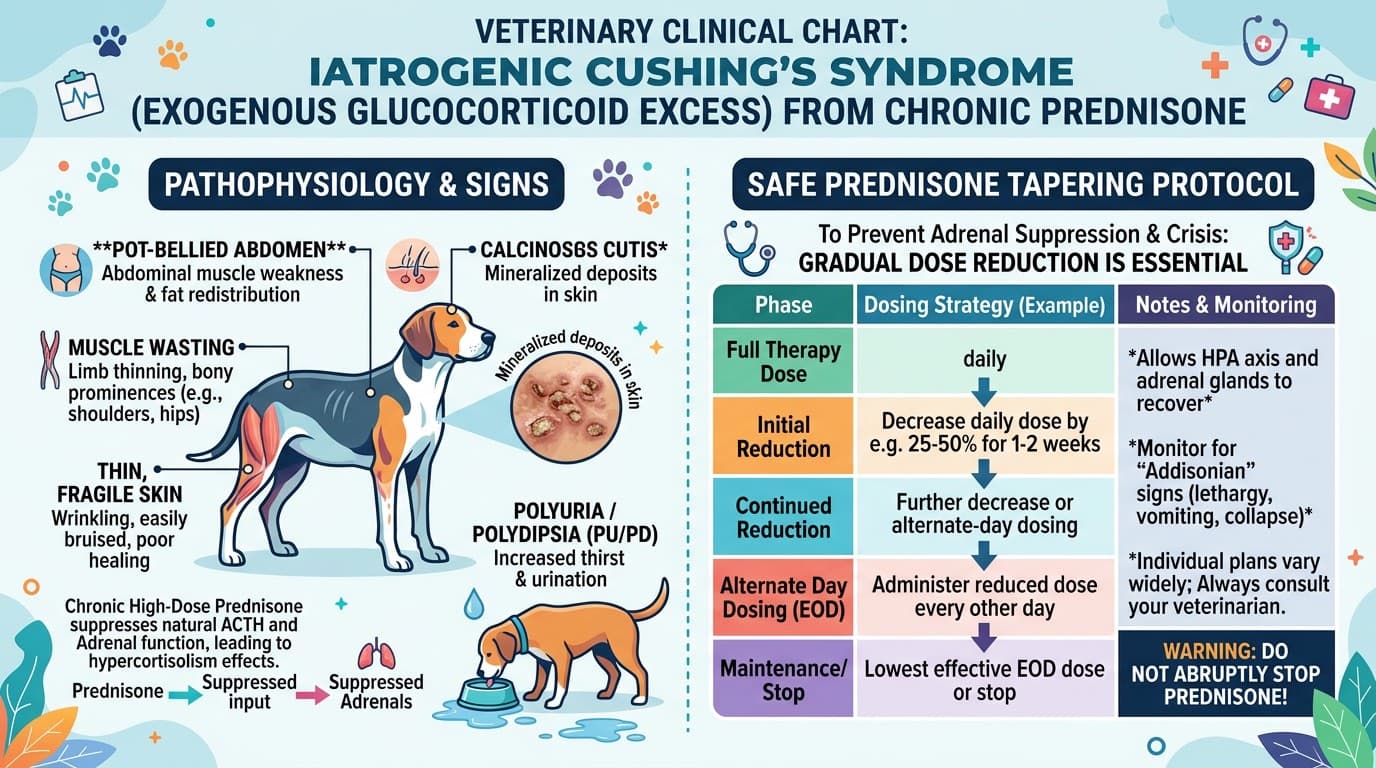
- Pot-belly (pendulous abdomen): hepatomegaly + fat redistribution + abdominal muscle weakness
- Symmetrical truncal alopecia and thin, fragile skin
- Calcinosis cutis: Firm gritty calcium deposits in dermis, especially dorsum and inguinal region pathognomonic for chronic steroid exposure. Can ulcerate and become infected.
- Muscle wasting: Epaxial, temporal, appendicular atrophy. Glucocorticoids increase protein catabolism.
- Easy bruising, poor wound healing
Distinguishing Iatrogenic vs. Spontaneous Cushing's
| Feature | Iatrogenic | Spontaneous PDH |
|---|---|---|
| Steroid history | Yes | No |
| Endogenous ACTH | Suppressed | Elevated |
| LDDS test | Fully suppressed | Escape pattern |
| Adrenal ultrasound | Bilateral atrophy | Bilateral enlargement |
| Treatment | Taper steroids | Trilostane/mitotane |
Managing Muscle Atrophy
- Reduce to minimum effective dose
- High-protein diet
- Controlled resistance exercise (leash walks, inclines)
- Physical rehabilitation (underwater treadmill)
Infection Risk, HPA Suppression and Drug Interactions
Infection Risk at Immunosuppressive Doses
- UTI: 3050% of dogs on long-term immunosuppressive steroids. Often subclinical dilute urine and neutrophil dysfunction mask classic signs. Perform urine culture (not just UA sediment) every 48 weeks. Treat positive cultures even if asymptomatic.
- Demodicosis: Secondary generalized mange in young dogs on long-term steroids
- Skin infections: Pyoderma at calcinosis cutis sites
- Pneumocystis carinii: Rare opportunistic pneumonia in severely immunosuppressed dogs
HPA Axis Suppression
- Always taper gradually (2550% every 24 weeks)
- Stress dosing: Dogs on steroids undergoing surgery or severe illness need 510 their maintenance dose acutely to prevent Addisonian crisis
- If HPA recovery uncertain: ACTH stimulation test before full discontinuation
Key Drug Interactions
| Drug | Interaction | Action |
|---|---|---|
| NSAIDs | Severe GI ulceration | Contraindicated avoid combination |
| Phenobarbital | Increases steroid clearance | May need higher steroid dose |
| Cyclosporine | Additive immunosuppression | Monitor for infections closely |
| Ketoconazole | Reduces steroid clearance | May need lower dose |
| Insulin | Antagonizes insulin hyperglycemia | Monitor glucose in diabetics |
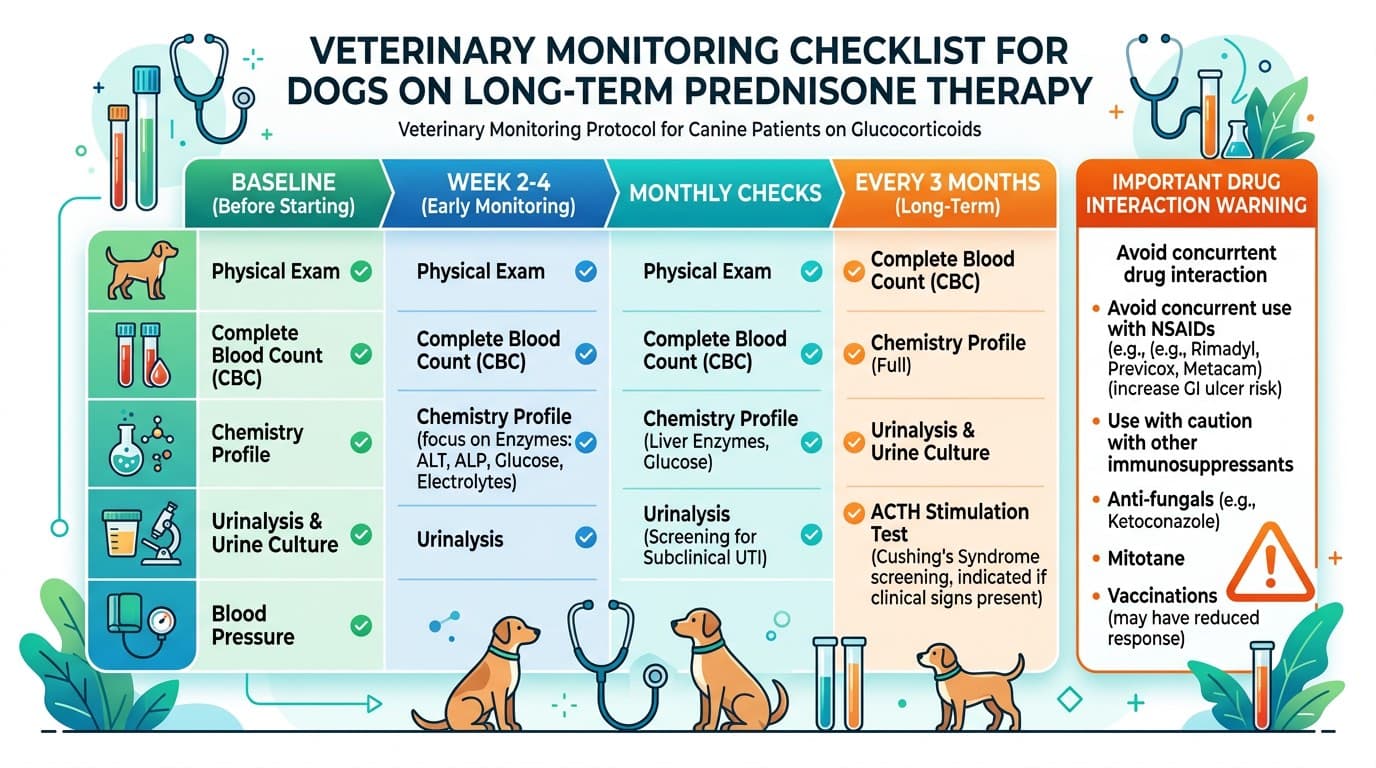
Monitoring Schedule
- Baseline: CBC, chemistry, UA, blood pressure
- Week 24: UA, body weight, PU/PD assessment
- Monthly: Weight, muscle condition score
- Every 3 months: CBC, chemistry, UA with culture (immunosuppressive doses)
- Long-term: ACTH stimulation test when planning discontinuation
Frequently Asked Questions
What are the most common prednisone side effects in dogs?
The most common are polyuria/polydipsia (excessive drinking and urination), polyphagia (ravenous appetite), weight gain, and panting. These begin within days of starting therapy. With prolonged use: hepatomegaly, muscle wasting, pot-belly appearance, thin skin, and increased infection risk.
Can prednisone cause Cushing's disease in dogs?
Yes prolonged high-dose prednisone causes iatrogenic Cushing's syndrome, which is clinically identical to spontaneous Cushing's. Signs include pot belly, muscle wasting, calcinosis cutis, and thin fragile skin. It resolves when steroids are gradually tapered. Distinguish it from spontaneous Cushing's using endogenous ACTH (suppressed in iatrogenic, elevated in PDH).
How do I protect my dog's stomach while on prednisone?
Always give prednisone with food. Never combine prednisone with NSAIDs this dramatically increases GI ulceration risk. If both must be used (rarely justified), add a proton pump inhibitor (omeprazole 0.71 mg/kg/day) or misoprostol (35 g/kg TID). Watch for signs of GI bleeding: black/tarry stools, vomiting blood, sudden weakness.
Why does my dog keep getting UTIs on prednisone?
Immunosuppressive doses of prednisone significantly impair immune defense, making UTIs 35 more likely. The dilute urine from PU/PD also reduces antimicrobial properties. Importantly, UTIs in these dogs are often subclinical urine culture (not just a dipstick) every 48 weeks is essential, as pyuria may be absent despite active infection.
What happens if I stop prednisone suddenly?
Abruptly stopping prednisone after >2 weeks of use risks secondary adrenal insufficiency (the adrenal glands have atrophied from HPA suppression) and disease relapse. Signs: weakness, vomiting, hypotension. Always taper by 2550% every 24 weeks. Final step: every-other-day dosing for 24 weeks before full discontinuation.
References
- Behrend EN, et al. Diagnosis of spontaneous canine hyperadrenocorticism. J Vet Intern Med. 2013.
- Trotman TK, et al. Identification of risk factors for urinary tract infections in dogs with corticosteroid-dependent IBD. J Vet Intern Med. 2013.
- Plumb DC. Prednisone/Prednisolone. In: Plumb's Veterinary Drug Handbook. 10th ed. Wiley-Blackwell; 2023.