Quick Answer
Cushing's syndrome (hyperadrenocorticism) is one of the most common endocrine disorders in middle-aged and senior dogs. This guide covers pathophysiology, PDH vs ADH differentiation, LDDS testing, trilostane dosing, and monitoring protocols.
Key Takeaways
- ✓PDH accounts for 80–85% of canine Cushing's; ADH accounts for 15–20%
- ✓Dramatically elevated ALP (5–20× normal) with PU/PD and pendulous abdomen is the classic clinicopathologic profile
- ✓LDDS is the preferred screening test (sensitivity ~90%); ACTH stim is preferred for monitoring trilostane therapy
- ✓Trilostane target: post-ACTH cortisol 2–6 μg/dL; levels <2 μg/dL indicate over-suppression (iatrogenic Addison's)
- ✓Abdominal ultrasound is essential to differentiate PDH (bilateral adrenal enlargement) from ADH (unilateral mass)
- ✓Calcinosis cutis and symmetrical truncal alopecia are hallmark skin findings
Pathophysiology: PDH vs Adrenal-Dependent
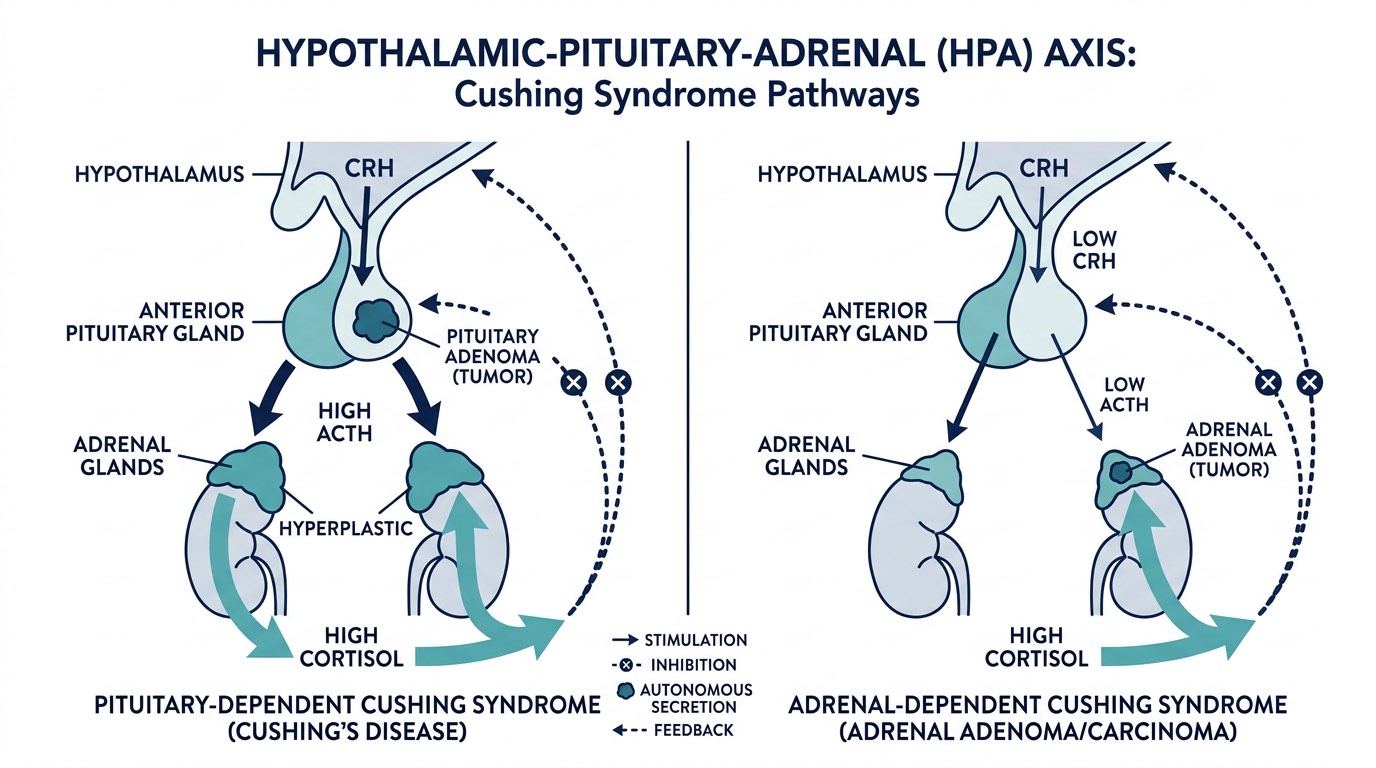
Cushing's syndrome results from chronically elevated cortisol, most commonly from excess ACTH stimulation (pituitary-dependent) or autonomous adrenal cortisol production (adrenal-dependent).
Pituitary-Dependent Hyperadrenocorticism (PDH) — 80–85% of cases A functional pituitary tumor (usually a microadenoma <1 cm, occasionally a macroadenoma >1 cm) secretes excess ACTH, driving bilateral adrenocortical hypertrophy and cortisol overproduction. PDH affects both adrenal glands symmetrically.
Adrenal-Dependent Hyperadrenocorticism (ADH) — 15–20% of cases A unilateral adrenal cortical tumor (adenoma or carcinoma) autonomously secretes cortisol, suppressing ACTH and atrophying the contralateral adrenal gland. Adrenal carcinomas are locally invasive and may metastasize to regional lymph nodes, liver, and lungs.
Iatrogenic Cushing's Caused by exogenous glucocorticoid administration (oral, injectable, topical, ophthalmic). ACTH stimulation test response is blunted. Treatment is gradual steroid tapering.
Clinical Signs: The Classic Cushingoid Dog
Cushing's signs develop gradually and are often dismissed as "normal aging" by owners. The classic presentation includes:
Cardinal Signs (>80% of cases)
- Polyuria and polydipsia (PU/PD) — often the first and most prominent sign
- Polyphagia (increased appetite, food-seeking behavior)
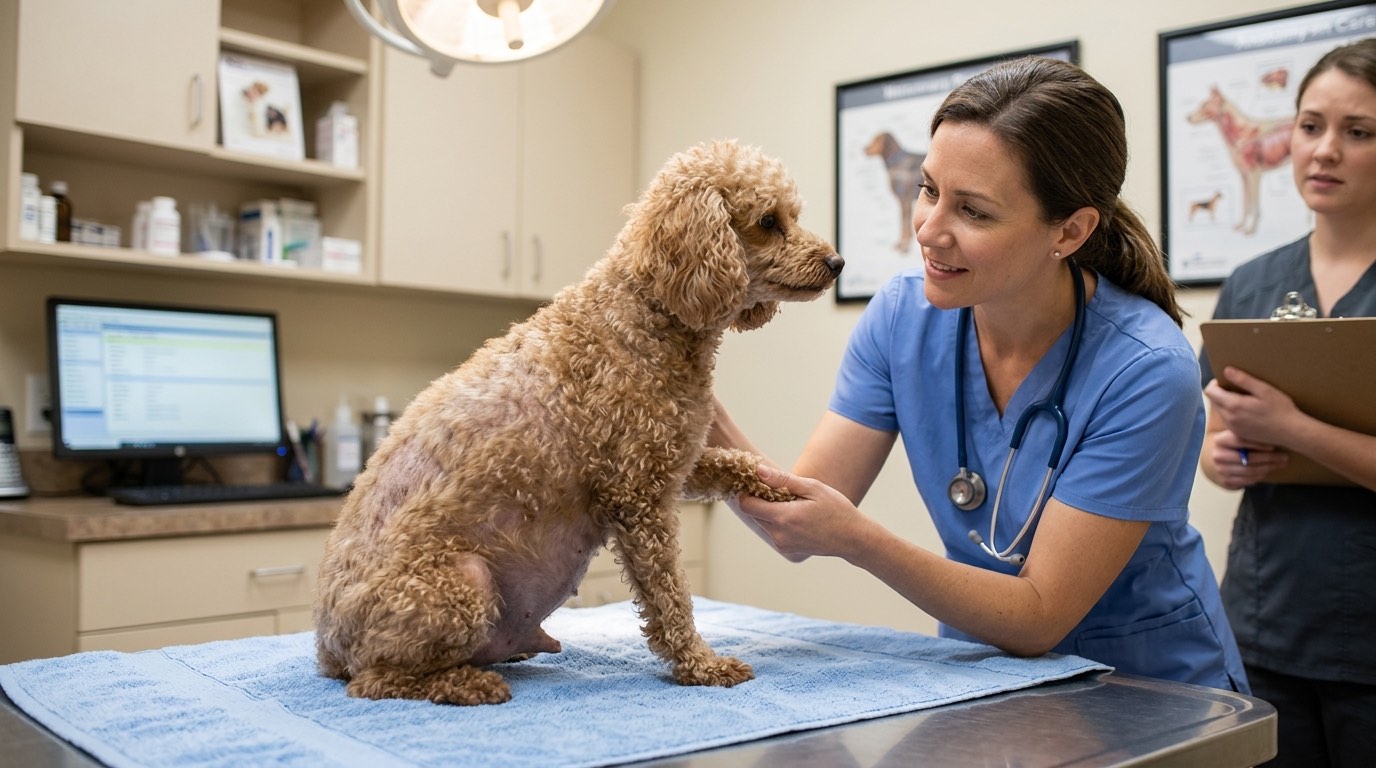
- Pendulous/pot-bellied abdomen — due to muscle wasting, fat redistribution, and hepatomegaly
- Alopecia (symmetrical, non-pruritic, truncal) — often spares head and extremities
- Thin, inelastic skin with hyperpigmentation
- Muscle weakness and exercise intolerance
Skin Changes (75% of cases)
- Calcinosis cutis — calcium deposits in skin, especially along the dorsal midline and inguinal region (whitish, firm plaques)
- Easy bruising (fragile skin)
- Comedones (dilated hair follicles)
Hepatomegaly
- Present in nearly all cases; steroid-induced hepatopathy with glycogen vacuolation
- Elevated ALP (often dramatically — 5–20× reference range) is a classic finding
Neurological signs (PDH macroadenoma)
- Dull mentation, circling, inappetence, blindness — rare but indicates large pituitary tumor requiring CT/MRI and referral
Diagnostic Testing: LDDS, HDDS, and ACTH Stimulation
No single test is 100% sensitive and specific. Use clinical context, CBC/chemistry, and urine cortisol:creatinine ratio (UCCR) as screening, then confirm with LDDS or ACTH stimulation.
Urine Cortisol:Creatinine Ratio (UCCR) Collected at home (first morning urine, before any stress). Sensitivity ~95% but specificity low (~30%). Used as a screening test — a normal UCCR makes Cushing's unlikely; an elevated UCCR requires confirmation.
Low-Dose Dexamethasone Suppression Test (LDDS) — Preferred Screening Test
- Baseline cortisol → dexamethasone 0.01 mg/kg IV → cortisol at 4 hr and 8 hr
- Dogs without Cushing's suppress to <1.0 μg/dL at 8 hours
- Dogs with Cushing's fail to suppress (>1.0 μg/dL at 8 hr)
- Sensitivity: ~90–95% for PDH; ~85% for ADH
- Can simultaneously differentiate PDH vs ADH: if 4-hour cortisol is <50% of baseline or <1.0 μg/dL, PDH is strongly suggested (escape suppression pattern)
ACTH Stimulation Test
- Baseline cortisol → cosyntropin (Cortrosyn) 5 μg/kg IV → cortisol at 1 hour
- Post-ACTH cortisol >22 μg/dL = consistent with Cushing's
- Sensitivity ~80–85%; does not differentiate PDH vs ADH
- Best for: Monitoring trilostane therapy; diagnosing iatrogenic Cushing's (blunted response)
High-Dose Dexamethasone Suppression Test (HDDS)
- Differentiates PDH from ADH: PDH usually suppresses (>50% reduction), ADH does not
- Being replaced by endogenous ACTH measurement and imaging in many referral centers
Abdominal Ultrasound
- Bilateral adrenal enlargement → PDH
- Unilateral adrenal mass with contralateral adrenal atrophy → ADH (adenoma vs carcinoma)
- Essential for all confirmed Cushing's cases
Treatment: Trilostane, Mitotane, and Adrenalectomy
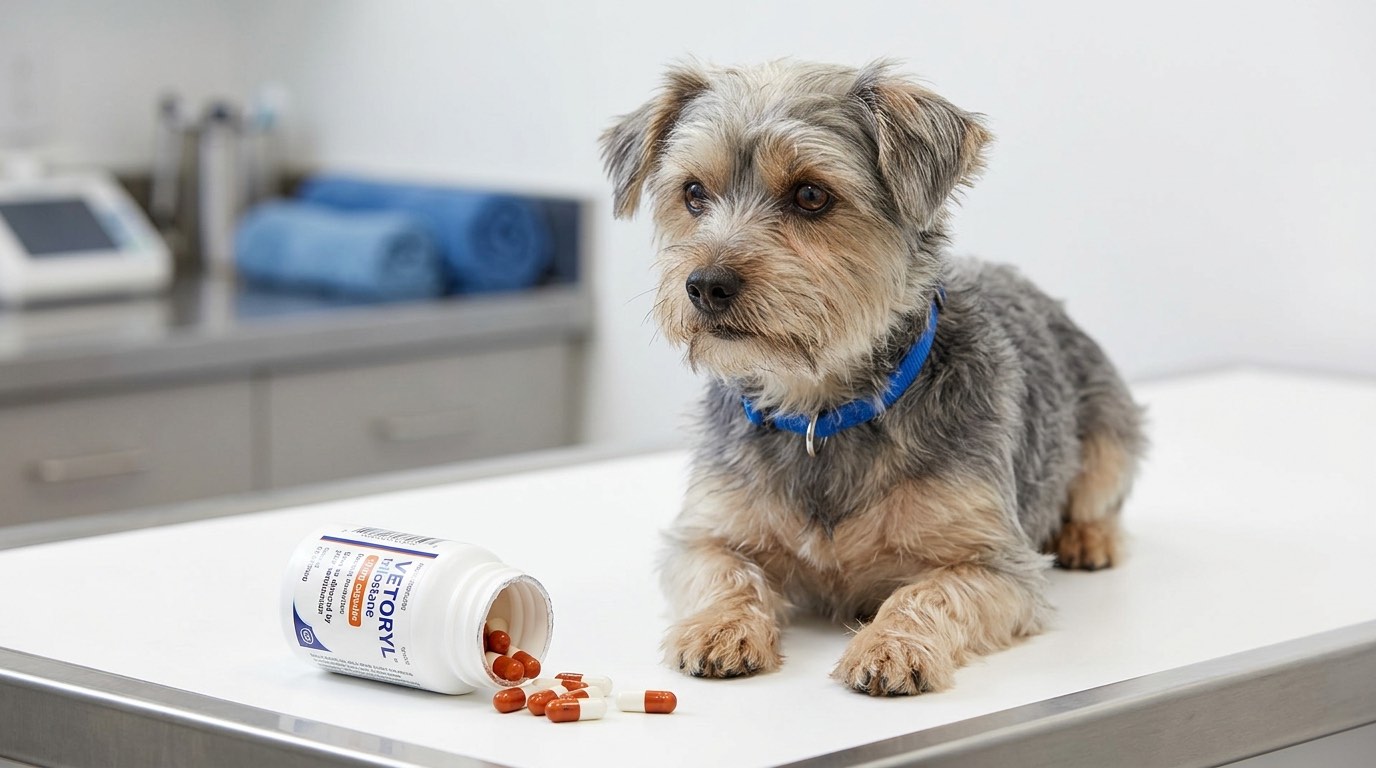
Trilostane (Vetoryl) — Drug of Choice for PDH and ADH Trilostane inhibits 3β-hydroxysteroid dehydrogenase, blocking cortisol synthesis. It does not destroy adrenal tissue (reversible).
Starting dose: 1–2 mg/kg/day orally once daily (preferably with food to improve absorption). Maximum initial dose 5 mg/kg/day; many dogs are well-controlled on lower doses.
Monitoring with ACTH stimulation test: perform at 10 days, 4 weeks, 12 weeks, and then every 3–6 months. Target post-ACTH cortisol: 2–6 μg/dL (some guidelines accept up to 8 μg/dL if clinical signs are controlled).
Dose Adjustments:
- Post-ACTH cortisol >6–8 μg/dL with ongoing clinical signs: increase dose 25–50%
- Post-ACTH cortisol <2 μg/dL (Addisonian): reduce dose or discontinue; monitor electrolytes
- Trilostane can cause iatrogenic Addison's disease — a serious complication requiring immediate dose reduction and potentially temporary glucocorticoid supplementation
Mitotane (Lysodren) An adrenocorticolytic agent that destroys adrenal cortical tissue (irreversible). Less commonly used due to narrow therapeutic index and risk of Addisonian crisis. Still appropriate for ADH (adrenal carcinoma) or trilostane failures.
Adrenalectomy for ADH Surgical removal of unilateral adrenal tumors (adenoma or carcinoma). Referral to specialist center recommended. Pre-operative trilostane for 4–6 weeks improves perioperative outcomes. Post-operative mineralocorticoid ± glucocorticoid supplementation required until contralateral adrenal recovers (weeks to months).
Frequently Asked Questions
What is the most common first sign of Cushing's in dogs?
Polyuria and polydipsia (PU/PD) are typically the first and most prominent signs. Owners often notice their dog drinking excessively and needing frequent urination before other signs develop.
How is trilostane monitored?
ACTH stimulation testing at 10 days, 4 weeks, 12 weeks, then every 3–6 months. Target post-ACTH cortisol: 2–6 μg/dL.
References
- Feldman EC, Nelson RW. Canine Hyperadrenocorticism. Canine and Feline Endocrinology and Reproduction. 3rd ed. Saunders; 2004.
- Ramsey IK. Trilostane in dogs: a review of the evidence. Vet Dermatol. 2010.
- Behrend EN, et al. Diagnosis of spontaneous canine hyperadrenocorticism: 2012 ACVIM consensus statement. J Vet Intern Med. 2013.