Quick Answer
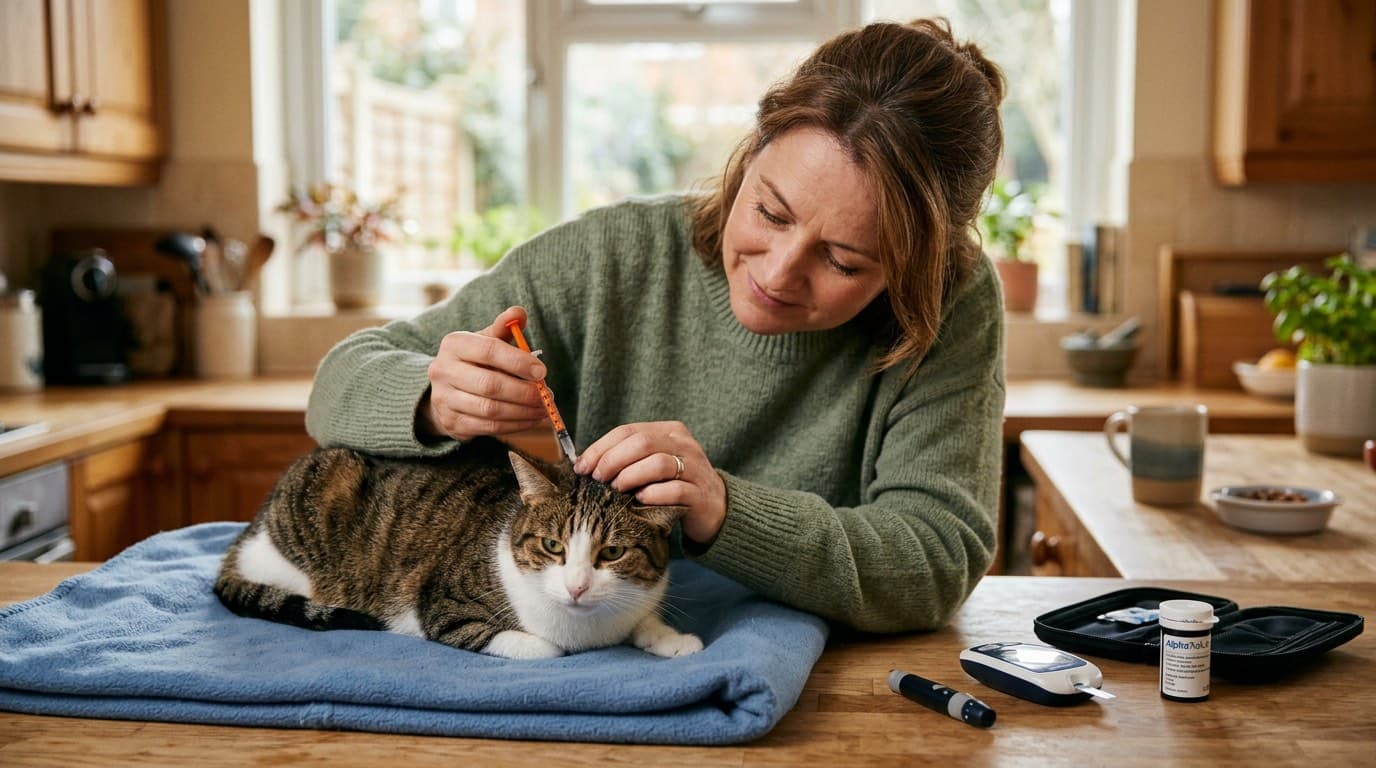
Insulin glargine (Lantus) is the preferred insulin for feline diabetes management due to its long duration of action and high remission rates. This guide covers starting dose (1-2 U BID), tight regulation protocol, pre-injection glucose cutoffs, monitoring schedules, and the low-carb diet combination that maximizes remission.
Key Takeaways
- ✓Starting dose for ALL newly diagnosed diabetic cats: 1–2 U glargine SQ BID regardless of glucose or body weight.
- ✓Tight regulation target: pre-injection glucose 150–300 mg/dL; nadir glucose 80–150 mg/dL.
- ✓Always check glucose before each injection — hold if <200 mg/dL initially, or <150 mg/dL in established patients.
- ✓Low-carbohydrate wet food (<10% calories as carbs) is essential — doubles remission rates alongside glargine.
- ✓Remission rate 50–80% with tight regulation + low-carb diet within 6 months of diagnosis.
- ✓Treat hypoglycemia with Karo syrup on gums (conscious) or IV 50% dextrose diluted 1:4 (unconscious).
Starting Glargine U-100: 1-2 Units SQ BID Regardless of Glucose
Insulin glargine (Lantus, Toujeo) is a long-acting human insulin analog that is the preferred insulin for newly diagnosed diabetic cats. Unlike intermediate-acting insulins (PZI, NPH), glargine provides a relatively flat, prolonged action profile that closely mimics the physiological basal insulin requirement.
Why Glargine for Cats?
- Duration: 12–24 hours in cats, making BID dosing practical
- Flat action profile: lower hypoglycemia risk than intermediate-acting insulins
- High remission rate: 50–80% remission within 6 months when combined with low-carb diet and tight regulation
- Well-studied in feline diabetes literature
Starting Dose Protocol
| Patient | Starting Dose | Route | Frequency |
|---|---|---|---|
| All newly diagnosed diabetic cats | 1–2 U | SQ | BID (every 12 hours) |
| Glucose <350 mg/dL | Start at 1 U BID | SQ | q12h |
| Glucose >350 mg/dL | Start at 1.5–2 U BID | SQ | q12h |
Key Rule: Start Low, Go Slow The starting dose is 1–2 units TOTAL DOSE (not mg/kg or U/kg) BID regardless of body weight. Cats are uniquely sensitive to insulin — overdosing causes hypoglycemia and a Somogyi rebound effect (rebound hyperglycemia after hypoglycemia), which confounds glucose curve interpretation and delays stabilization.
Tight Regulation Protocol The goal of tight regulation is to achieve near-normal blood glucose (80–150 mg/dL) as quickly as safely possible. This approach, developed by Roomp and Rand, significantly improves remission rates compared to conventional loose regulation.
Target glucose values:
- Pre-injection (before each dose): 150–300 mg/dL
- Nadir (lowest point, ~6–8 hours post-injection): 80–150 mg/dL
Pre-Injection Glucose Checks — Hold Rules
- If glucose <200 mg/dL on initial check (first week): skip injection, recheck in 2 hours
- If glucose <150 mg/dL (established patients): skip injection, recheck in 2 hours
- If glucose <80 mg/dL: treat for hypoglycemia immediately, skip injection
Available Formulations
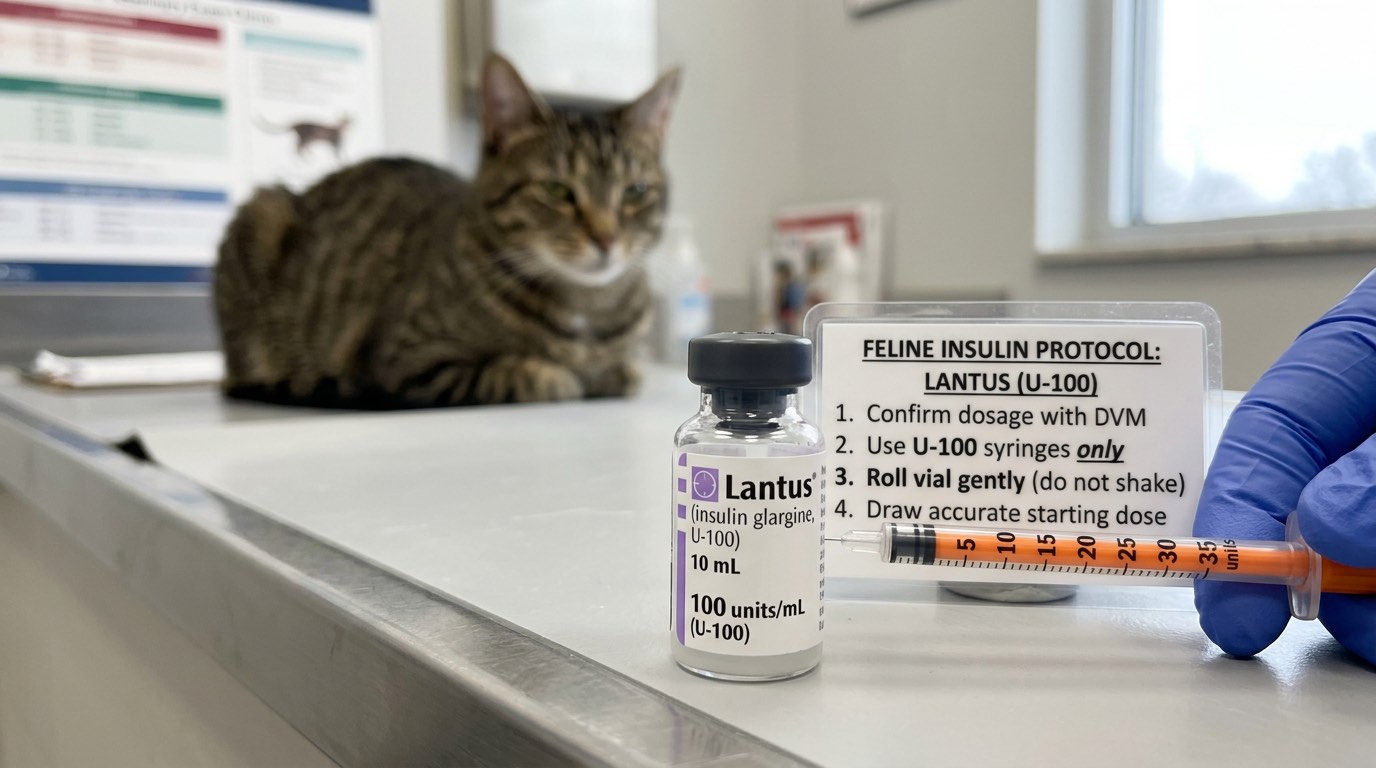
- Glargine U-100 (Lantus): 100 U/mL — standard formulation used in veterinary practice
- Glargine U-300 (Toujeo): 300 U/mL — much more concentrated, NOT recommended for cats (dosing imprecision risk)
- Use U-100 insulin syringes only with Lantus U-100
Glucose Monitoring and Dose Adjustment Schedule
Establishing a Monitoring Routine Consistent monitoring is the foundation of successful feline diabetes management. The tight regulation protocol requires more frequent glucose checks than conventional approaches but achieves remission in the majority of cats when followed consistently.
Home Monitoring — Equipment
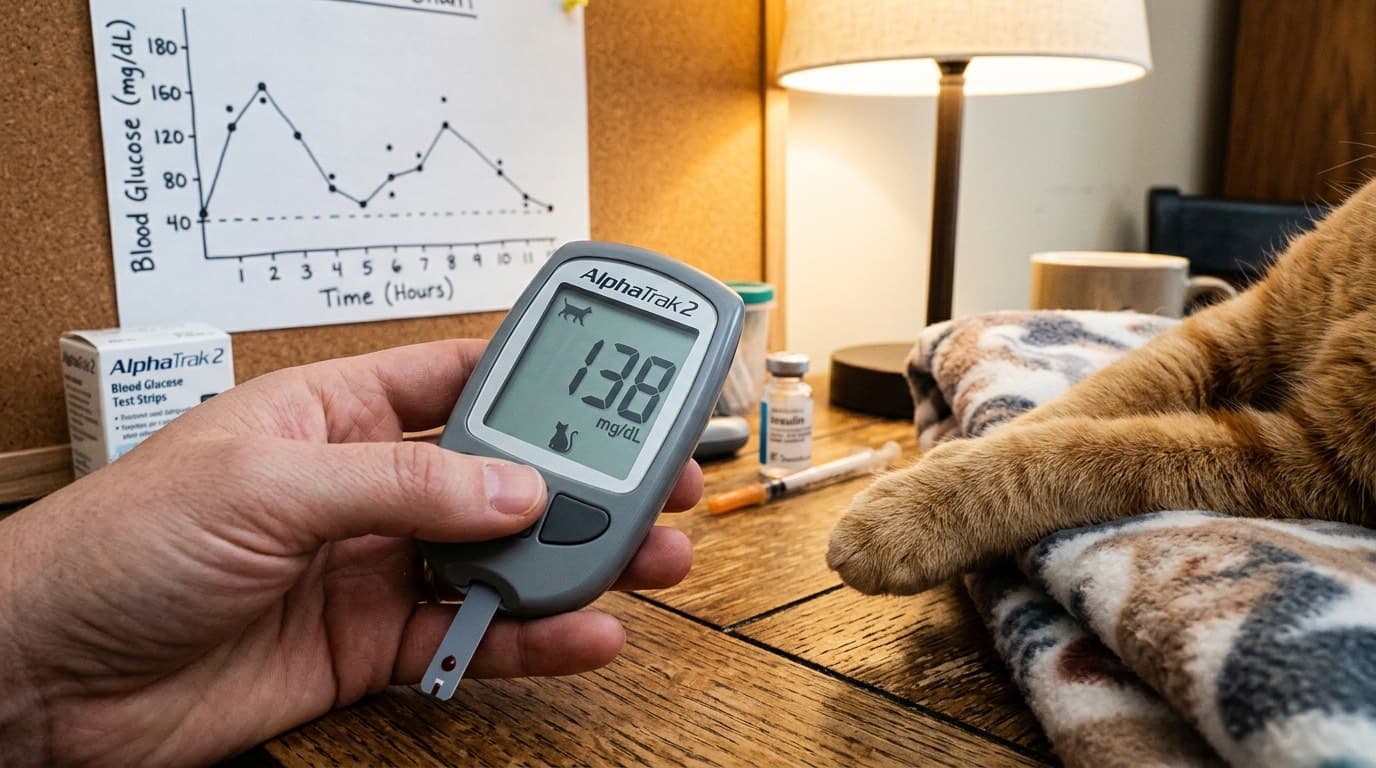
- AlphaTrak 2 glucometer (validated for cats; uses blood calibration for cats/dogs)
- Test strips: AlphaTrak strips only (do not use human glucose strips — values differ significantly)
- Lancet device with feline-specific lancing depth setting
- Ear margin vein (pinna) most common site; alternatively lip or paw pad
Glucose Curve — Initial Stabilization (Weeks 1-4)
| Day | Action |
|---|---|
| Day 0 (start) | Begin glargine 1–2 U BID, record pre-injection glucose |
| Days 1–7 | Check glucose before each injection |
| Week 1–2 recheck | In-clinic glucose curve (7-point: 0, 1, 2, 3, 4, 5, 6 hours post-injection) or spot checks |
| Every 2 weeks | Dose adjustment based on nadir glucose |
| Once stable | Monthly rechecks; continue home monitoring |
Dose Adjustment Rules
| Nadir Glucose | Action |
|---|---|
| >300 mg/dL | Increase dose by 0.5–1 U per injection |
| 150–300 mg/dL | No change |
| 80–150 mg/dL | Maintain current dose (at target) |
| <80 mg/dL | Decrease dose by 0.5 U; skip current injection |
| <65 mg/dL | Treat hypoglycemia; skip injection; recheck in 1–2 hours |
Maximum Dose Escalation Do not increase by more than 1 U per injection per adjustment. Most cats stabilize at 1–5 U BID. Cats requiring >7 U BID should be re-evaluated for concurrent disease (acromegaly, hypersomatotropism) before continuing dose escalation.
Concurrent Laboratory Monitoring
- Fructosamine: reflects average glucose over 1–2 weeks; useful when home curves are unreliable
- Serum chemistry + CBC every 3–6 months
Low-Carb Diet Protocol and Maximizing Remission Rates
Diet is the Second Pillar of Feline Diabetic Management The combination of glargine insulin + low-carbohydrate wet food diet achieves remission in 50–80% of newly diagnosed cats within 3–6 months. This is dramatically higher than rates achieved with intermediate-acting insulins or high-carbohydrate diets.
Dietary Goals
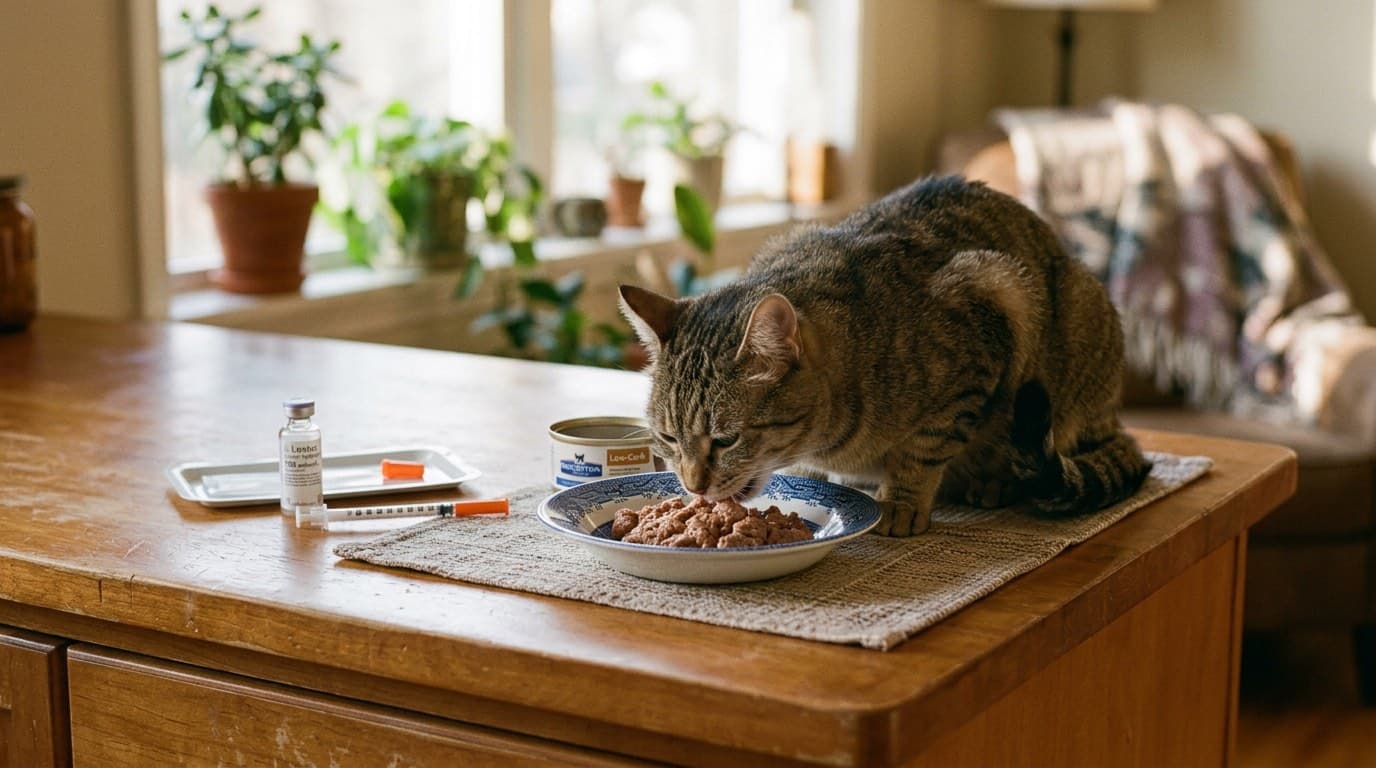
- Carbohydrate content: <10% of calories (ideally <5%)
- High protein content: >40% of calories
- Wet food only — dry kibble has higher carbohydrate content and lower moisture
Why Low-Carb Diet Matters Feline diabetes is predominantly type 2 — caused by insulin resistance and beta cell exhaustion from chronic high glucose (glucotoxicity). Reducing dietary carbohydrate load decreases post-prandial glucose spikes, reduces insulin demand, and allows exhausted beta cells to recover function during the period of exogenous insulin support.
Recommended Diet Options
- Many pate-style grain-free canned cat foods qualify
- Prescription diabetic diets: Hill's m/d, Purina DM, Royal Canin Diabetic DS 46 (wet formulations)
- Avoid dry kibble (typically 30–50% carbohydrates) and semi-moist foods
Feed-Inject Protocol
- Feed a small meal (1/4 of daily ration) immediately before each insulin injection
- This ensures the cat is eating before each dose — critical safety measure
- If a cat refuses to eat: skip the injection, do not adjust dose
Hypoglycemia Recognition and Emergency Response
Signs of hypoglycemia in cats:
- Mild: lethargy, weakness, wobbly gait
- Moderate: ataxia, disorientation, vocalizing
- Severe: seizures, coma, hypothermia
Emergency Treatment of Hypoglycemia
- Conscious cat: apply Karo corn syrup or honey to gums (1/4 teaspoon), wait 10–15 min, recheck glucose
- Unconscious cat: 50% dextrose 1 mL/kg IV diluted 1:4 in saline, or rubbing corn syrup on gums if IV access unavailable
- After stabilization: small meal, skip next insulin dose, recheck glucose in 2–4 hours
Frequently Asked Questions
Why do we start all cats at 1-2 units regardless of their blood glucose level?
Cats are uniquely sensitive to insulin and have unpredictable insulin requirements that do not correlate well with initial glucose values. Starting too high causes hypoglycemia and Somogyi rebound. The conservative 1–2 U BID start is evidence-based — subsequent dose adjustments are made based on observed glucose response, not initial glucose level.
How do I know if my cat is going into diabetic remission?
Signs of approaching remission include: consistently low pre-injection glucose readings (<200 mg/dL), declining insulin requirements over weeks, resolution of polyuria/polydipsia (owner reports normal thirst and urination), and weight normalization. Formal remission is defined as maintaining glucose <200 mg/dL without insulin for at least 4 weeks.
What is the difference between Lantus and Toujeo for cats?
Lantus (glargine U-100) is the recommended formulation for cats. Toujeo is glargine U-300, three times more concentrated. At the small volumes used in cats (0.5–5 units), U-300 increases the risk of dosing errors. Always use U-100 glargine (Lantus) with U-100 insulin syringes for cats.
Can I use Basaglar instead of Lantus for my cat?
Basaglar is a biosimilar to Lantus (same glargine U-100 concentration) and is generally considered interchangeable. Some veterinary internists prefer Lantus (original glargine) due to more extensive feline-specific clinical data, but Basaglar is a reasonable cost-effective alternative for clients who cannot afford Lantus.
How long does an open vial of Lantus last for a cat?
An open vial of Lantus (glargine U-100) should be used within 28–30 days when stored at room temperature (up to 25°C/77°F) or up to the expiration date when refrigerated. The small doses used in cats mean a 10 mL vial may last for months at 1–2 U BID — rotating to a new vial every 28 days is recommended regardless of remaining volume.
References
- Roomp K, Rand J. "Intensive blood glucose control is safe and effective in diabetic cats using home monitoring and treatment with glargine." J Feline Med Surg. 2009;11(8):668-682.
- Rand JS, et al. "Normalisation of blood glucose concentration in diabetic cats when treated with glargine." J Feline Med Surg. 2012;14(2):108-117.
- Fleeman LM, Rand JS. "Management of diabetes mellitus in cats." Vet Clin North Am Small Anim Pract. 2001;31(5):1057-1084.