Quick Answer
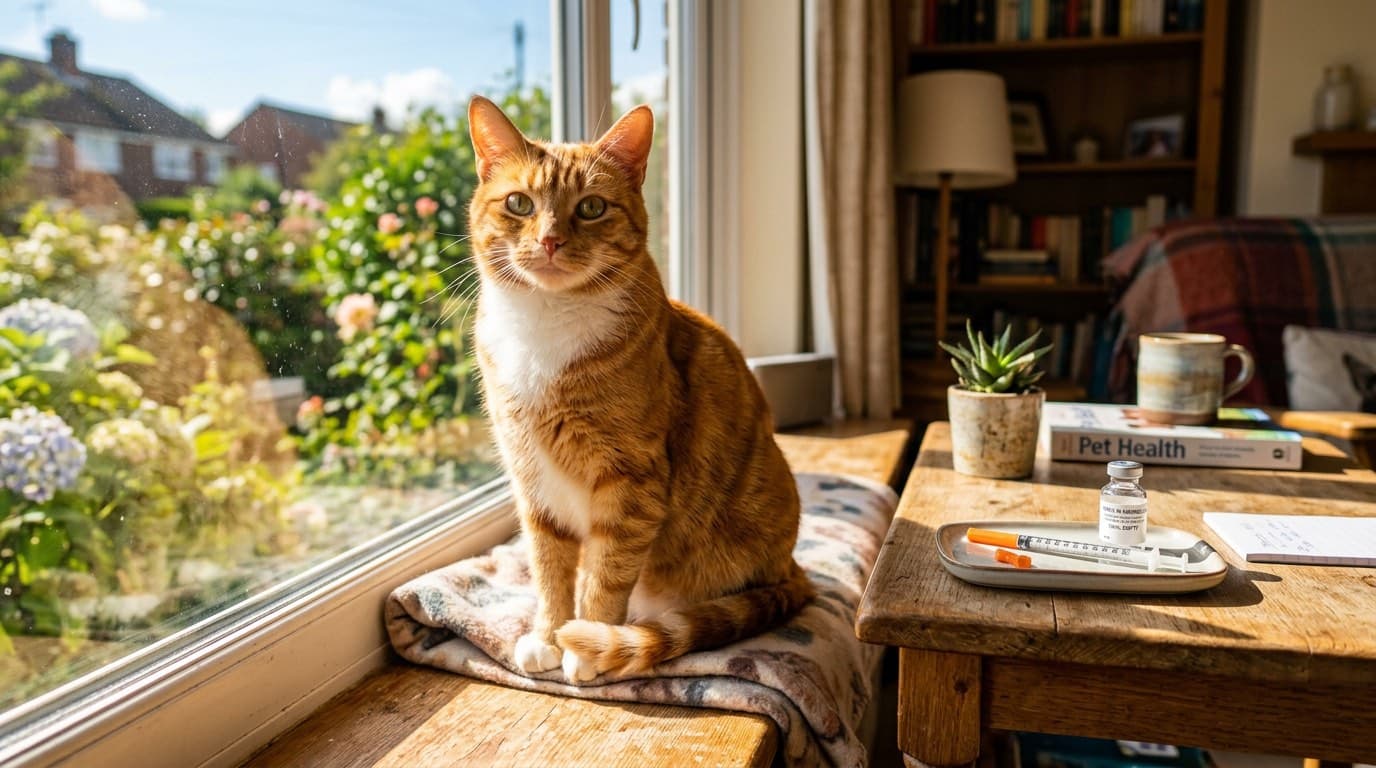
Diabetic remission occurs in 50-80% of cats treated aggressively with insulin glargine and a low-carbohydrate diet. This guide covers the criteria for initiating the weaning protocol, step-by-step dose reduction, monitoring for confirmed remission, long-term surveillance, and managing the 30% relapse risk.
Key Takeaways
- ✓Remission is achievable in 50–80% of cats using glargine + tight regulation + low-carb diet within 6 months.
- ✓Begin weaning when pre-injection glucose is consistently <200 mg/dL AND nadir is consistently <100 mg/dL.
- ✓Reduce insulin by 0.5 U per injection each week — never abruptly discontinue.
- ✓Official remission confirmed: glucose <200 mg/dL without insulin for 4 consecutive weeks.
- ✓Approximately 30% of cats relapse within 1 year — monitor fructosamine or glucose every 3–6 months lifelong.
- ✓Low-carbohydrate wet food diet must be maintained indefinitely — returning to dry kibble is the leading cause of relapse.
Criteria for Initiating the Remission Weaning Protocol
What Is Diabetic Remission? Diabetic remission (also called diabetic clinical remission or transitional diabetes) occurs when a previously diabetic cat maintains normoglycemia without exogenous insulin for at least 4 consecutive weeks. The cat's pancreatic beta cells have recovered sufficient function to manage glucose independently.
Why Does Remission Happen? Feline diabetes is predominantly type 2 — a combination of insulin resistance and reversible beta cell dysfunction caused by glucotoxicity (chronic high glucose damaging beta cells). When glucose is normalized through tight regulation with glargine + low-carb diet, glucotoxicity is relieved, insulin resistance decreases, and beta cell function recovers in many cats.
Remission Rates by Protocol
| Treatment Protocol | Remission Rate |
|---|---|
| Glargine + low-carb diet + tight regulation | 50–80% within 6 months |
| Glargine + standard diet + loose regulation | 20–35% |
| PZI or NPH insulin + standard diet | 10–25% |
| No insulin (diet alone) | <5% |
Prerequisites for Starting Weaning All of the following criteria must be met:
- Pre-injection glucose consistently <200 mg/dL on at least 3–4 consecutive checks
- Nadir glucose consistently <100 mg/dL (or glucose not dropping significantly after injection)
- Owner reports resolution of polyuria and polydipsia (normal thirst and urination)
- Cat is maintaining or gaining weight appropriately
- No concurrent illness (infection, pancreatitis, acromegaly) driving insulin resistance
Timing Factor The probability of achieving remission is highest in the first 3–6 months after diagnosis. After 6 months, the likelihood decreases as beta cell exhaustion becomes more permanent. Early aggressive treatment is therefore critical — do not delay initiating the tight regulation protocol.
Step-by-Step Insulin Weaning Protocol
The Weaning Protocol Insulin weaning must be gradual to allow real-time monitoring and safe dose reduction. Abrupt discontinuation risks a rapid glucose rebound and delays recognition of true remission vs transient normoglycemia.
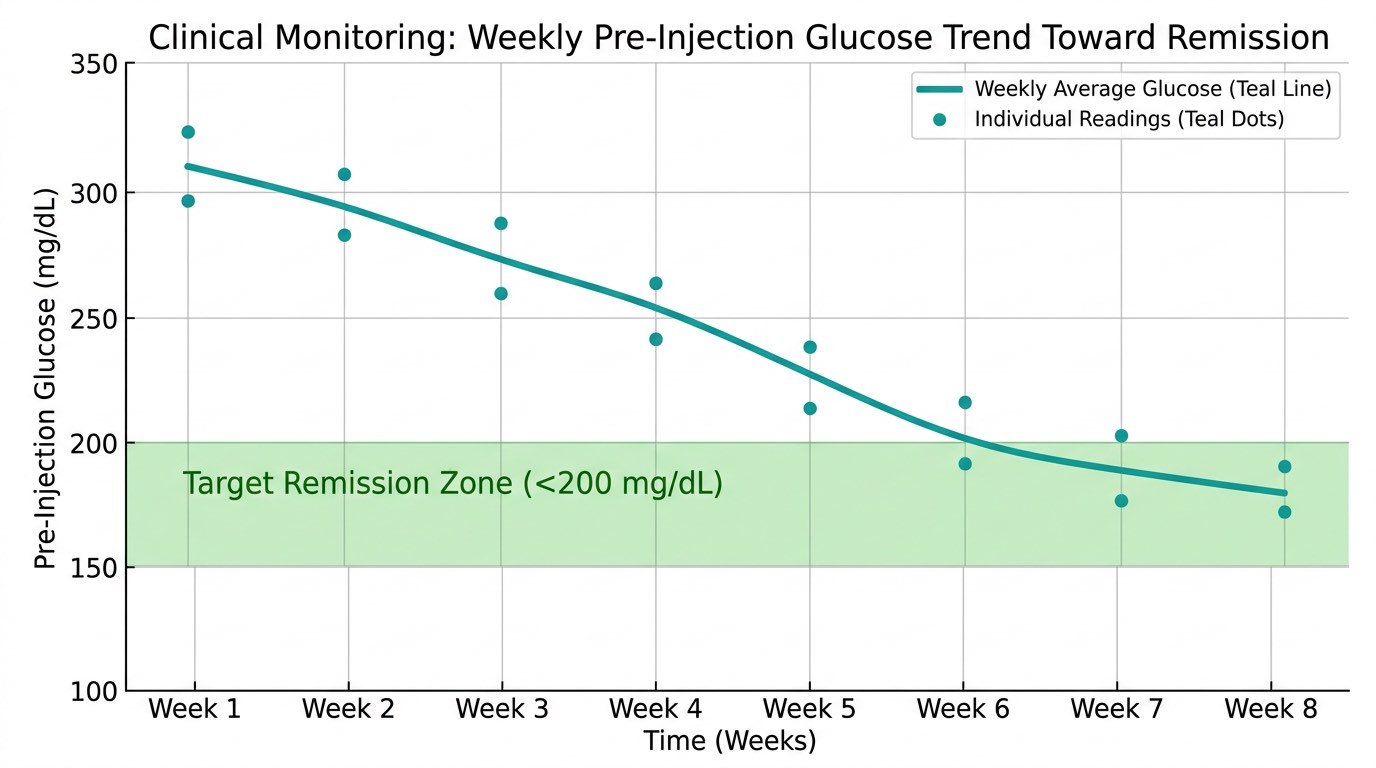
Weaning Trigger Begin weaning when pre-injection glucose is consistently <200 mg/dL AND nadir is consistently <100 mg/dL on 3–4 consecutive checks over at least 1 week.
Step-by-Step Dose Reduction
| Step | Action | Frequency | Threshold to Proceed |
|---|---|---|---|
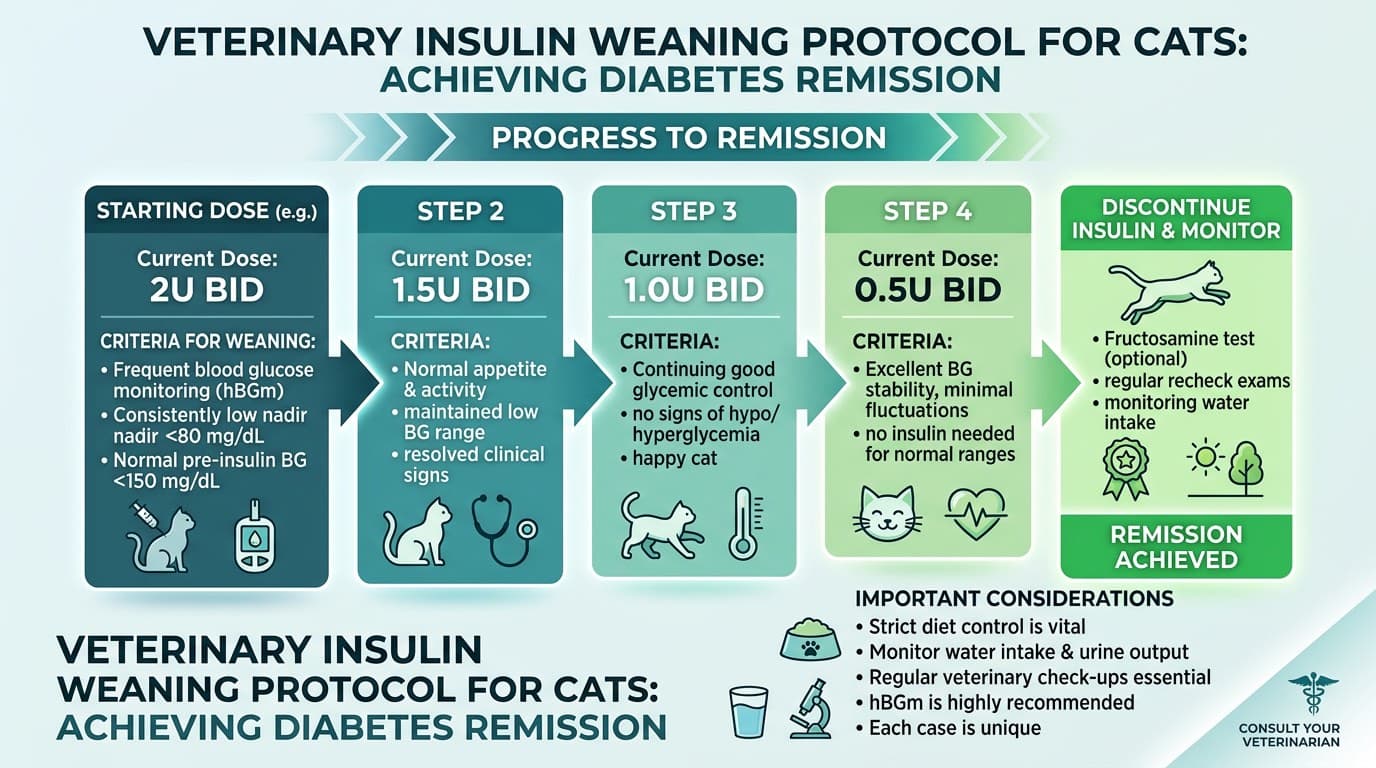
| 1 | Reduce each injection by 0.5 U | Wait 1 week | Pre-injection glucose remains <200 mg/dL |
| 2 | Continue reducing by 0.5 U per week | Week by week | Pre-injection glucose remains <200 mg/dL |
| 3 | When at 0.5 U BID | Switch to 0.5 U SID | Pre-injection glucose <150 mg/dL |
| 4 | At 0.5 U SID | Consider discontinuation | Pre-injection glucose consistently <150 mg/dL |
| 5 | Discontinue insulin | Monitor closely | Glucose remains <200 mg/dL without insulin |
Hold Points — When to Stop Weaning
- Return to previous dose
- Recheck glucose in 3–5 days
- Consider whether a concurrent illness is driving hyperglycemia
- Some cats stabilize at a low maintenance dose and do not fully discontinue
Confirming Remission
- Day 3 and Day 7 post-discontinuation
- Day 14 and Day 28 post-discontinuation
- Fructosamine at 4 weeks (target <340 micromol/L confirms remission)
Official remission = glucose <200 mg/dL without insulin for at least 4 consecutive weeks.
Continue Low-Carb Diet in Remission The low-carbohydrate wet food diet should be maintained indefinitely in cats that achieve remission. Returning to high-carbohydrate dry food significantly increases relapse risk. The diet is a lifelong management strategy, not just a temporary treatment.
Long-Term Monitoring and Managing 30% Relapse Risk
After Remission — What Happens Next? Approximately 30% of cats that achieve diabetic remission will relapse within 1 year. Some cats maintain remission indefinitely; others cycle through remission and relapse. Long-term monitoring is essential because early relapse detection allows prompt re-initiation of insulin before glucose rises to toxic levels.
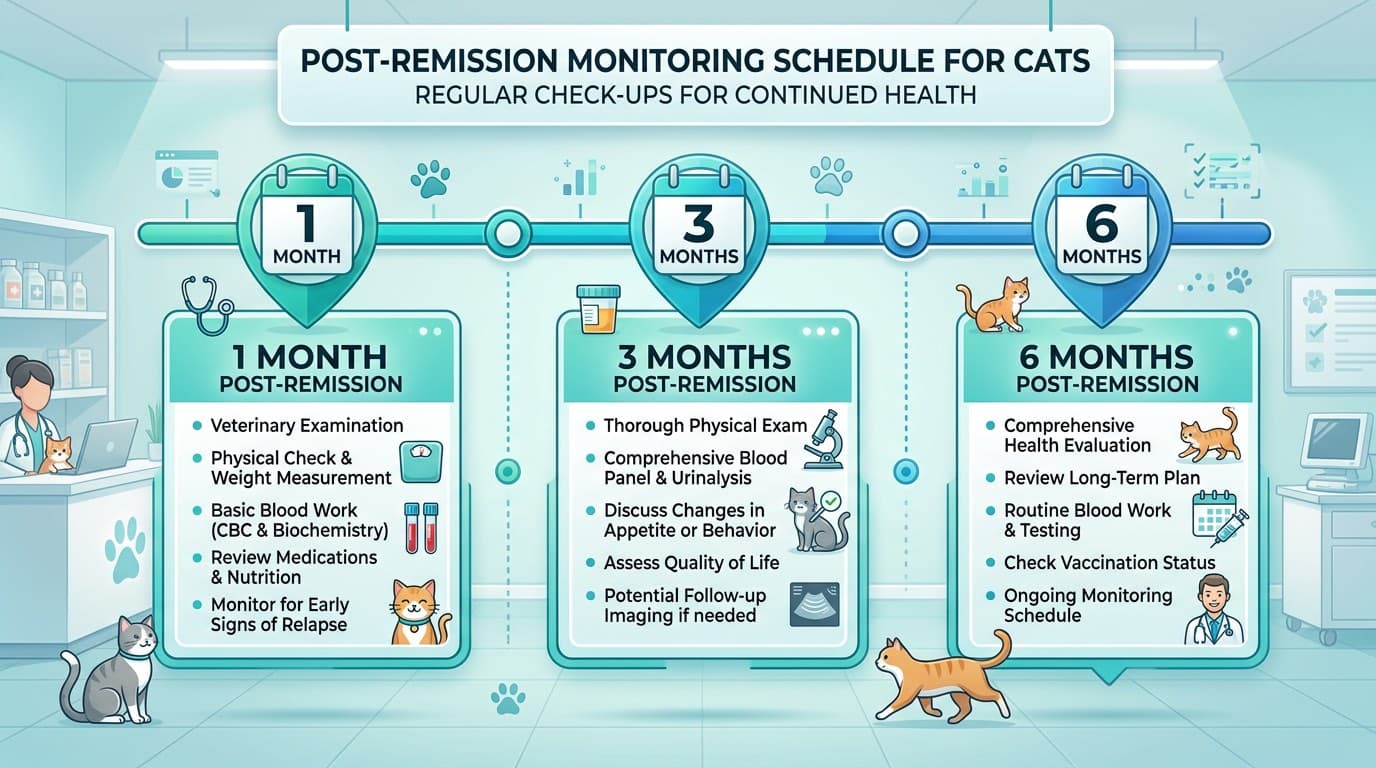
Surveillance Schedule Post-Remission
| Timepoint | Testing |
|---|---|
| 1 month post-remission | Glucose + fructosamine |
| 3 months | Glucose + fructosamine |
| 6 months | Full chemistry panel + glucose |
| Every 3–6 months (ongoing) | Fructosamine or spot glucose |
| At any time: PU/PD symptoms | Immediate glucose check |
Signs of Relapse
- Return of polyuria and polydipsia (increased thirst and urination)
- Increased appetite (polyphagia)
- Weight loss
- Decreased activity or lethargy
- Plantigrade posture (walking on hocks — peripheral neuropathy sign)
Relapse Glucose Threshold Confirmed relapse: fasting glucose >250 mg/dL on two separate measurements, or glucose >250 mg/dL with clinical signs.
Re-Initiating Insulin After Relapse
- Restart glargine at 1–2 U BID (return to the starting protocol)
- Recheck bloodwork to rule out new concurrent disease
- Re-emphasize low-carb diet compliance
- Discuss whether obesity, infections, or other insulin-resistance factors have recurred
- Remission is achievable again in a significant proportion of relapsed cats
Concurrent Diseases That Prevent or Delay Remission
| Disease | Effect on Diabetes |
|---|---|
| Acromegaly (hypersomatotropism) | Major insulin resistance; rare but over-represented in diabetic cats |
| Hyperthyroidism | Increases insulin degradation; treat before or concurrent with diabetes |
| Pancreatitis | Destroys beta cells; concurrent pancreatitis lowers remission rates |
| Obesity | Insulin resistance; gradual weight loss toward ideal BCS improves remission |
| Chronic steroid administration | Iatrogenic insulin resistance; discontinue if possible |
Acromegaly Screening
- IGF-1 >1000 ng/mL supports diagnosis
- MRI of pituitary gland for confirmation
- Treatment: stereotactic radiation therapy; conventional radiation; hypophysectomy at specialist centers
Frequently Asked Questions
How long does it take for a cat to achieve diabetic remission?
Most cats that achieve remission do so within 1–6 months of starting tight regulation with glargine and a low-carbohydrate diet. The highest remission rates are seen in cats treated aggressively from the time of diagnosis. After 6 months without remission, the probability decreases as beta cell exhaustion becomes more permanent.
What is the relapse rate after diabetic remission in cats?
Approximately 30% of cats relapse within 1 year of achieving remission. Regular monitoring (glucose or fructosamine every 3–6 months) and maintaining a low-carbohydrate diet are the most effective strategies to detect early relapse and prevent a return to uncontrolled diabetes.
Can my cat go back to eating dry food after remission?
No. Dry kibble is typically 30–50% carbohydrates, which significantly increases the risk of relapse after diabetic remission. The low-carbohydrate wet food diet should be maintained lifelong in cats that achieve remission. This is one of the most important factors in preventing relapse.
My cat's glucose has been <150 mg/dL for 2 weeks. Should I stop insulin now?
Not immediately. Use the step-down weaning protocol: reduce dose by 0.5 U increments weekly, monitoring glucose at each step. Abrupt discontinuation risks missing cats that need a low maintenance dose. After reaching 0.5 U SID with consistently low glucose, discontinuation is appropriate with close monitoring.
What causes relapse after diabetic remission?
Common causes of relapse include: return to high-carbohydrate diet (especially dry kibble), weight gain, concurrent infections or inflammatory disease, steroid administration, undetected acromegaly, and stress. A thorough workup for concurrent disease is recommended when a cat relapses, especially if insulin requirements are markedly higher than during the initial treatment period.
References
- Roomp K, Rand J. "Intensive blood glucose control is safe and effective in diabetic cats using home monitoring and treatment with glargine." J Feline Med Surg. 2009;11(8):668-682.
- Gottlieb S, Rand J. "Managing diabetes in cats." Vet Clin North Am Small Anim Pract. 2013;43(2):407-420.
- Reusch CE. "Feline diabetes mellitus." In: Ettinger SJ, Feldman EC, eds. Textbook of Veterinary Internal Medicine. 8th ed. Saunders; 2017.