Quick Answer
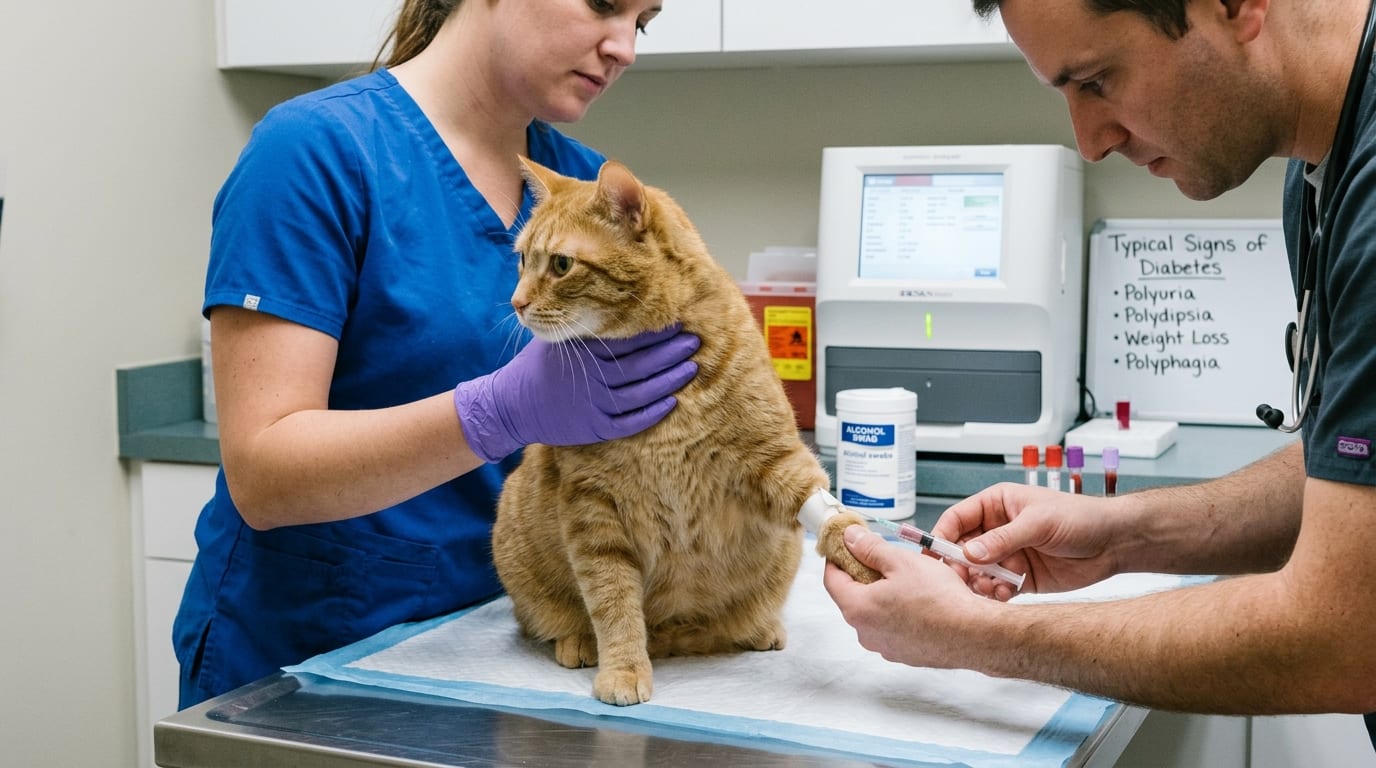
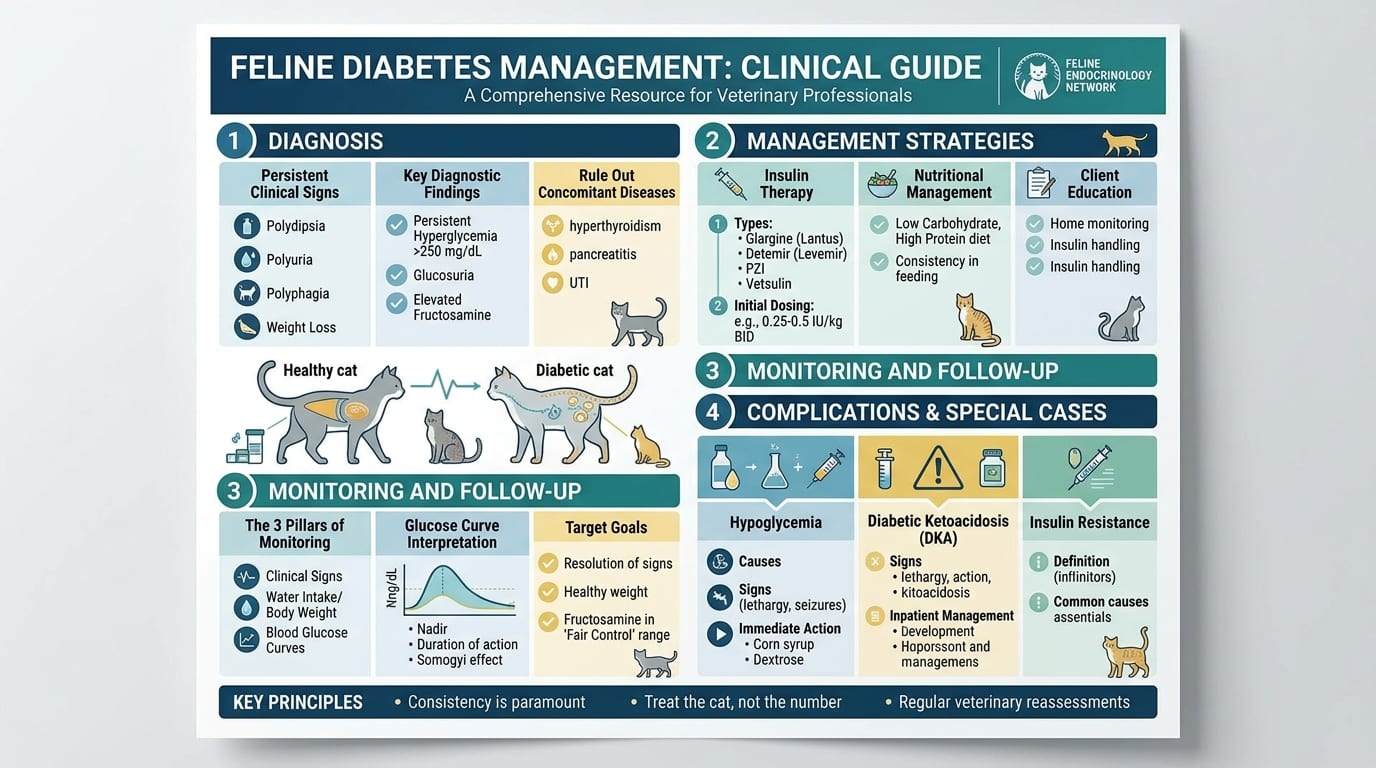
Successful feline diabetes management depends on consistent home monitoring, glucose curve interpretation, dietary management, and client education. This guide covers AlphaTrak technique, 7-point glucose curves, nadir glucose targets, hypoglycemia emergency response, and signs of approaching diabetic remission.
Key Takeaways
- ✓AlphaTrak 2 is the only validated glucometer for cats — human meters underread by 10–30%.
- ✓Target glucose: pre-injection 150–300 mg/dL; nadir (6h post-injection) 80–150 mg/dL.
- ✓Conduct 7-point glucose curves during dose adjustments; stable patients may use daily spot checks.
- ✓Hypoglycemia emergency: corn syrup or honey to gums for conscious cats; IV dextrose for unconscious.
- ✓Never give insulin if the cat refuses to eat — skip the dose and contact the veterinarian.
- ✓Home glucose curves are more accurate than in-clinic curves due to stress hyperglycemia in the hospital.
Home Monitoring with AlphaTrak: Equipment and Technique
Home blood glucose monitoring is the cornerstone of successful feline diabetes management. It eliminates the stress hyperglycemia that occurs with in-clinic glucose measurements, provides real-time data for dose adjustments, and allows early detection of hypoglycemia before clinical signs appear.
Why AlphaTrak Instead of Human Glucometers? Human glucometers are calibrated for human blood glucose (plasma calibration). Cat and dog blood has a higher red blood cell glucose concentration relative to plasma. Using a human meter with cat blood typically reads 10–30% lower than the true value. AlphaTrak is calibrated specifically for cats and dogs.
AlphaTrak Setup
- AlphaTrak 2 glucometer (current generation)
- AlphaTrak test strips (coded for cats [code 7] or dogs [code 10] — use cat code for cats)
- Lancet device (Microlet 2 or similar) with lancing depth set to minimum
- Small gauge lancet (28–33G)
Blood Sampling Technique *Preferred site: Ear margin vein (pinna)* 1. Warm the ear with warm cloth or your hands for 30–60 seconds (increases blood flow) 2. Apply petroleum jelly (Vaseline) lightly to the sampling area (helps blood bead up) 3. Gently prick the ear margin vein on the medial (inner) edge with the lancet 4. Allow one small drop of blood to form — do not squeeze 5. Touch the test strip edge to the blood drop (capillary action draws blood in) 6. Read result within 10 seconds
*Alternative sites:* Lip margin, paw pad (less preferred due to sampling difficulty)
Frequency of Testing
| Phase | Testing Frequency |
|---|---|
| Initial stabilization (weeks 1–4) | Before every injection (2x daily) |
| Stable, well-regulated | Before AM injection daily |
| Suspected hypoglycemia | Immediately on symptoms |
| Glucose curve day | Every 1–2 hours for 7 hours |
Recording Data Maintain a logbook (paper or app) recording: date, time, pre-injection glucose, insulin dose given, food intake, and any symptoms. Share this log at every recheck appointment.
Glucose Curves: 7-Point Protocol and Interpreting Nadir
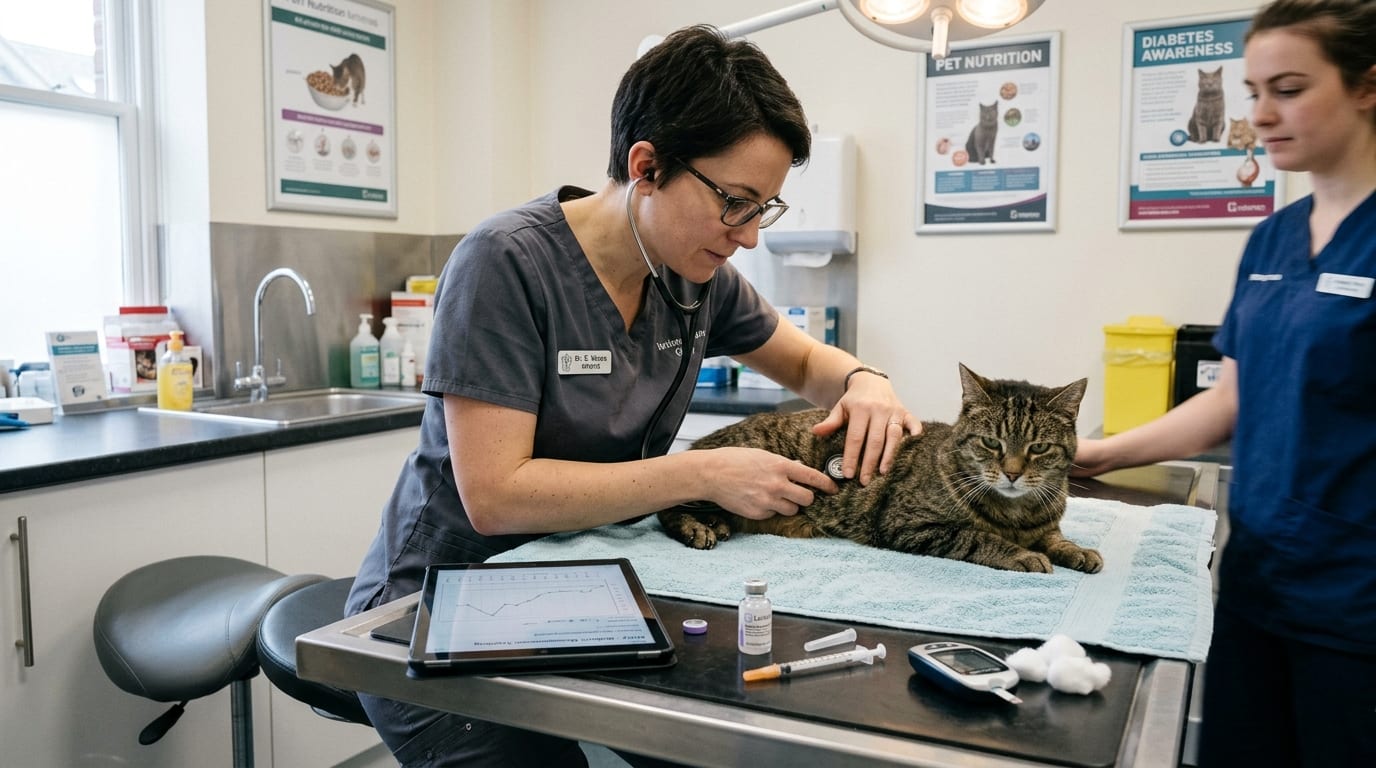
What is a Glucose Curve? A glucose curve is a series of blood glucose measurements taken over the duration of insulin action to determine the nadir (lowest glucose point) and the duration of insulin effectiveness. It is the gold standard for assessing insulin dose adequacy.
7-Point Glucose Curve Protocol
| Time | Measurement |
|---|---|
| 0 hours (pre-injection) | Pre-dose glucose; give insulin + small meal |
| 1 hour post-injection | Monitor for rapid drop |
| 2 hours post-injection | Typically early decline |
| 3 hours post-injection | Approaching nadir |
| 4 hours post-injection | Often at or near nadir |
| 5 hours post-injection | Nadir or beginning to rise |
| 6 hours post-injection | Confirming return toward baseline |
Note: some cats show nadir as late as 8–10 hours. If glucose is still declining at the 6-hour point, extend monitoring.
Interpreting the Glucose Curve
| Nadir Glucose | Interpretation | Action |
|---|---|---|
| >300 mg/dL | Underdosing; inadequate control | Increase dose by 0.5–1 U |
| 150–300 mg/dL | Adequate but aim for better | Minor increase or maintain |
| 80–150 mg/dL | Target range — optimal | Maintain current dose |
| 65–80 mg/dL | Borderline low | Decrease dose by 0.5 U |
| <65 mg/dL | Hypoglycemia | Decrease dose significantly; treat if symptomatic |
Spot Checks vs Full Curves
- Pre-AM injection glucose: reflects overnight fasting glucose
- Nadir spot check (3–6 hours post-injection): once weekly in stable patients
Fructosamine as Curve Alternative Serum fructosamine provides an average glucose level over the preceding 1–2 weeks — useful when curves are unavailable or unreliable (due to stress or owner difficulty). Target: 340–450 micromol/L for controlled feline diabetes.
In-Clinic vs Home Glucose Curves Home curves are often more accurate than in-clinic curves. Stress in the clinic causes cortisol release, which elevates glucose — this can make a well-controlled cat appear poorly controlled. Trained owners performing home curves provide more reliable data for dose adjustments.
Hypoglycemia Emergency Response and Client Education
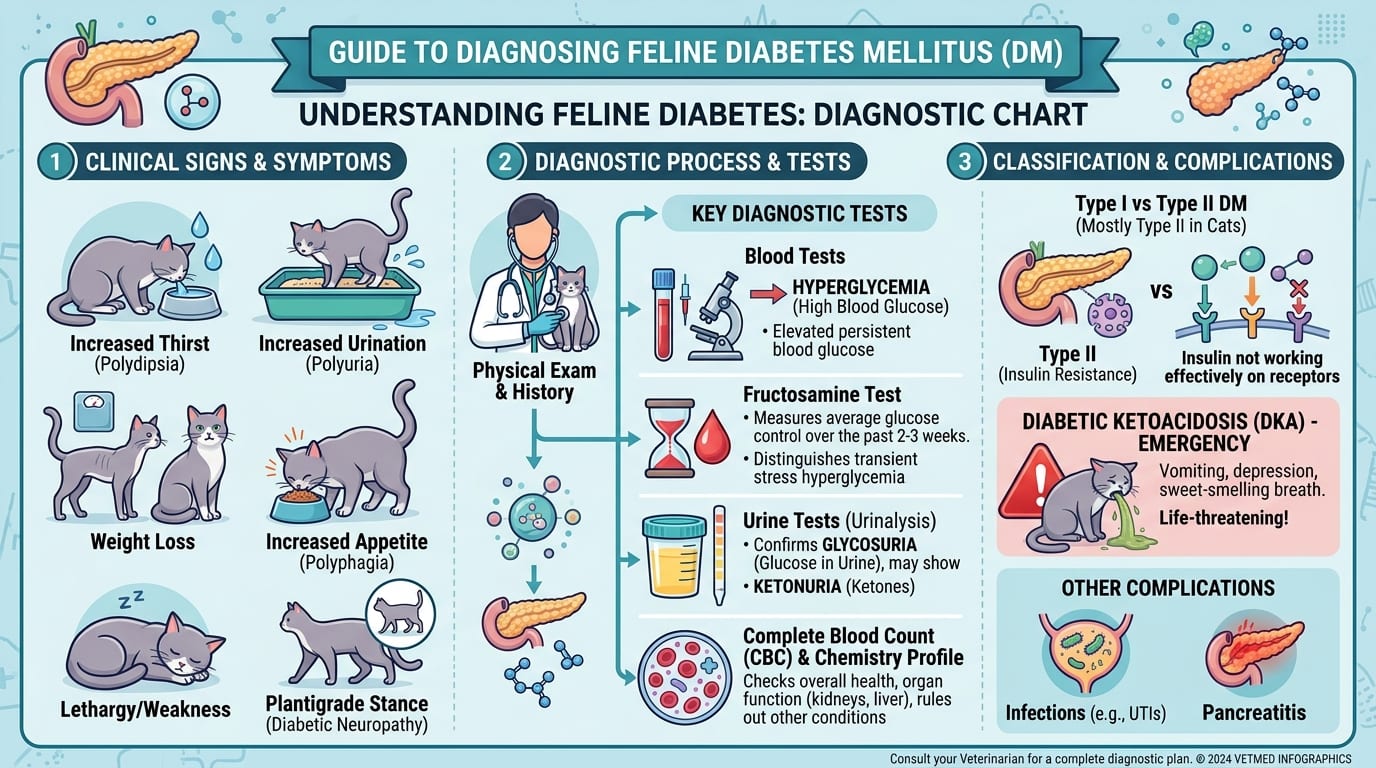
Hypoglycemia — The Most Serious Complication Hypoglycemia (blood glucose <65 mg/dL) is a medical emergency in diabetic cats. Severe hypoglycemia can cause brain damage and death within minutes if untreated. Owner education on recognition and emergency response is mandatory before initiating insulin therapy.
Recognizing Hypoglycemia
| Severity | Signs |
|---|---|
| Mild | Unusual quietness, reduced appetite, slight weakness |
| Moderate | Ataxia, wobbly gait, disorientation, vocalization, tremors |
| Severe | Seizures, coma, hypothermia, unresponsive |
Emergency Treatment at Home
*Conscious Cat (can swallow):*
- Apply 1 teaspoon of Karo light corn syrup, honey, or maple syrup to the gums
- Alternative: glucose gel (Glutose 15) if available
- Wait 5–10 minutes; recheck glucose
- Repeat if still symptomatic and glucose <80 mg/dL
- Offer small meal once glucose rises and cat is alert
- Skip next insulin injection; contact veterinarian
*Unconscious Cat:*
- Do NOT attempt to give oral glucose to an unconscious cat (aspiration risk)
- Rub corn syrup on gums and transport immediately to emergency clinic
- IV 50% dextrose diluted 1:4 in saline: 1 mL/kg slowly IV
- Monitor glucose every 15 minutes until stable
Prevention of Hypoglycemia
- Always offer food before each insulin injection
- If the cat refuses to eat: do NOT give insulin; contact veterinarian
- Maintain pre-injection glucose checks before every dose during initial stabilization
- Know the cat's typical glucose range before adjusting doses
Dietary Management — Practical Client Guide
- Transition to high-protein, low-carbohydrate wet food before or at the time of insulin initiation
- Feed the same amount at the same time each injection cycle
- Avoid grazing (free choice dry food) — unpredictable glucose fluctuations
- Recommended target: carbohydrates <10% of calories, protein >40%
- Weight management: obesity worsens insulin resistance — gradual weight loss to ideal BCS (3–4/5) improves glucose control
Remission Monitoring
- Pre-injection glucose consistently <200 mg/dL without dose increases
- Nadir glucose consistently <100 mg/dL
- Owner reports resolved polyuria and polydipsia
- Cat appears clinically well, maintaining or gaining weight
When pre-injection glucose is consistently <200 mg/dL, begin weaning protocol (see diabetic-remission-cats article).
Frequently Asked Questions
How often should I check my diabetic cat's blood glucose at home?
During initial stabilization (first 4 weeks), check glucose before every injection (twice daily). Once the cat is stable and well-regulated, a pre-morning injection check daily is sufficient, with weekly nadir spot checks. A full 7-point glucose curve should be done at every veterinary recheck appointment or whenever the dose is adjusted.
Can I use a human glucometer for my cat?
Not recommended. Human glucometers are calibrated for human blood and consistently read 10–30% lower than the true glucose value in cats. This inaccuracy can lead to dosing errors and missed hypoglycemia. AlphaTrak 2 is specifically validated for feline blood glucose measurement.
What should I do if my cat won't eat before an insulin injection?
Do not give insulin if your cat refuses to eat. Skip the injection, offer another food option (try different protein flavors), and check glucose. If glucose is >300 mg/dL and the cat still won't eat, contact your veterinarian. Recurring appetite loss warrants a clinical recheck — it may indicate hypoglycemia, other illness, or the cat is approaching remission.
How do I know if a glucose curve is reliable?
A home glucose curve is generally more reliable than an in-clinic curve. Look for a smooth arc-shaped pattern with a clear nadir. Erratic values may indicate sampling errors, inconsistent timing, or Somogyi rebound. At least 2–3 consistent curves are needed to make confident dose adjustments.
What does a pre-injection glucose of 450 mg/dL mean?
A pre-injection glucose of 450 mg/dL indicates poor glycemic control. This may suggest the current dose is too low, the cat's insulin requirement has increased (stress, concurrent infection, obesity), or the insulin has expired/been improperly stored. Review glucose curves, examine insulin technique and storage, and consider a dose increase if the nadir is also elevated.
References
- Roomp K, Rand J. "Evaluation of detemir in diabetic cats managed with a protocol for intensive blood glucose control." J Feline Med Surg. 2012;14(8):566-572.
- Behrend EN, et al. "Diagnosis of spontaneous hypoadrenocorticism and hypoglycemia in dogs and cats." J Vet Intern Med. 2013;27(1):1-15.
- Sparkes AH, et al. "ISFM consensus guidelines on the practical management of diabetes mellitus in cats." J Feline Med Surg. 2015;17(3):235-250.