Quick Answer
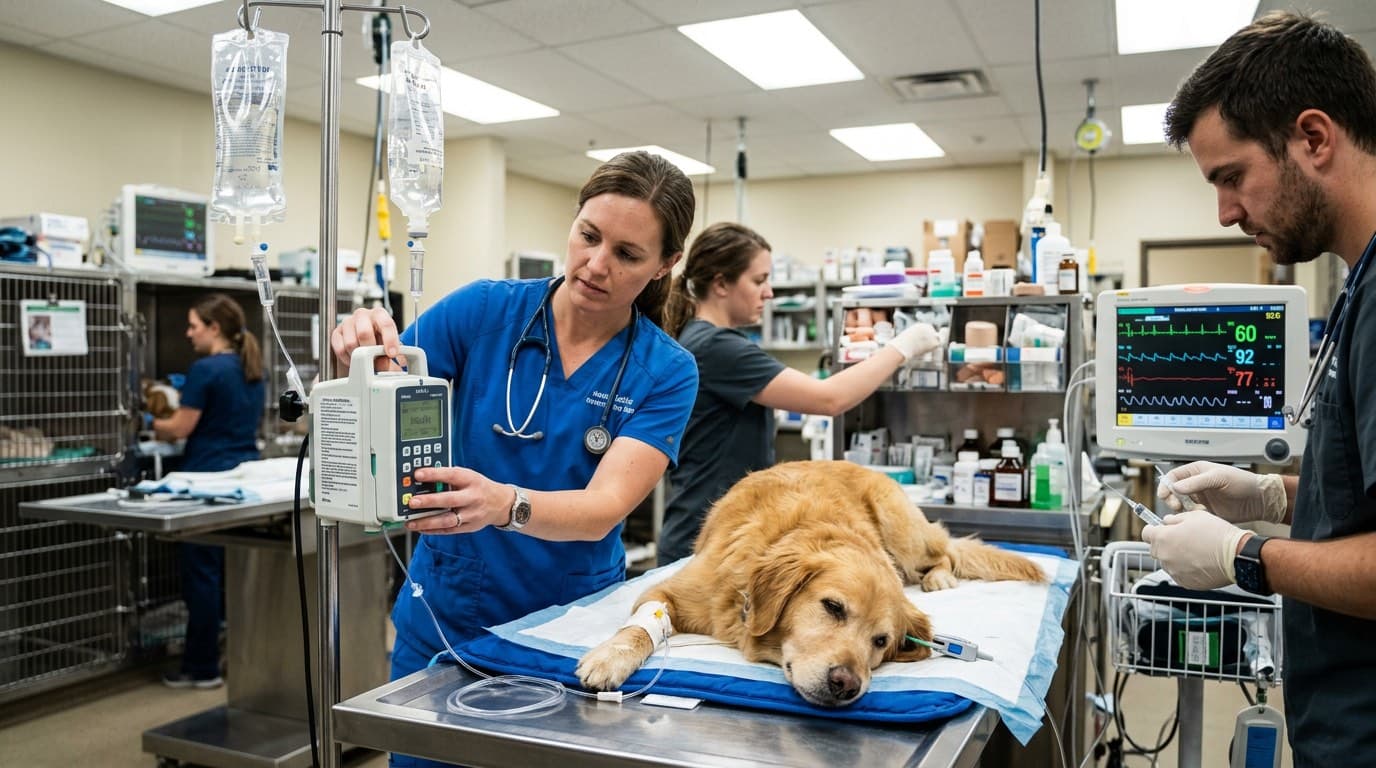
DKA is one of the most complex veterinary emergencies. This guide covers pathophysiology, clinical recognition, fluid resuscitation, regular insulin CRI protocol, potassium and phosphorus management, and transition to subcutaneous insulin.
Key Takeaways
- ✓Give IV fluids BEFORE insulin — K+ depletion means insulin given first can cause fatal hypokalemia
- ✓Regular insulin CRI: 2.2 U/kg in 250 mL 0.9% NaCl; discard first 50 mL (tubing adsorption)
- ✓Rate: 0.1 U/kg/hr (BG >600) down to 0.03 U/kg/hr (BG 150-250); add dextrose when BG <250
- ✓Target glucose drop of 50-75 mg/dL/hr — faster causes cerebral edema risk
- ✓Check K+ every 2-4 hours; phosphorus every 12 hours (severe hypophosphatemia causes hemolysis)
- ✓Transition to SQ insulin when ketones cleared, pH normalized, patient eating voluntarily; overlap CRI 1-2 hours
Pathophysiology and Clinical Recognition
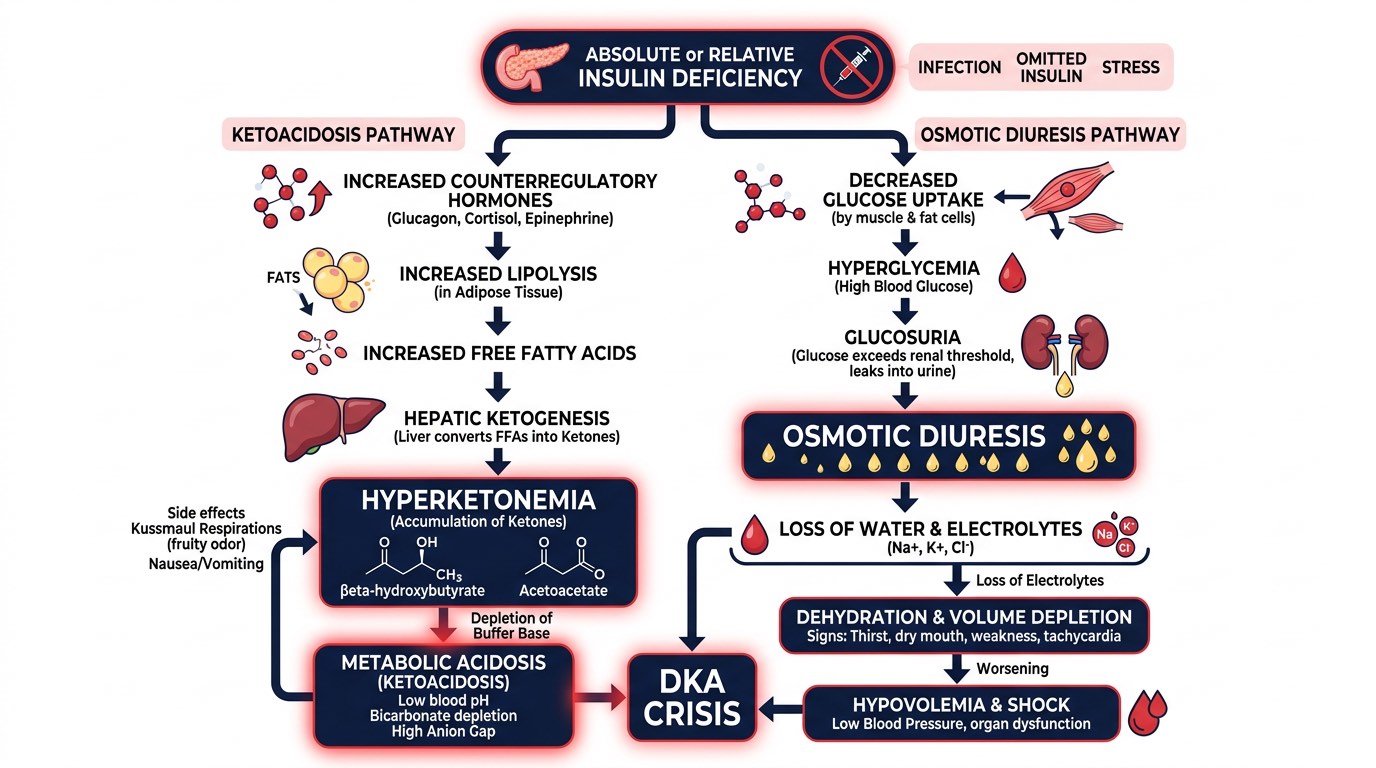
DKA occurs when severe insulin deficiency causes simultaneous hyperglycemia and ketoacidosis.
Pathophysiology 1. Insulin deficiency → glucose cannot enter cells → energy deficit 2. Counter-regulatory hormones rise (glucagon, cortisol, catecholamines) 3. Glucagon stimulates lipolysis → fatty acids → beta-oxidation → ketone bodies (acetoacetate, beta-hydroxybutyrate) 4. Ketones are organic acids → metabolic acidosis (pH ↓, HCO3⁻ ↓) 5. Hyperglycemia → osmotic diuresis → dehydration + electrolyte loss
Triggering Conditions
- Infection (UTI, pancreatitis, dental disease, pneumonia)
- Any significant systemic stress or illness
- Missed insulin doses, incorrect insulin storage (heat/freeze damage)
Clinical Signs
| Sign | Dogs | Cats |
|---|---|---|
| Vomiting | Common | Common |
| Anorexia / lethargy | Yes | Often profound |
| Dehydration | Moderate-severe | Moderate-severe |
| Acetone (fruity) breath | Variable | Variable |
| Tachycardia | Common | Bradycardia if hypokalemic |
| Obtunded/stuporous | Severe cases | Severe cases |
Diagnosis
- Blood glucose: typically >400 mg/dL
- Ketones: urine dipstick (acetoacetate); serum or point-of-care ketone meter
- Blood gas: pH <7.3, HCO3⁻ <15 mEq/L
- Electrolytes: K⁺, Na⁺, phosphorus — all typically depleted despite possibly normal initial serum levels (acidosis-driven transcellular shifts)
Fluid Resuscitation and Regular Insulin CRI Protocol
Phase 1: Fluid Resuscitation (BEFORE Insulin) Start fluids BEFORE insulin. Insulin will shift potassium intracellularly — giving insulin to a K⁺-depleted patient can cause fatal hypokalemia.
- Fluid choice: 0.9% NaCl preferred (provides needed Na⁺/Cl⁻ without K⁺ complexity)
- Rate: 60–90 mL/kg over first 1–4 hours (titrated to cardiovascular response)
- Replace deficit over 12–24 hours
- Add KCl to fluids based on measured K⁺ (target >3.5 mEq/L before insulin)
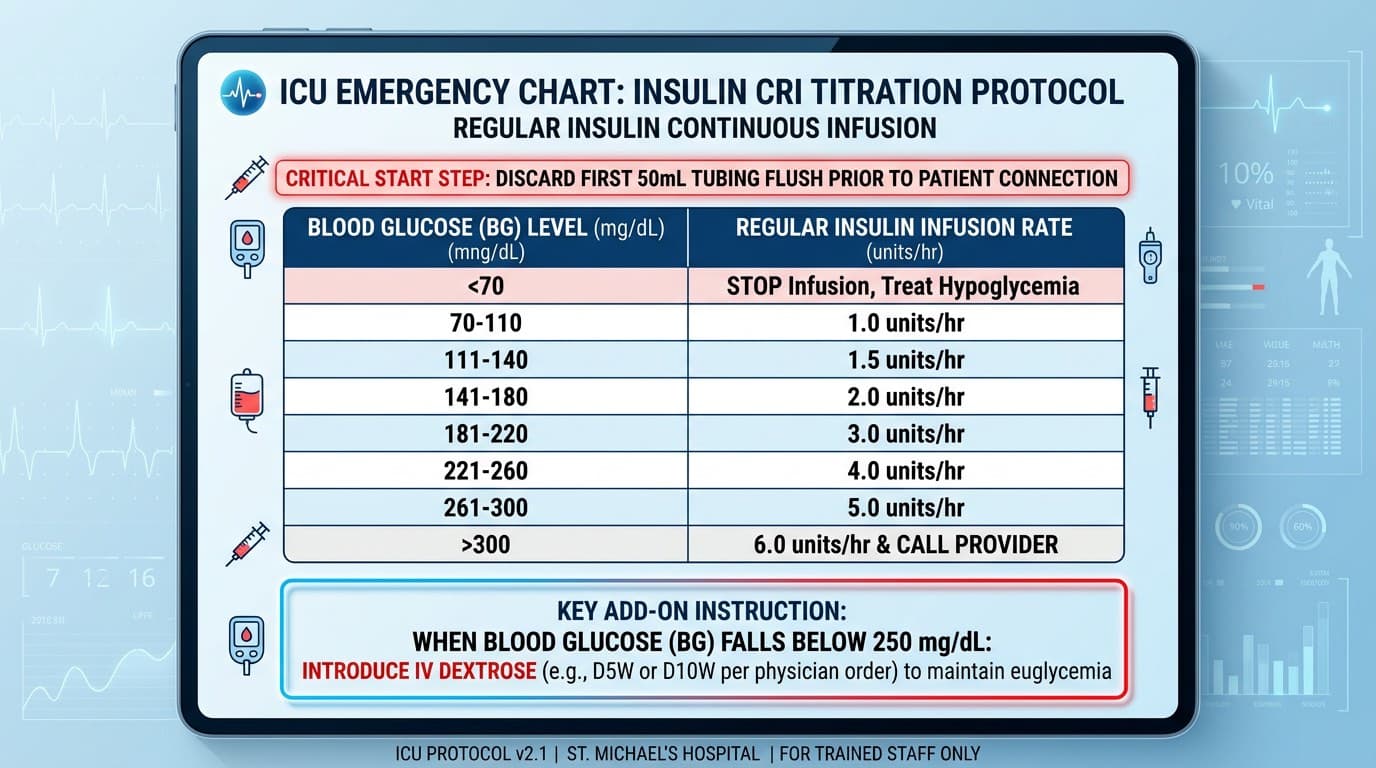
Phase 2: Regular Insulin CRI Protocol Regular (short-acting) insulin CRI provides titratable glycemic control.
Setup: 2.2 U/kg regular insulin in 250 mL 0.9% NaCl → discard first 50 mL (insulin adsorbs to plastic tubing)
| Blood Glucose | Insulin CRI Rate |
|---|---|
| >600 mg/dL | 0.1 U/kg/hr |
| 400–600 mg/dL | 0.07 U/kg/hr |
| 250–400 mg/dL | 0.05 U/kg/hr |
| 150–250 mg/dL | 0.03 U/kg/hr |
| <150 mg/dL | STOP insulin; add dextrose to fluids |
When glucose approaches 250 mg/dL: Add 2.5–5% dextrose to IV fluids to maintain insulin therapy for ketone clearance while preventing hypoglycemia.
Goal: Gradual glucose reduction of 50–75 mg/dL/hour. Faster drops cause cerebral edema risk.
Electrolyte Management, Monitoring and Transition to SQ Insulin
Critical Electrolyte Management
*Potassium (K⁺):*
- Check K⁺ every 2–4 hours during insulin CRI
- Never start insulin if K⁺ <3.0 mEq/L — correct first with IV KCl (max 0.5 mEq/kg/hr)
- Target K⁺ >3.5 mEq/L throughout insulin therapy
- Insulin therapy causes rapid K⁺ to fall — this is expected and must be managed proactively
*Phosphorus:*
- Hypophosphatemia develops 12–24 hours into treatment (intracellular shift with glucose)
- Severe hypophosphatemia (<1.5 mg/dL) causes hemolytic anemia, muscle weakness, respiratory failure
- Check phosphorus q12h; supplement with potassium phosphate (0.01–0.03 mmol/kg/hr IV) if <2.0 mg/dL
*Sodium:*
- Corrected Na⁺ for hyperglycemia: Add 1.6 mEq/L Na⁺ for every 100 mg/dL glucose above 100
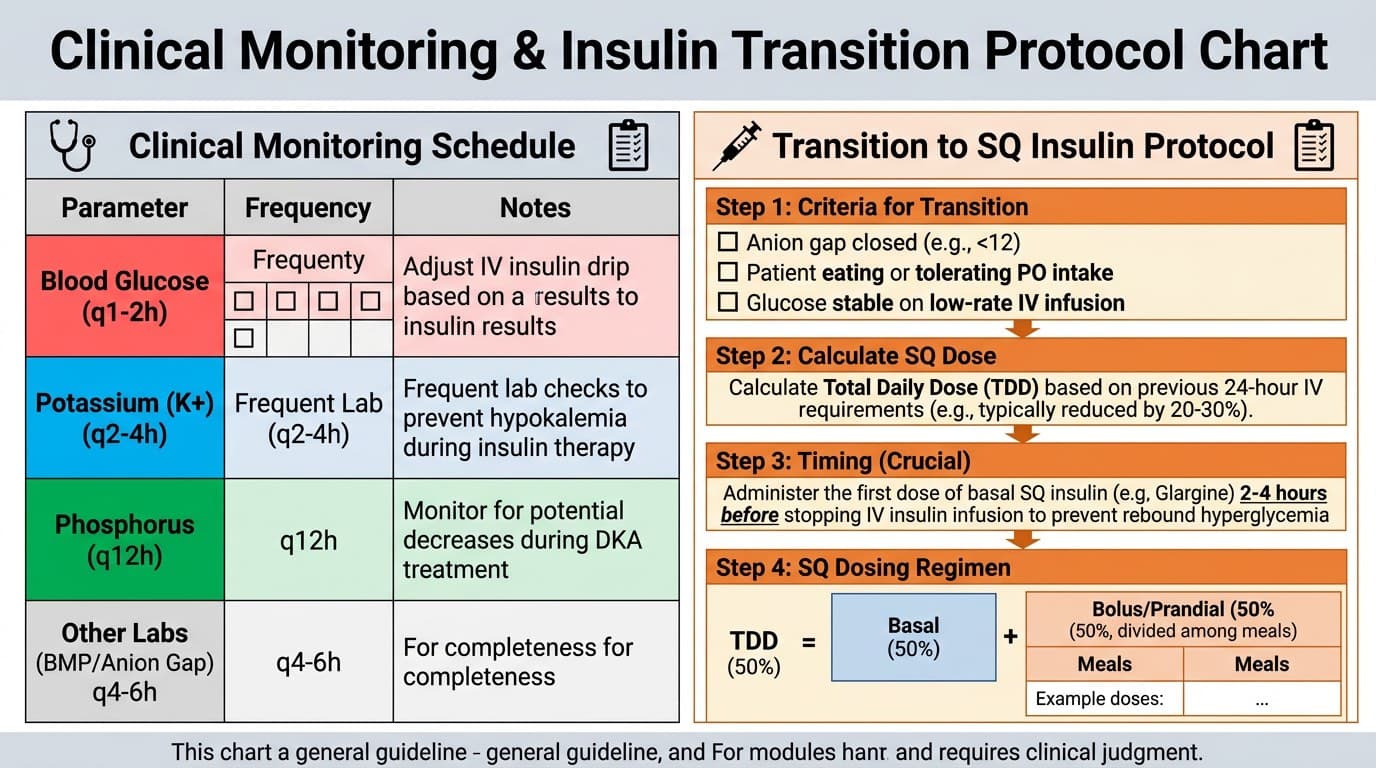
Monitoring Protocol
- Blood glucose: every 1–2 hours
- K⁺, Na⁺: every 2–4 hours
- Blood gas/pH: every 6–12 hours
- Phosphorus: every 12 hours
- Urine ketones: every 8–12 hours
- Body weight: every 6–12 hours (fluid balance)
Transition to SQ Insulin When ketones cleared AND patient eating/drinking voluntarily: 1. Give first SQ dose: glargine (Lantus) 0.5–1 U/cat BID (cats) or NPH/Vetsulin 0.25–0.5 U/kg BID (dogs) 2. Continue CRI for 1–2 hours after first SQ dose (overlap period) 3. Discontinue CRI after overlap 4. Recheck glucose 2–4 hours after first SQ dose
Frequently Asked Questions
What is the insulin protocol for DKA in dogs and cats?
Regular insulin CRI: 2.2 U/kg in 250 mL 0.9% NaCl (discard first 50 mL for tubing adsorption). Rate: 0.1 U/kg/hr for BG >600 mg/dL, decreasing stepwise to 0.03 U/kg/hr at 150-250 mg/dL. Stop insulin and add dextrose to fluids when BG <150 mg/dL.
Why do you give fluids before insulin in DKA?
Total body potassium is depleted in DKA. Insulin drives K+ into cells, causing serum K+ to drop rapidly. If insulin is started before adequate K+ replacement, potentially fatal hypokalemia results. Always check K+, start IV fluids with KCl supplementation, and confirm K+ >3.0 mEq/L before starting insulin.
What fluids should be used for DKA?
0.9% NaCl is preferred for initial resuscitation. Replace deficit over 12-24 hours at 60-90 mL/kg initially. Add KCl based on measured potassium. After resuscitation, transition to 0.45% NaCl for maintenance.
How do you know when DKA is resolving?
Urine ketones becoming trace or negative, blood pH returning to normal (>7.3), bicarbonate recovering (>18 mEq/L), and the patient eating/drinking voluntarily. All three criteria should be met before transitioning to SQ insulin.
What causes DKA in a known diabetic dog or cat?
DKA is almost always triggered by concurrent disease or missed insulin: infections (UTI, pancreatitis, dental disease), any systemic stress, incorrect insulin storage, or missed doses. Always investigate for and treat concurrent disease alongside DKA management.
References
- Feldman EC, Nelson RW. Diabetic ketoacidosis. In: Canine and Feline Endocrinology. 4th ed. Elsevier; 2015.
- Claus MA, Silverstein DC, et al. Comparison of regular insulin infusion doses in critically ill diabetic cats. J Vet Emerg Crit Care. 2010.
- Hume DZ, et al. Outcome of dogs and cats with diabetic ketoacidosis. J Vet Emerg Crit Care. 2006.