Quick Answer
Status epilepticus (SE) is a life-threatening neurological emergency in dogs requiring immediate sequential anticonvulsant administration. This guide covers the time-sensitive step-by-step drug protocol (benzodiazepine, phenobarbital, levetiracetam IV, propofol CRI), physiological monitoring, and ICU management of refractory SE.
Key Takeaways
- ✓Status epilepticus begins at >5 minutes of continuous seizure activity — intervene with benzodiazepines at this point, not later
- ✓Check and correct blood glucose immediately before administering any anticonvulsant — hypoglycemia-induced seizures require dextrose, not phenobarbital
- ✓Step 1: diazepam 0.5-1 mg/kg IV (up to 3x) or midazolam 0.2-0.5 mg/kg IV/IM; Step 2: phenobarbital 2-4 mg/kg IV (max 20 mg/kg) and/or levetiracetam 30-60 mg/kg IV; Step 3: propofol CRI
- ✓Active cooling of hyperthermic SE patients is urgent — stop cooling at 39C rectal temperature
- ✓Monitor for aspiration pneumonia, DIC, AKI, hypoglycemia, and cardiac arrhythmias post-SE
- ✓Discharge all post-SE dogs with oral anticonvulsants and a home cluster seizure action plan with owner-administered benzodiazepine
Definition, Triage and Immediate Stabilization
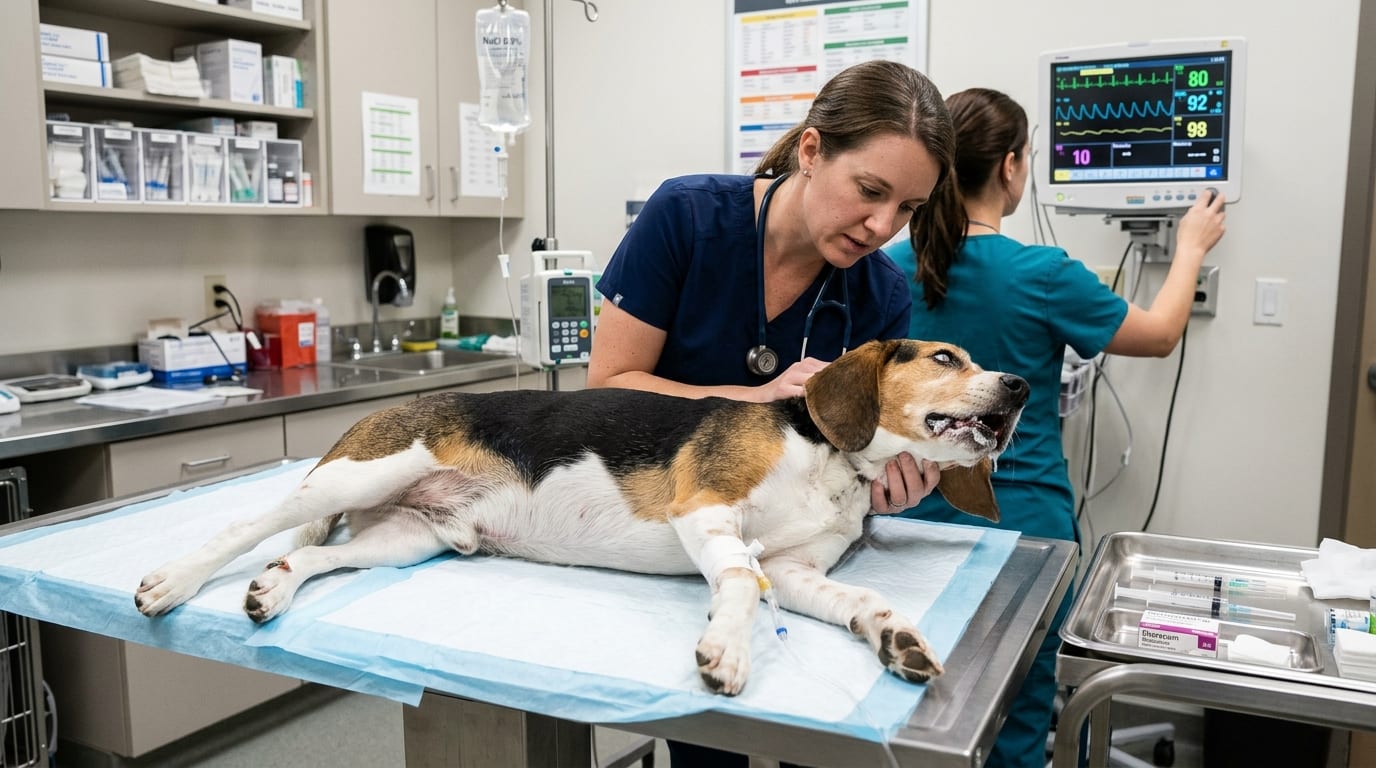
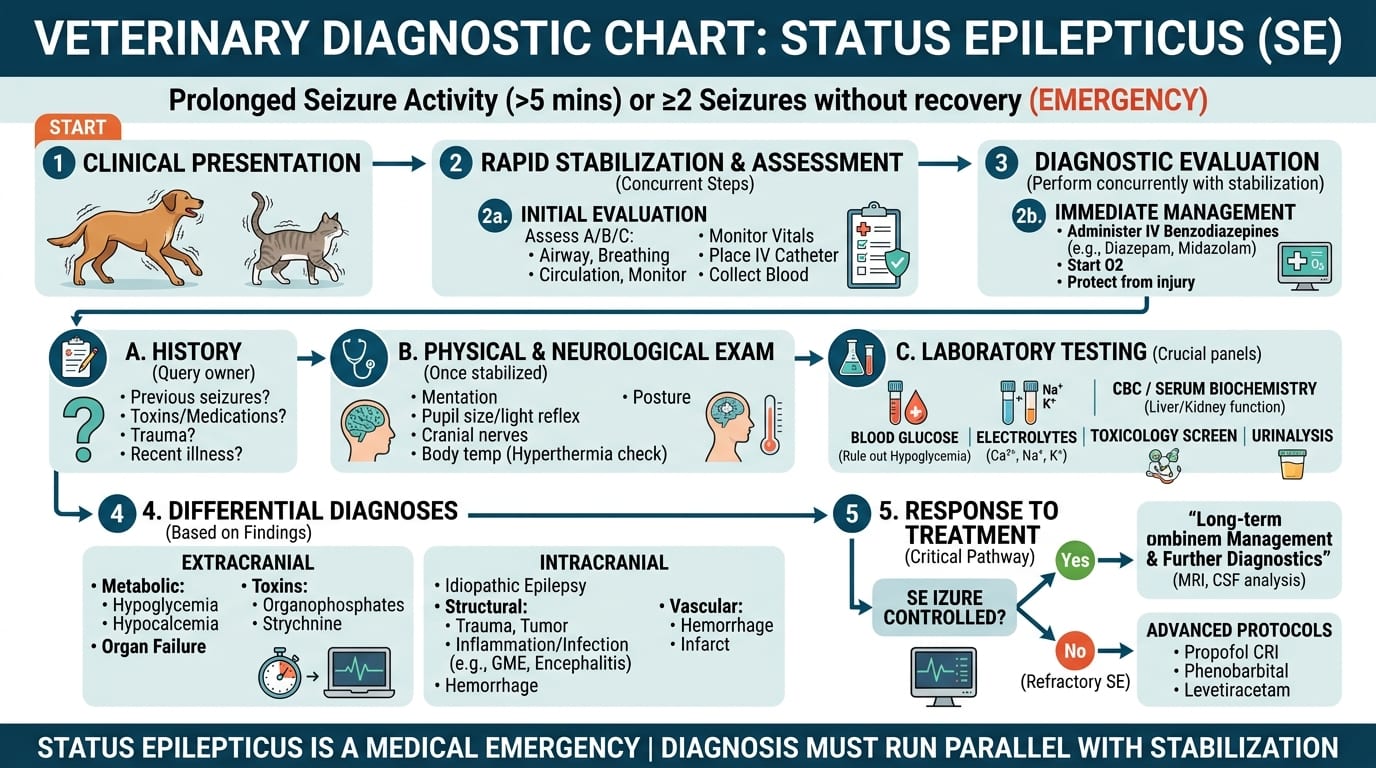
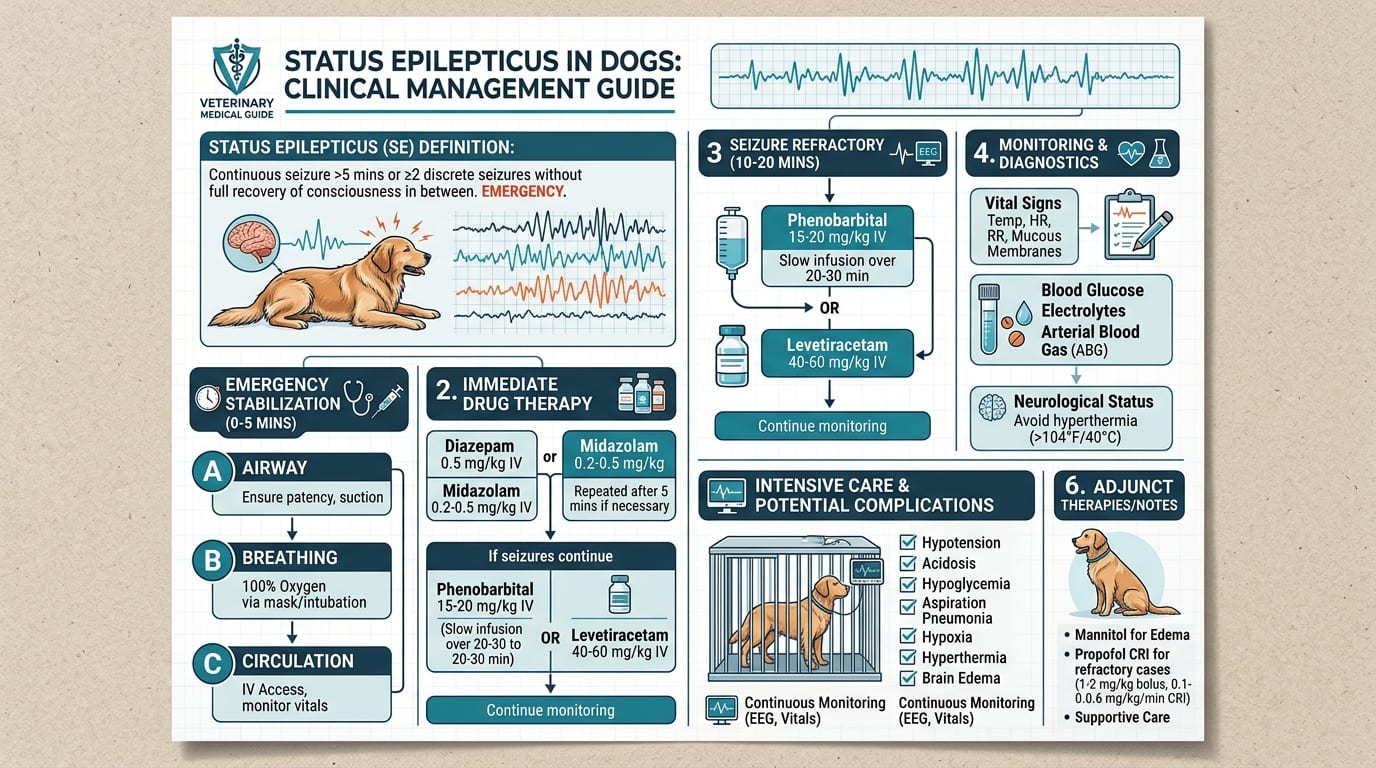
Status epilepticus (SE) is defined as a single seizure lasting >5 minutes or two or more discrete seizures without full recovery of consciousness between episodes. Neuronal injury begins within minutes of sustained seizure activity — brain temperature rises, glutamate-mediated excitotoxicity accumulates, and the blood-brain barrier becomes disrupted. Early, aggressive treatment is essential.
Time-Sensitive Framework:
- 0-5 minutes: Seizure beginning — normal, may self-terminate
- 5-30 minutes: Impending SE — intervention required; benzodiazepine administration
- 30+ minutes: Established SE — escalate to second-line agents (phenobarbital IV, levetiracetam IV)
- >60 minutes: Refractory SE — general anesthesia (propofol CRI) required
Immediate Triage Steps (First 2-5 Minutes on Arrival): 1. Ensure patent airway — lateral recumbency, extend neck, suction if needed 2. Supplemental oxygen via flow-by or mask at 4-6 L/min 3. IV catheter placement — cephalic or saphenous vein (jugular if others unavailable) 4. Blood sampling: blood glucose (critical — hypoglycemia causes seizures and must be ruled out immediately), electrolytes (sodium, calcium), CBC/chemistry, toxicology screen if indicated 5. Measure rectal temperature — hyperthermia (>40.5C) must be actively cooled (cool water on paws and groin, fan); do not use ice (causes peripheral vasoconstriction) 6. Blood glucose assessment: if <60 mg/dL, give 0.5 mL/kg of 50% dextrose IV (dilute to 25% before administration); this takes <60 seconds and is mandatory before any anticonvulsant
History Questions While Stabilizing:
- Prior seizure history? Any known epilepsy and current medications?
- Last known time of seizure onset (helps determine duration and urgency)
- Potential toxin exposure? (Metaldehyde, strychnine, xylitol, THC, tremorgenic mycotoxins)
- Recent illness, trauma, fever? (Encephalitis, head trauma, electrolyte abnormalities)
Sequential Emergency Anticonvulsant Drug Protocol
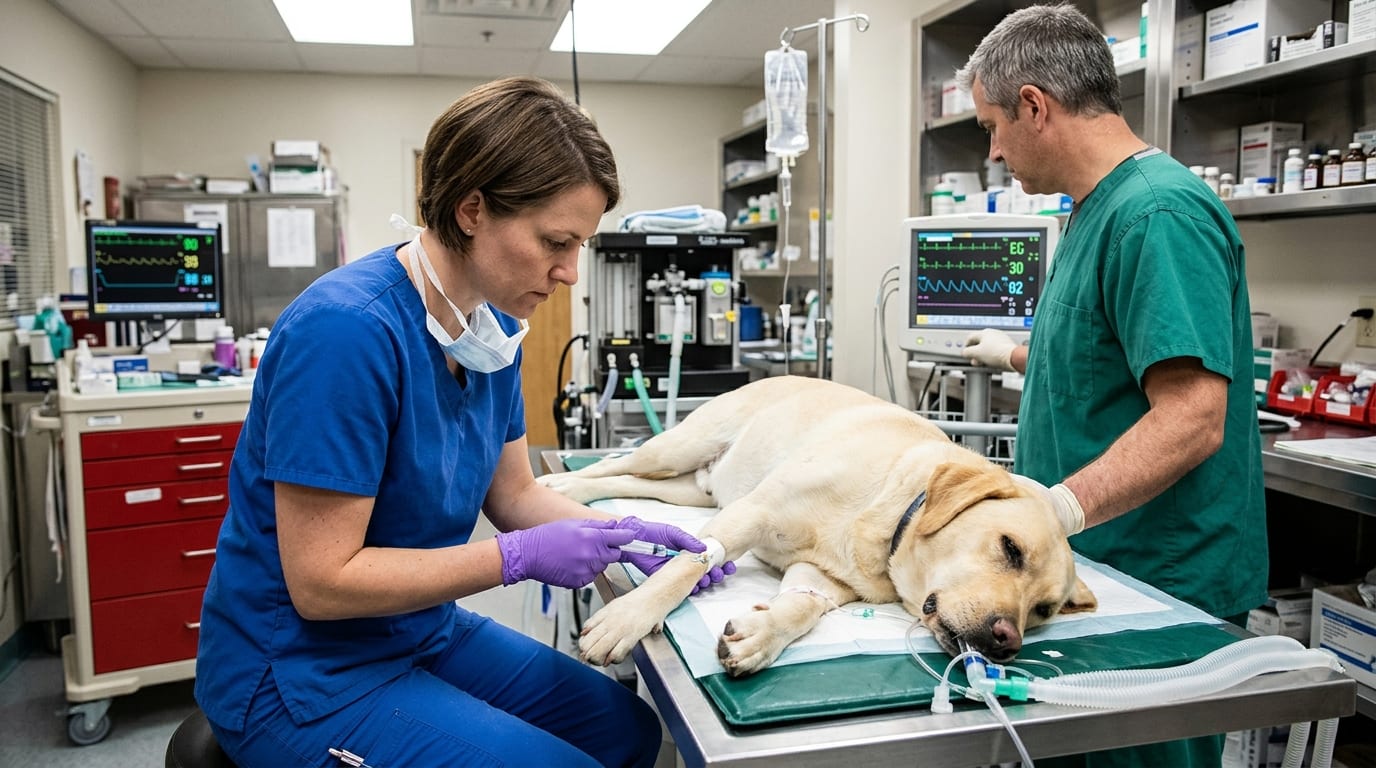
STEP 1 — Benzodiazepines (First-Line, 5-30 minutes)
Diazepam: 0.5-1 mg/kg IV bolus slowly over 1-2 minutes. May repeat every 10 minutes for up to 3 doses. Diazepam has rapid onset (1-3 minutes) but short anticonvulsant duration (20-30 minutes) — it buys time but must be followed by a longer-acting agent if seizures recur.
Important: Do NOT give diazepam via CRI — it adsorbs to PVC IV tubing and loses potency. Use bolus only.
Midazolam (preferred alternative): 0.2-0.5 mg/kg IV, IM, or intranasally. Midazolam is water-soluble, more reliably absorbed IM/IN than diazepam, and has a slightly longer action. IM or intranasal midazolam (0.2 mg/kg) is the recommended pre-hospital owner-administered benzodiazepine for cluster seizure protocols.
STEP 2 — Phenobarbital IV (30-minute mark if still seizing)
Phenobarbital sodium injectable: 2-4 mg/kg IV slowly (over 5-10 minutes per dose). May repeat every 20-30 minutes to a cumulative dose of 20 mg/kg. Monitor blood pressure and respiration — respiratory depression is the primary risk at high cumulative doses. Have oxygen and intubation ready.
Onset: 20-40 minutes after IV administration — slower than benzodiazepines but provides longer-lasting seizure suppression.
Levetiracetam IV (Alternative to or alongside phenobarbital): 30-60 mg/kg IV over 5-15 minutes. Can be combined with phenobarbital. Particularly useful if the patient is already on oral phenobarbital (cumulative loading is limited).
STEP 3 — Propofol CRI (Refractory SE, >60 minutes)
Propofol bolus: 1-4 mg/kg IV slowly to effect (until seizure terminates). Follow immediately with propofol CRI: 0.1-0.6 mg/kg/minute to maintain seizure cessation. Requires intubation and mechanical ventilation or close respiratory monitoring (SpO2, ETCO2 if available).
Ketamine adjunct: if propofol alone is insufficient, add ketamine CRI 0.5-1 mg/kg/hour (NMDA antagonist — different mechanism from propofol/GABA pathway).
Levetiracetam and phenobarbital should be continued concurrently during propofol CRI — treat the underlying epilepsy while the anesthetic suppresses acute seizure activity.
ICU Management, Physiological Complications and Recovery
Dogs surviving the acute SE event require intensive monitoring for physiological complications that develop during and after prolonged seizure activity.
Key Physiological Complications of Prolonged SE:
Hyperthermia: core body temperature rises 0.5-1C per minute of tonic-clonic activity. Temperatures >41C cause CNS injury independent of seizure. Active cooling (cool water, fan) until rectal temperature reaches 39C, then discontinue — risk of overshoot hypothermia.
Aspiration pneumonia: risk from secretions, vomiting, or medication during unprotected airway. Intubate early in refractory SE. Empiric antibiotic therapy with ampicillin-sulbactam or amoxicillin-clavulanate if aspiration suspected.
Disseminated intravascular coagulation (DIC): prolonged seizures, hyperthermia, and endothelial damage trigger coagulation cascade activation. Monitor PT, aPTT, fibrinogen, D-dimers. Fresh frozen plasma (FFP) if coagulopathy present.
Hypoglycemia: ongoing seizure activity depletes CNS glucose. Maintain blood glucose 80-150 mg/dL with dextrose CRI if needed (2.5-5% dextrose in IV fluids).
Acute kidney injury: hyperthermia, rhabdomyolysis, and decreased perfusion. Monitor serum creatinine and urine output (target >1-2 mL/kg/hr). IV fluid resuscitation with crystalloids.
Cerebral edema: in severe or prolonged SE, mannitol 0.5-1 g/kg IV over 20 minutes may be considered for suspected cerebral edema with neurological deterioration post-SE.
Monitoring in ICU:
- Continuous ECG (cardiac arrhythmias from autonomic storm during SE)
- Pulse oximetry (SpO2 >95% target)
- Blood pressure monitoring (hypotension from propofol CRI — vasopressor support if MAP <60 mmHg)
- Temperature q1h until stable
- Blood glucose q2-4h
- Urine output via urinary catheter
Long-Term Anticonvulsant Planning Post-SE: Dogs with confirmed SE should be started on or have current anticonvulsant therapy reassessed. Initiate phenobarbital 2.5-5 mg/kg PO BID if not already on anticonvulsants. If already on phenobarbital with therapeutic levels, add levetiracetam. Discharge on home cluster seizure protocol (owner-administered midazolam or levetiracetam per rectum) with written action plan.
Frequently Asked Questions
When does a seizure become status epilepticus in dogs?
A seizure lasting >5 minutes or two or more seizures without full recovery of consciousness between them constitutes status epilepticus. Neuronal injury from glutamate excitotoxicity and hyperthermia begins within minutes — intervention with benzodiazepines should begin at the 5-minute mark, not at a later threshold.
What is the first drug to give a dog in status epilepticus?
After confirming IV access and checking blood glucose (treating hypoglycemia if present), diazepam 0.5-1 mg/kg IV slowly is the first-line anticonvulsant. Midazolam 0.2-0.5 mg/kg IV, IM, or intranasally is an effective alternative, particularly in pre-hospital settings where IV access is unavailable.
What is the maximum cumulative dose of phenobarbital for status epilepticus?
The maximum cumulative IV phenobarbital dose for acute SE management is 20 mg/kg, given as 2-4 mg/kg increments every 20-30 minutes while monitoring for respiratory depression and hypotension. Exceeding 20 mg/kg is rarely indicated; escalate to propofol CRI if seizures persist at this cumulative dose.
Why should I check blood glucose before giving anticonvulsants?
Hypoglycemia (blood glucose <60 mg/dL) causes seizures and altered mentation that can mimic or worsen SE. Correcting hypoglycemia with IV dextrose (0.5 mL/kg of 50% dextrose, diluted to 25%) may resolve seizures without anticonvulsants. This check takes <1 minute and should never be skipped.
How do I manage hyperthermia in a seizing dog?
Cool water applied to the paws, groin, and armpits with a fan creates evaporative cooling. Stop active cooling when rectal temperature reaches 39C to avoid overshoot hypothermia. Do not use ice packs directly on skin — peripheral vasoconstriction reduces heat dissipation. Monitor rectal temperature every 10-15 minutes during cooling.
References
- Podell M, et al. "2015 ACVIM Small Animal Consensus Statement on Seizure Management in Dogs." Journal of Veterinary Internal Medicine. 2016;30(2):477-490.
- Bateman SW, Parent JM. "Clinical findings, treatment, and outcome of dogs with status epilepticus or cluster seizures: 156 cases." Journal of the American Veterinary Medical Association. 1999.
- Zimmermann R, et al. "Intravenous levetiracetam as emergency treatment of refractory status epilepticus." Veterinary Record. 2009.