Quick Answer
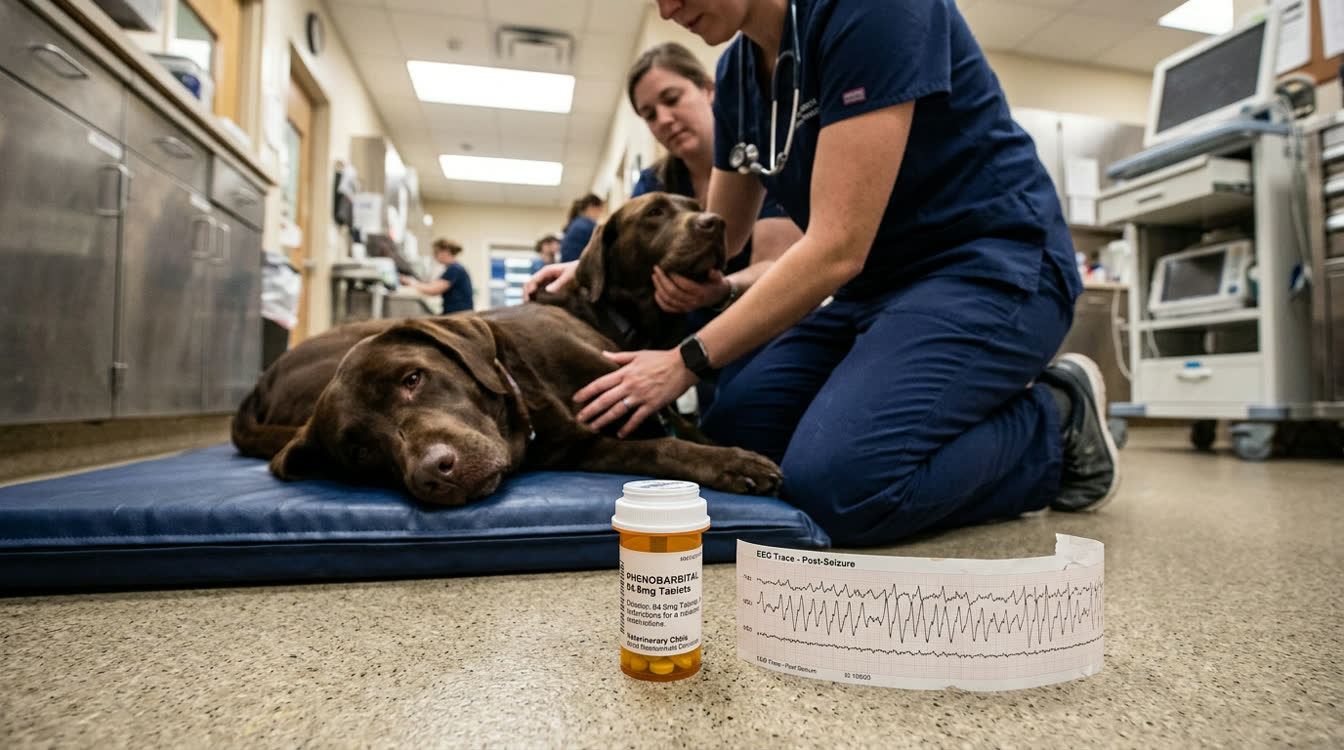
Phenobarbital remains the first-line anticonvulsant for dogs and cats with idiopathic epilepsy. This guide covers loading dose protocols, maintenance dosing, therapeutic drug monitoring (TDM) targets, hepatotoxicity surveillance, and practical management of breakthrough seizures and tolerance.
Key Takeaways
- ✓Phenobarbital is first-line for idiopathic epilepsy in dogs and cats; achieves >50% seizure reduction in 60-70% of dogs
- ✓Target serum trough levels: 20-40 mcg/mL dogs, 23-30 mcg/mL cats; check at 2 weeks and 4-6 weeks after initiation
- ✓ALP elevation is expected (enzyme induction); elevated bile acids signal true hepatic dysfunction requiring dose reduction
- ✓Monitor phenobarbital levels and liver function (chemistry + bile acids) every 6 months in stable patients
- ✓Do not abruptly discontinue — taper over at least 3-6 months to prevent rebound seizures
- ✓Tolerance can develop in 15-20% of dogs over 3-6 months; confirm with TDM before adding adjunct medications
Mechanism of Action, Loading Dose and Maintenance Dosing
Phenobarbital is a long-acting barbiturate that enhances GABA-A receptor activity (increasing chloride channel opening frequency), inhibits glutamate-mediated excitatory neurotransmission, and reduces calcium-dependent action potential generation. It is the most cost-effective, extensively studied anticonvulsant for dogs and cats, achieving seizure freedom or >50% seizure reduction in approximately 60-70% of dogs with idiopathic epilepsy.
Loading Dose Protocol (acute seizure control or rapid achievement of therapeutic levels):
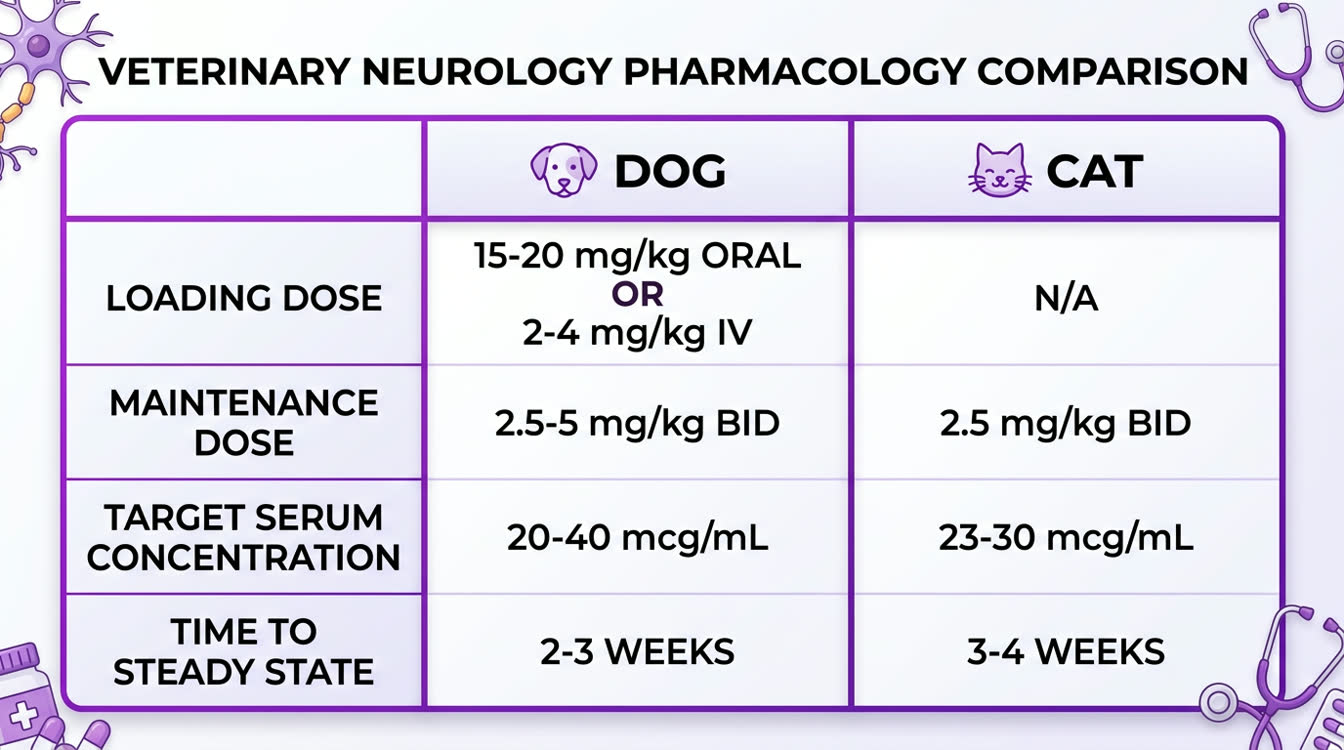
Oral loading: 15-20 mg/kg total divided into 4-6 doses over 24-48 hours achieves therapeutic serum levels within 1-2 days. Administer 4-5 mg/kg PO every 4-6 hours for 4-5 doses, then transition to maintenance dosing.
IV loading (emergency): Phenobarbital sodium injectable: 2-4 mg/kg IV slowly (over 5-10 minutes); may repeat up to 20 mg/kg total cumulative if seizing. Must monitor for respiratory depression and hypotension.
Maintenance Dosing:
| Species | Starting Dose | Frequency | Target Serum Level |
|---|---|---|---|
| Dog | 2.5-5 mg/kg | BID | 20-40 mcg/mL |
| Cat | 2.5 mg/kg | BID | 23-30 mcg/mL |
Cats metabolize phenobarbital more slowly than dogs; BID dosing is appropriate. Begin monitoring levels at 2 weeks after initiation (before steady state) and at 4-6 weeks (true steady state). Steady state is reached in approximately 2-3 weeks in dogs and 3-4 weeks in cats.
Hepatic Enzyme Induction: Phenobarbital is a potent inducer of hepatic microsomal enzymes (CYP450). This causes elevation of ALT, ALP, and GGT within weeks of starting treatment — this is an expected pharmacologic effect, not necessarily hepatotoxicity. True phenobarbital hepatotoxicity (hepatic necrosis) is less common but can occur, particularly at high serum levels.
Therapeutic Drug Monitoring (TDM) and Dose Adjustment
Therapeutic drug monitoring is essential for phenobarbital — the therapeutic window is narrow, toxicity occurs at high levels, and individual pharmacokinetic variation is substantial. Serum phenobarbital concentrations should be measured as trough levels (just before the next scheduled dose).
TDM Schedule:
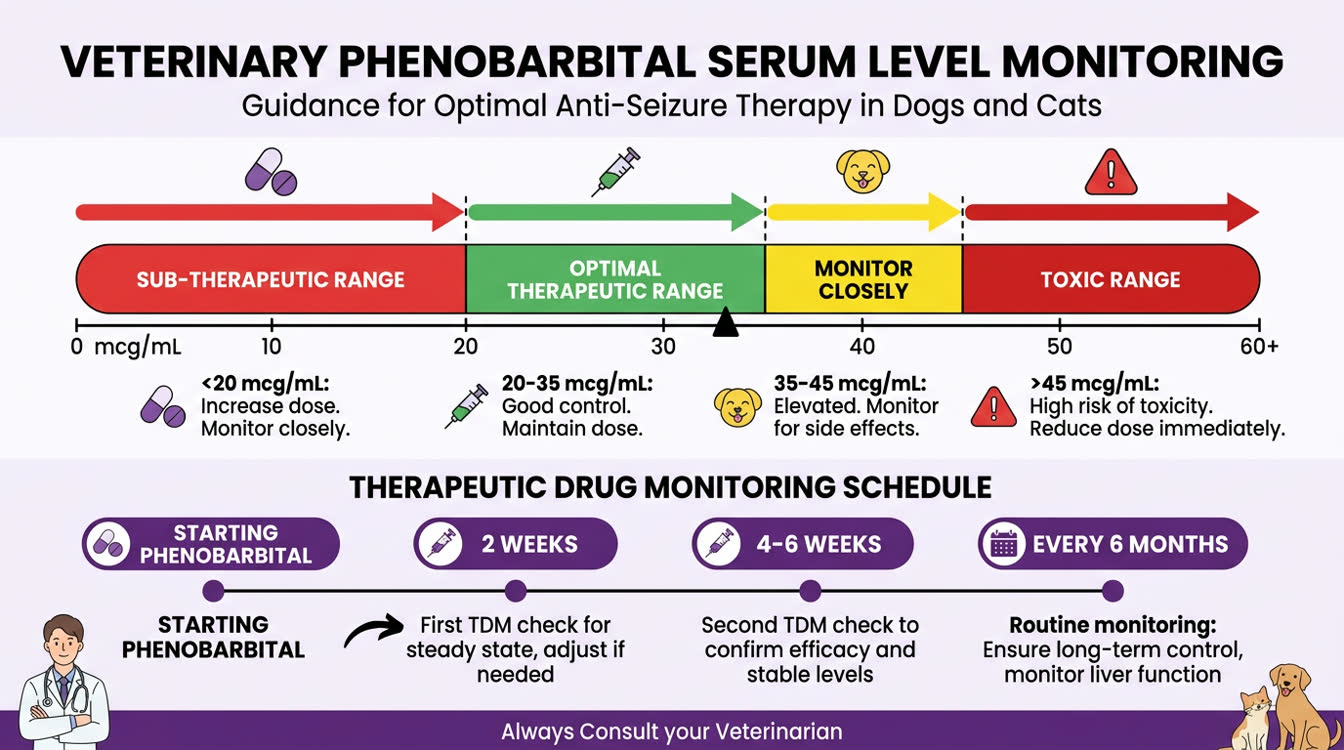
- 2 weeks after starting (pre-steady state — identify levels grossly below or above target early)
- 4-6 weeks after starting (true steady state)
- Every 6 months thereafter for stable patients
- Immediately after any dose adjustment, re-check level in 2-3 weeks
- Any time seizure frequency increases unexpectedly (check level + look for tolerance)
Interpreting Serum Levels:
| Level (dogs) | Interpretation | Action |
|---|---|---|
| <20 mcg/mL | Sub-therapeutic | Increase dose by 25-30% |
| 20-35 mcg/mL | Optimal range | Maintain; reassess based on seizure control |
| 35-40 mcg/mL | High therapeutic | Monitor closely for sedation, ataxia |
| >45 mcg/mL | Potentially toxic | Reduce dose; assess for hepatotoxicity |
Dose Adjustment Principles: Phenobarbital follows linear pharmacokinetics in most patients. To increase the serum level by ~10 mcg/mL, increase the daily dose by approximately 30-50%. Allow 2-3 weeks for new steady state before re-checking.
Tolerance (Autoinduction): Some dogs (15-20%) develop apparent tolerance to phenobarbital over 3-6 months due to autoinduction of hepatic metabolism — serum levels fall despite stable dosing. Confirm with TDM. If level has dropped: increase dose. If level is stable but seizures increase: may be disease progression; add levetiracetam as adjunct.
Phenobarbital and Other Drug Interactions:
- Chloramphenicol inhibits phenobarbital metabolism (levels increase — reduce dose)
- Phenobarbital accelerates clearance of many other drugs including cyclosporine, metronidazole, corticosteroids — adjust doses of concurrent medications
Hepatotoxicity Surveillance and Long-Term Safety Monitoring
Phenobarbital-associated hepatotoxicity is a serious but uncommon complication of long-term treatment. It must be distinguished from the expected enzyme induction (elevated ALT, ALP) that occurs in most dogs on phenobarbital. True hepatotoxicity involves hepatocellular damage and altered liver function.
Monitoring Schedule:
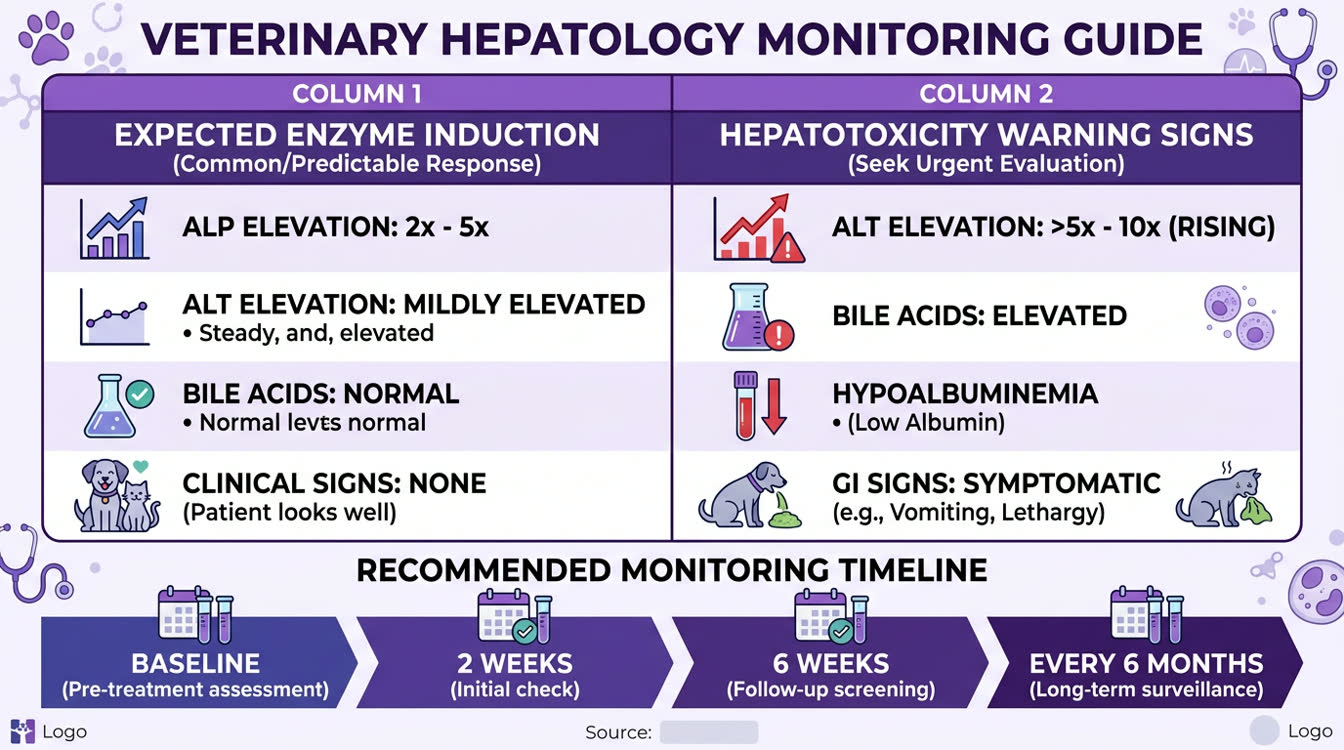
- Baseline CBC, chemistry panel, bile acids (fasted and 2-hour post-prandial) before starting
- 2-week recheck: phenobarbital level + chemistry panel (ALP and ALT will be elevated — compare to baseline for trend)
- 6-week recheck: phenobarbital level + full chemistry + bile acids
- Every 6 months thereafter: phenobarbital level + chemistry + bile acids (when stable)
Interpreting Liver Enzymes on Phenobarbital:
Expected (enzyme induction — not hepatotoxicity):
- ALP 2-5x upper reference range: typical; often improves or stabilizes over 6-12 months
- ALT mildly elevated (1.5-3x): common with enzyme induction
- Bile acids NORMAL: confirms hepatic function intact despite enzyme elevation
Concerning (possible hepatotoxicity):
- ALT >5-10x upper limit with upward trend
- Elevated bile acids (fasted >25 micromol/L, post-prandial >50 micromol/L): indicates impaired hepatic function
- Hypoalbuminemia, hypoglycemia, prolonged PT: late signs of liver failure
- GI signs (vomiting, anorexia, weight loss) concurrent with liver enzyme rise
Management of Phenobarbital Hepatotoxicity: 1. Reduce dose if serum level is at high-therapeutic or toxic range 2. If bile acids elevated with normal level: still reduce dose and consider transition to alternate anticonvulsant (potassium bromide in dogs, levetiracetam in cats) 3. Add SAMe (S-adenosylmethionine) 400-900 mg/day and milk thistle (silymarin) for hepatoprotection — modest but clinically useful evidence in dogs 4. Do not abruptly stop phenobarbital — taper over 6+ weeks to prevent rebound seizures
Other Long-Term Adverse Effects:
- Polyuria/polydipsia (PU/PD): common; monitor hydration and renal function
- Polyphagia and weight gain: common; may be managed with portion control
- Sedation and ataxia: common at initiation; typically improves within 2-4 weeks as tolerance to sedation develops
Frequently Asked Questions
What is the target serum level for phenobarbital in dogs?
The optimal target serum phenobarbital level in dogs is 20-35 mcg/mL. Levels below 20 mcg/mL are sub-therapeutic and associated with poor seizure control. Levels above 45 mcg/mL are associated with hepatotoxicity and excessive sedation. Measure trough levels (just before the next dose) at steady state (2-3 weeks after initiating or changing dose).
Is elevated ALP always a sign of liver damage in dogs on phenobarbital?
No. ALP elevation of 2-5x above the reference range is expected with phenobarbital due to hepatic enzyme induction and does not indicate hepatotoxicity. The key differentiator is bile acids — if fasted and post-prandial bile acids are normal, liver function is intact despite elevated ALP. Monitor bile acids every 6 months.
How long does it take phenobarbital to reach steady state in dogs?
Phenobarbital reaches steady state in approximately 2-3 weeks in dogs and 3-4 weeks in cats. A pre-steady-state level at 2 weeks provides early guidance but does not reflect the final steady-state concentration. Re-check at 4-6 weeks for accurate steady-state TDM.
Can I suddenly stop phenobarbital in my patient?
No. Abrupt discontinuation of phenobarbital risks rebound seizures and potentially status epilepticus. If transitioning off phenobarbital (due to hepatotoxicity or treatment failure), taper the dose by 25% every 4-6 weeks over a minimum of 3-6 months. Add an alternative anticonvulsant before starting the taper.
What should I do if my dog is well-controlled but developing high phenobarbital levels?
If seizure control is good but levels are approaching 40-45 mcg/mL or above, reduce the daily dose by 15-25% and recheck in 2-3 weeks. If reducing the dose risks seizure breakthrough, consider adding levetiracetam (Keppra) as an adjunct to allow dose reduction while maintaining seizure control.
References
- Podell M, et al. "2015 ACVIM Small Animal Consensus Statement on Seizure Management in Dogs." Journal of Veterinary Internal Medicine. 2016;30(2):477-490.
- Muñana KR. "Management of refractory epilepsy." Topics in Companion Animal Medicine. 2013;28(2):67-71.
- March PA, et al. "SAMe and silybin are hepatoprotective in dogs with phenobarbital-induced hepatotoxicity." Veterinary and Comparative Orthopaedics and Traumatology. 2002.