Quick Answer
A comprehensive veterinary guide to seizure disorders in dogs, including types of seizures, causes, diagnostic workup, treatment options, and emergency management.
Key Takeaways
- ✓Seizures are sudden, uncontrolled electrical disturbances in the brain; epilepsy means recurrent seizures
- ✓Idiopathic epilepsy (unknown cause) is most common in dogs 1-5 years old
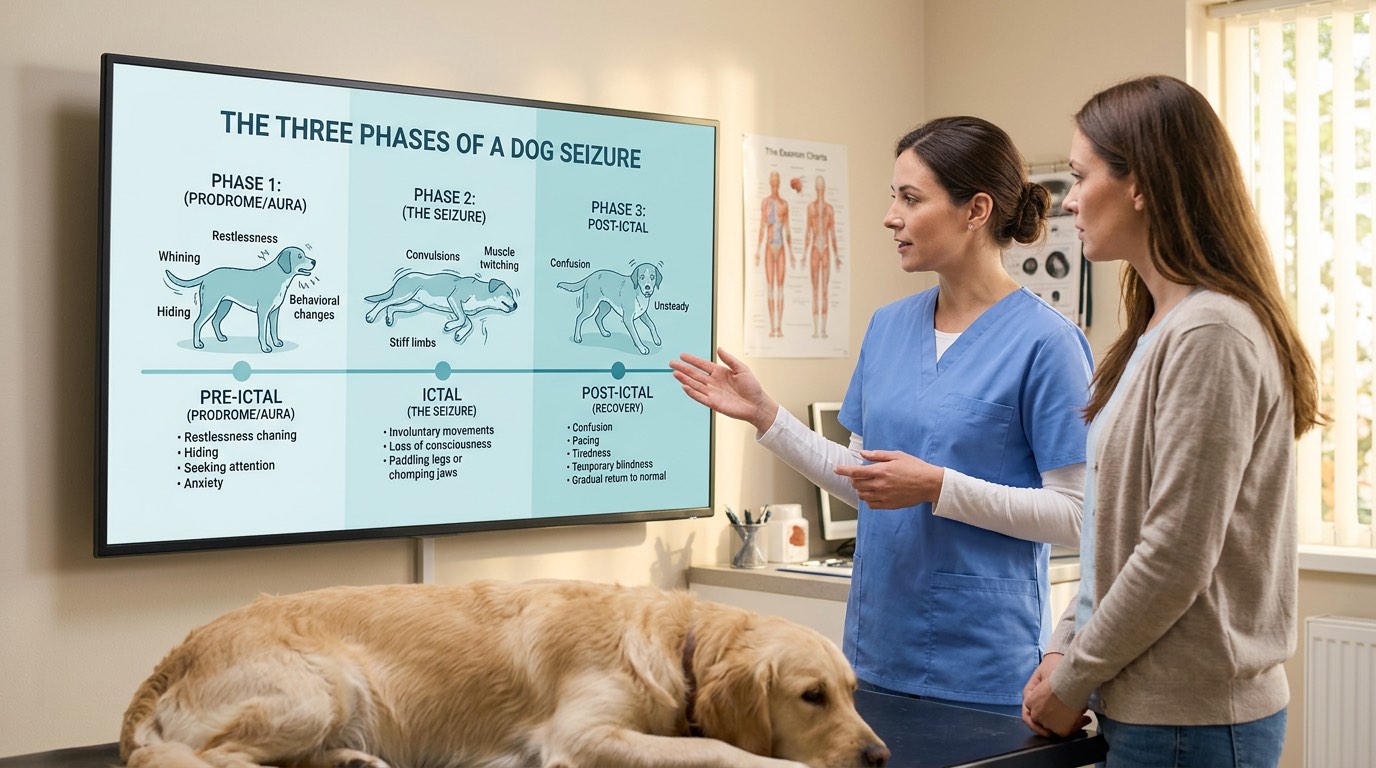
- ✓Seizures have three phases: pre-ictal (warning), ictal (seizure), and post-ictal (recovery)
- ✓Diagnostic workup includes bloodwork, neurological exam, and potentially MRI and CSF analysis
- ✓Phenobarbital and potassium bromide are first-line medications; levetiracetam and zonisamide are alternatives
- ✓Status epilepticus (seizure > 5 minutes) is a life-threatening emergency requiring immediate veterinary care
- ✓Most epileptic dogs live happy lives with proper management, medication compliance, and seizure monitoring
Understanding Seizures
What is a Seizure?
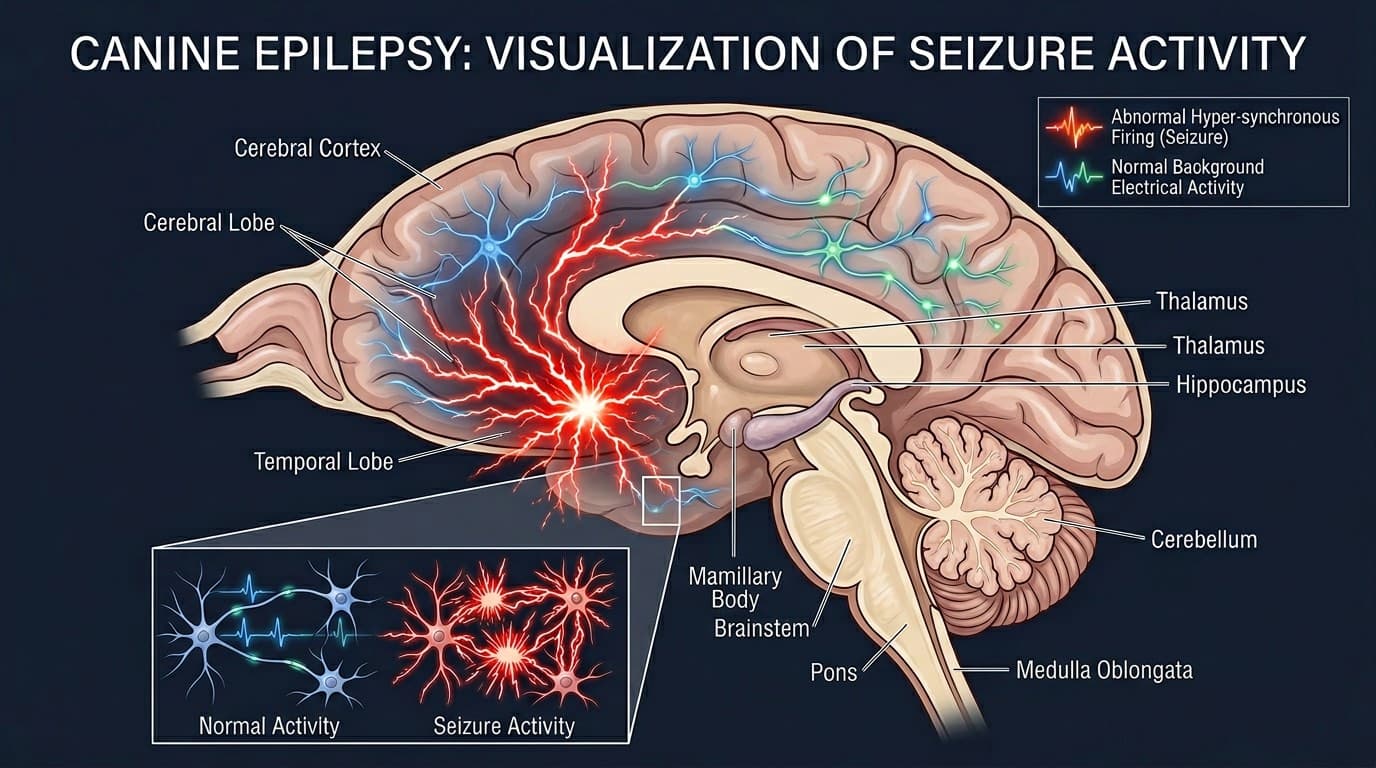
A seizure is a sudden, uncontrolled electrical disturbance in the brain that causes changes in behavior, movements, feelings, and consciousness. Seizures result from abnormal, excessive, or synchronous neuronal activity in the brain.
Terminology
- Seizure: A single episode of abnormal brain electrical activity
- Epilepsy: Recurrent seizures (two or more unprovoked seizures more than 24 hours apart)
- Idiopathic Epilepsy: Epilepsy with no identifiable underlying cause (most common in dogs)
- Status Epilepticus: Continuous seizure activity lasting >5 minutes, or multiple seizures without full recovery between them—a medical emergency
Classification of Seizures
Generalized Seizures
- Tonic-clonic (grand mal): Most recognizable; stiffening then jerking
- Tonic: Muscle stiffening only
- Clonic: Rhythmic jerking only
- Atonic: Sudden loss of muscle tone (drop attacks)
- Myoclonic: Brief, shock-like jerks
- Absence: Staring episodes (rare in dogs)
Focal (Partial) Seizures
- May involve one limb, one side of face, or unusual behaviors
- Can progress to generalized seizures (focal-onset to bilateral tonic-clonic)
- Behaviors: fly-biting, star-gazing, tail-chasing, limb jerking
Phases of a Seizure
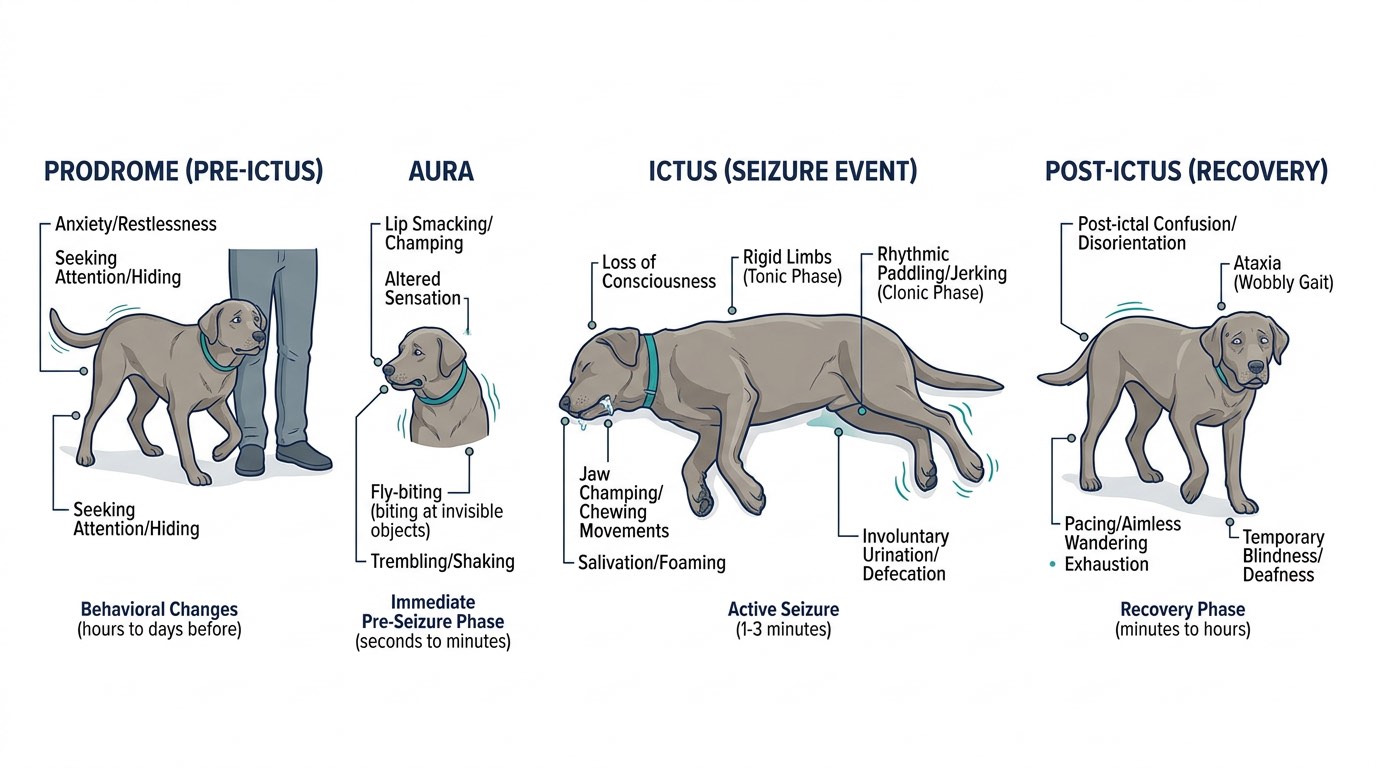
Pre-ictal Phase (Aura)
The period before the seizure where the dog may show behavioral changes:
- Restlessness or anxiety
- Seeking owner or hiding
- Whining or vocalization
- Salivation
- Staring into space
- Duration: seconds to hours before seizure
Owners often learn to recognize these warning signs.
Ictal Phase (The Seizure)
The actual seizure event. In a generalized tonic-clonic seizure:
Tonic Phase (typically 10-30 seconds):
- Dog falls to one side
- Muscles become rigid
- Head thrown back
- Legs extended stiffly
- May vocalize or cry out
- Pupils dilate
Clonic Phase (typically 30-90 seconds):
- Rhythmic jerking of limbs
- Paddling motions
- Jaw chomping
- Excessive salivation (may be bloody if tongue bitten)
- Loss of bladder/bowel control
- Dog is unconscious
Focal seizures may appear as:
- Facial twitching
- Rhythmic blinking
- Head turning
- Single limb jerking
- Snapping at invisible flies
- Unusual behaviors (rage, aggression, fear)
Post-ictal Phase
Recovery period after the seizure:
- Disorientation and confusion
- Temporary blindness
- Excessive hunger or thirst
- Restlessness or pacing
- Exhaustion and prolonged sleep
- May last minutes to days
- Gradual return to normal behavior
Causes of Seizures
Idiopathic Epilepsy
The most common cause in dogs (estimated 75% of epileptic dogs):
- Presumed genetic basis
- No identifiable structural or metabolic cause
- Typically develops between 1-5 years of age
- Some breeds highly predisposed
Breed Predispositions
- Beagles
- German Shepherds
- Golden Retrievers
- Labrador Retrievers
- Belgian Tervurens
- Border Collies
- Australian Shepherds
- Bernese Mountain Dogs
- Irish Setters
- Vizslas
Structural/Intracranial Causes
Problems within the brain:
- Brain tumors (more common in older dogs)
- Meningoencephalitis (inflammatory brain disease)
- Hydrocephalus
- Stroke (cerebrovascular disease)
- Head trauma
- Brain malformations
- Infectious diseases (distemper, toxoplasmosis, fungal)
Extracranial/Metabolic Causes
Problems outside the brain:
- Hypoglycemia: Low blood sugar (common in toy breeds, puppies)
- Hepatic encephalopathy: Liver disease (portosystemic shunt)
- Electrolyte imbalances: Low calcium, sodium abnormalities
- Toxin exposure: Lead, ethylene glycol, metaldehyde, organophosphates
- Severe kidney disease: Uremia
- Hypothyroidism: In some cases
- Severe hyperthermia: Heat stroke
Reactive Seizures
Normal brain's response to:
- Toxins
- Metabolic disturbances
- Certain medications
- Systemic illness
Age-Related Patterns
- < 1 year: Consider developmental, infectious, toxic causes
- 1-5 years: Idiopathic epilepsy most likely
- > 5 years: Brain tumors, metabolic disease more common
Diagnostic Workup
Diagnostic Goals
- Confirm the events are true seizures
- Identify underlying cause if present
- Classify seizure type
- Establish baseline for monitoring
History Taking
Detailed history is crucial:
- Description of episodes (video very helpful)
- Age at first seizure
- Frequency and duration of seizures
- Pre-ictal and post-ictal behaviors
- Potential toxin exposure
- Vaccination and travel history
- Diet and access to garbage
- Medication history
- Family history (if known)
Physical Examination
- Complete neurological examination between seizures
- Often normal in idiopathic epilepsy
- Abnormalities suggest structural or metabolic cause
- Evaluate for signs of systemic disease
Minimum Database
Complete Blood Count (CBC)
- Rule out infection, anemia
Serum Chemistry
- Blood glucose level
- Liver function (bile acids, ammonia)
- Kidney values
- Electrolytes (calcium, sodium, potassium)
- Protein levels
Urinalysis
- Assess kidney function
- Screen for toxins in some cases
Additional Testing
Thyroid Panel
- Low thyroid can contribute to seizures
Bile Acids
- Screen for portosystemic shunt
Blood Pressure
- Hypertension can cause neurological signs
Infectious Disease Testing
- Based on geographic exposure and clinical signs
Advanced Imaging
MRI (Magnetic Resonance Imaging)
- Gold standard for evaluating brain
- Detects tumors, inflammation, malformations
- Recommended if:
CT Scan
- Less detailed than MRI
- May detect some structural changes
- More accessible than MRI
Cerebrospinal Fluid (CSF) Analysis
- Collected after MRI (never before imaging)
- Evaluates for inflammation, infection
- Important for diagnosing encephalitis
Electroencephalography (EEG)
- Limited availability in veterinary medicine
- Can detect abnormal brain electrical activity
- Helpful for confirming epilepsy diagnosis

Treatment Options
When to Start Treatment
Treatment typically recommended when:
- Two or more seizures in 6 months
- Status epilepticus or cluster seizures occur
- Prolonged post-ictal phase (>24 hours)
- Underlying progressive condition identified
- Single severe seizure with significant injury
Goals of Treatment
- Reduce seizure frequency (aim for >50% reduction)
- Minimize seizure severity
- Maintain quality of life
- Avoid serious side effects
- Prevent status epilepticus
First-Line Medications
Phenobarbital
- Most commonly used anticonvulsant in dogs
- Dose: 2-3 mg/kg twice daily (starting dose)
- Therapeutic level: 20-35 μg/mL
- Side effects: sedation, increased appetite/thirst, liver effects
- Requires therapeutic monitoring
- Controlled substance
Potassium Bromide (KBr)
- Often used with phenobarbital or alone
- Dose: 20-40 mg/kg once daily
- Therapeutic level: 1000-2000 μg/mL (with phenobarbital) or 2000-3000 μg/mL (alone)
- No liver metabolism
- Side effects: sedation, rear leg weakness, pancreatitis risk
- Long half-life; takes months to reach steady state
- Loading dose may be given
Second-Line Medications
Levetiracetam (Keppra)
- Excellent safety profile
- Dose: 20-30 mg/kg three times daily
- Extended-release: 30 mg/kg twice daily
- Minimal drug interactions
- May need higher doses with phenobarbital
- Expensive at high doses
Zonisamide (Zonegran)
- Good adjunct medication
- Dose: 5-10 mg/kg twice daily
- Minimal drug interactions
- Side effects: sedation, inappetence
- Avoid in sulfonamide-allergic animals
Gabapentin
- May help as adjunct therapy
- Better established for pain than seizures
- Dose: 10-20 mg/kg three times daily
Other Options
- Pregabalin: Similar to gabapentin
- Topiramate: Limited veterinary experience
- Imepitoin (Pexion): Available in some countries
Treatment Monitoring
- Therapeutic drug levels regularly
- Liver enzymes (phenobarbital)
- Seizure diary kept by owner
- Adjustments based on seizure control and levels

Emergency Management
Status Epilepticus
Status epilepticus is a life-threatening emergency defined as:
- Continuous seizure activity lasting > 5 minutes
- Multiple seizures without full recovery between them
Why It's Dangerous
- Brain damage begins after 5-30 minutes
- Hyperthermia
- Metabolic acidosis
- Muscle damage (rhabdomyolysis)
- Aspiration risk
- Can be fatal
Emergency Protocols
At Home (While Transporting)
- Keep calm
- Move dog away from hazards (stairs, water, furniture)
- Do NOT put hands in mouth
- Time the seizure
- Keep dog cool
- Transport immediately to veterinary emergency
Veterinary Emergency Treatment
First Priority: Stop the seizure
- IV access and blood glucose check
- Diazepam (Valium): 0.5-1 mg/kg IV, can repeat x2
- Midazolam: 0.2-0.5 mg/kg IV/IM (may be faster IM)
- Levetiracetam: 30-60 mg/kg IV
If Benzodiazepines Fail
- Phenobarbital: 15-20 mg/kg IV (loading dose, given slowly)
- Propofol: CRI for refractory status epilepticus
- General anesthesia may be required
Supportive Care
- IV fluids
- Temperature monitoring and cooling
- Oxygen supplementation
- Blood work
- Correct any metabolic abnormalities
Cluster Seizures
Multiple seizures within 24 hours:
- Also considered an emergency
- Higher risk of progressing to status epilepticus
- Treatment as above
- Pulse diazepam may be used at home (rectal or intranasal)
At-Home Emergency Medications
Veterinarians may prescribe:
- Diazepam rectal gel: 1-2 mg/kg rectally
- Intranasal/buccal midazolam: 0.2 mg/kg
- Levetiracetam pulse: 60 mg/kg at onset of cluster
When to Seek Emergency Care
- Seizure lasting > 2-3 minutes
- Multiple seizures in 24 hours
- Difficulty breathing
- Seizure different from typical pattern
- Injury during seizure
- First-ever seizure
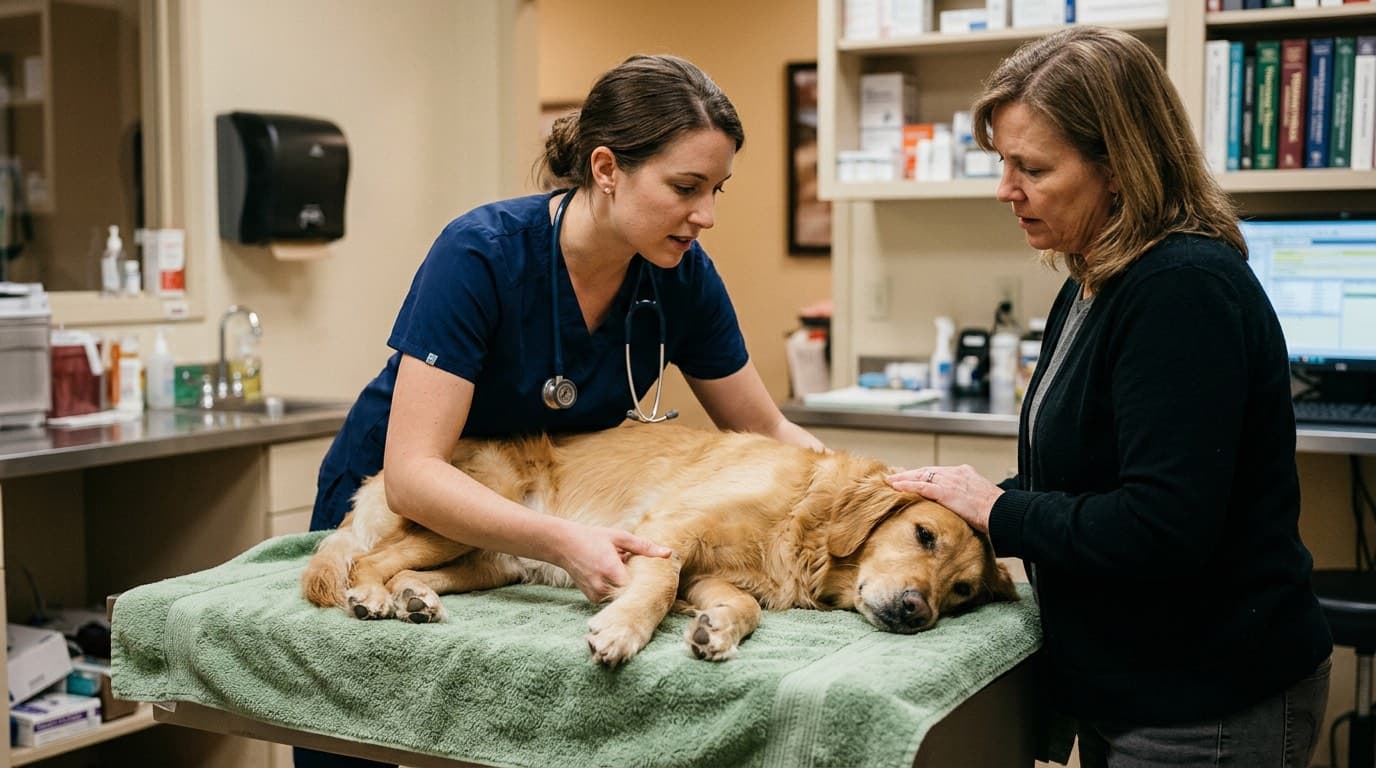
Living with an Epileptic Dog
Prognosis
- Many dogs live normal, happy lives with proper management
- Approximately 15-30% of dogs are refractory to treatment
- Quality of life often very good between seizures
- Average survival with idiopathic epilepsy similar to non-epileptic dogs with treatment
Seizure Diary
Keep detailed records of:
- Date and time of each seizure
- Duration
- Description of seizure
- Any potential triggers
- Pre-ictal and post-ictal behavior
- Medications given
- Response to treatment
Many apps available for seizure tracking.
Environmental Safety
- Block access to stairs during and after seizures
- Prevent access to pools or bodies of water
- Pad hard floor surfaces if possible
- Supervise outdoor time
- Consider baby gates
Potential Triggers
While seizures often occur randomly, possible triggers include:
- Stress or excitement
- Sleep deprivation
- Missing medication doses
- Hormonal changes (estrus)
- Weather changes (some dogs)
- Flashing lights (rare in dogs)
Medication Compliance
- Give medications at same times daily
- Never stop medications abruptly (can cause severe seizures)
- Keep emergency medication supply
- Notify vet before surgery or other medications
Owner Support
- Witnessing seizures is stressful
- Connect with support groups (Facebook, forums)
- Communicate openly with veterinary team
- Set realistic expectations
- Focus on quality of life
Activities and Exercise
- Most dogs can exercise normally
- Avoid swimming unsupervised
- Avoid extreme temperatures
- Watch for seizure triggers
- Short, frequent activities may be better than exhausting play

Special Considerations
Refractory Epilepsy
When seizures don't respond adequately to treatment:
- Reassess diagnosis (are they true seizures?)
- Check therapeutic drug levels
- Ensure medication compliance
- Consider adding second medication
- Advanced imaging if not done
- Dietary therapy (MCT oil, ketogenic diets)
- Referral to veterinary neurologist
Dietary Therapy
Emerging evidence for:
- Medium-chain triglyceride (MCT) oil: May help reduce seizure frequency
- Ketogenic diets: Being studied; may have some benefit
- Prescription diets: Purina NC (NeuroCAre) contains MCT
Surgery
- Very limited availability in veterinary medicine
- May be option for focal seizures with identifiable source
- Requires specialized centers
Alternative Therapies
Limited evidence but sometimes tried:
- Acupuncture
- CBD products (variable quality, not well-regulated)
- Herbal supplements
Always discuss with veterinarian before using.
Breeding Considerations
- Dogs with idiopathic epilepsy should not be bred
- Strong genetic component in many breeds
- Spaying/neutering does not affect seizure control
- Some medications have teratogenic effects
SUDEP (Sudden Unexpected Death in Epilepsy)
- Can occur in dogs (and humans)
- Rare but recognized
- May be related to severe seizures
- No way to predict which dogs at risk
- Good seizure control may reduce risk
Cost Considerations
Long-term management requires:
- Regular medication (lifelong)
- Periodic blood testing
- Emergency veterinary care for clusters/status
- Possible advanced imaging
- Potential specialist referrals
Discuss financial planning with veterinary team.

Frequently Asked Questions
What triggers seizures in dogs?
In idiopathic epilepsy (most common), the cause is unknown but presumed genetic. Other triggers include toxins, liver disease, low blood sugar, brain tumors, infections, and metabolic disorders. Stress, excitement, and missing medication doses can also trigger seizures in epileptic dogs.
How long do dog seizures last?
Most seizures last 30 seconds to 2 minutes. Seizures lasting more than 5 minutes (status epilepticus) are medical emergencies requiring immediate veterinary care. The recovery (post-ictal) phase can last from minutes to hours.
What should I do if my dog has a seizure?
Stay calm, move your dog away from hazards (stairs, water), do NOT put your hands in their mouth, time the seizure, and keep them cool. If the seizure lasts more than 2-3 minutes or they have multiple seizures, seek emergency veterinary care immediately.
Can dogs live a normal life with epilepsy?
Yes, with proper management most epileptic dogs live normal, happy lives. Medication can reduce seizure frequency by 50% or more in many cases. Quality of life between seizures is typically excellent with proper treatment and monitoring.
References
- Berendt, M. et al. "International veterinary epilepsy task force consensus report on epilepsy definition, classification and terminology in companion animals." BMC Veterinary Research, 2015.
- Podell, M. et al. "ACVIM Consensus Statement on Seizure Management in Dogs." Journal of Veterinary Internal Medicine, 2016.
- De Risio, L. et al. "International veterinary epilepsy task force consensus proposal: diagnostic approach to epilepsy in dogs." BMC Veterinary Research, 2015.
- Bhatti, S.F.M. et al. "International veterinary epilepsy task force consensus proposal: medical treatment of canine epilepsy in Europe." BMC Veterinary Research, 2015.