Quick Answer
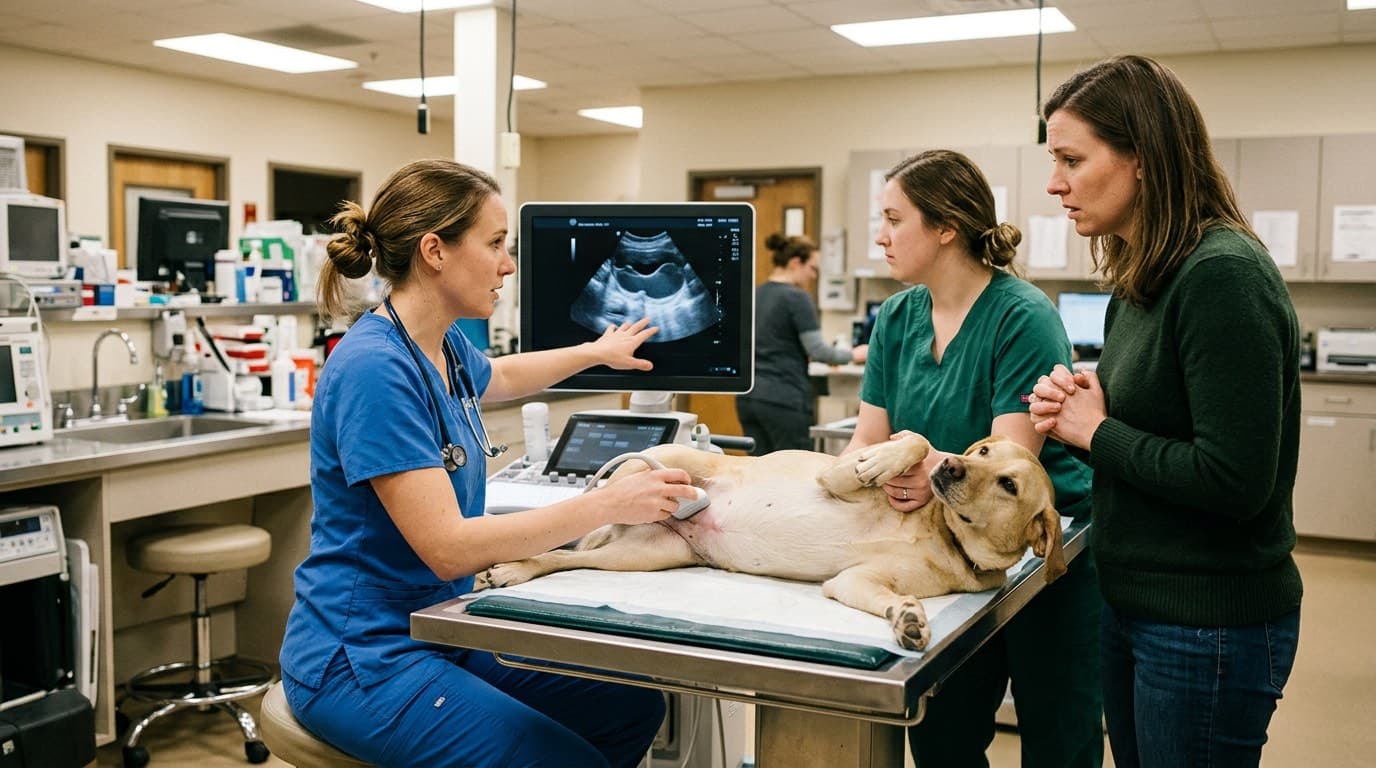
Pyometra is a serious, potentially fatal infection of the uterus affecting intact (unspayed) female dogs and cats. This guide covers the hormonal cascade that leads to pyometra, the critical difference between open and closed forms, how diagnosis is confirmed, and why emergency ovariohysterectomy is the treatment of choice — along with when medical management may be considered.
Key Takeaways
- ✓Pyometra is a life-threatening uterine infection in intact female dogs and cats — it is a surgical emergency with high mortality if untreated
- ✓Open pyometra shows vaginal discharge; closed pyometra (more dangerous) shows only systemic signs like lethargy, vomiting, and excessive thirst
- ✓Approximately 25% of intact female dogs will develop pyometra by age 10 — it is extremely common in unspayed females
- ✓Emergency ovariohysterectomy is the definitive treatment — medical management is only considered in rare breeding-prospect cases
- ✓Routine spaying before the first or second heat cycle virtually eliminates the risk of pyometra
What Is Pyometra and Who Is at Risk?
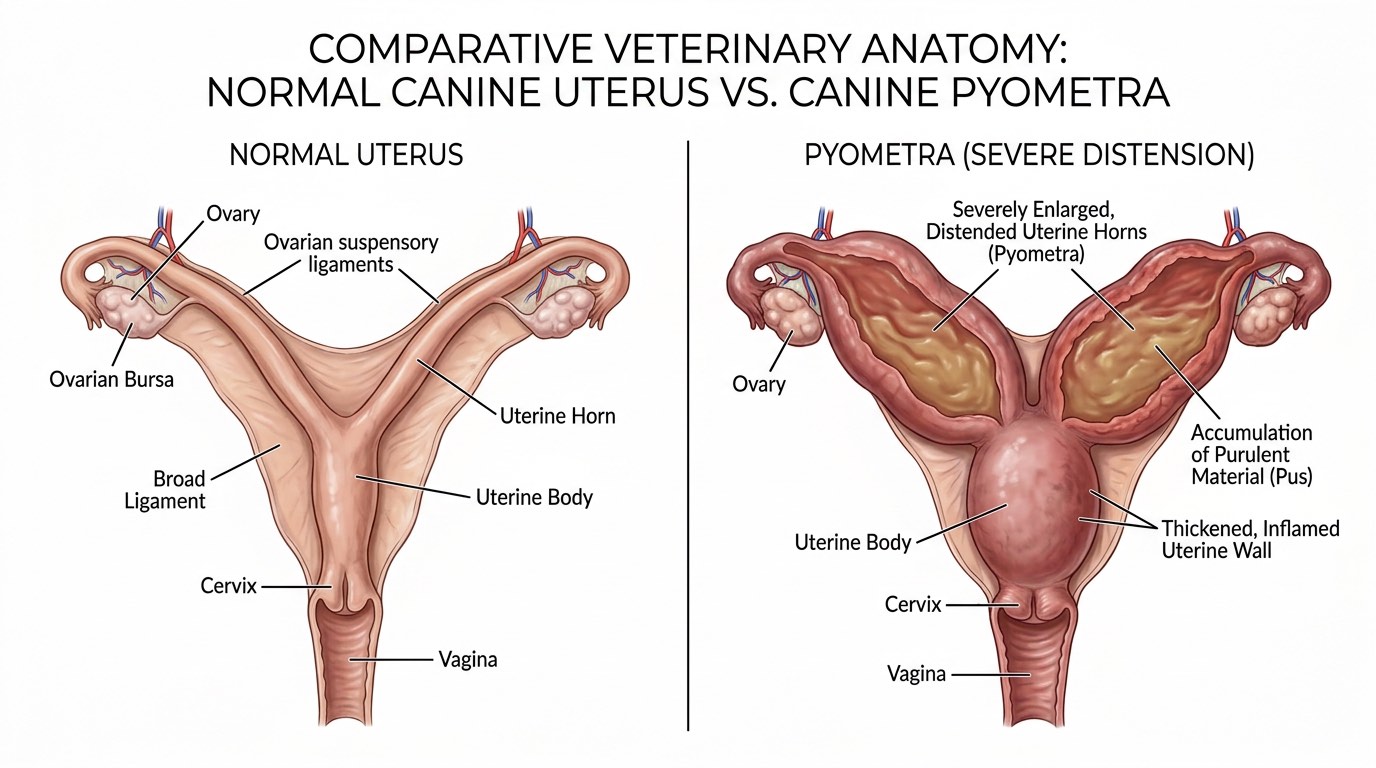
Pyometra is a life-threatening infection of the uterus that occurs in intact (unspayed) female dogs and cats. The term literally means "pus in the uterus," and at its most severe, the uterus fills with infected fluid, becomes massively enlarged, and can rupture — leading to septicemia and death within hours. It is one of the most urgent surgical emergencies in small animal medicine.
The condition develops through a hormonal mechanism linked to the estrous cycle. Repeated progesterone surges following estrus (heat) cause the uterine lining to thicken and develop cysts (a condition called cystic endometrial hyperplasia or CEH). This thickened, cystic environment is ideal for bacterial colonization — most commonly Escherichia coli, which ascends from the vagina through the cervix. Over time — often after multiple estrous cycles — the bacterial load overwhelms the uterine defenses and frank pyometra develops.
Any intact female dog or cat can develop pyometra, but risk increases significantly with age and number of cycles. Dogs are most commonly affected between 6 and 10 years of age, though it can occur in younger animals. Cats develop pyometra less frequently than dogs but it is still a serious concern in intact queens. Importantly, pyometra can also develop after inappropriate use of estrogen or progesterone-containing medications used to suppress heat or treat false pregnancy.
Open vs Closed Pyometra: Why the Difference Matters
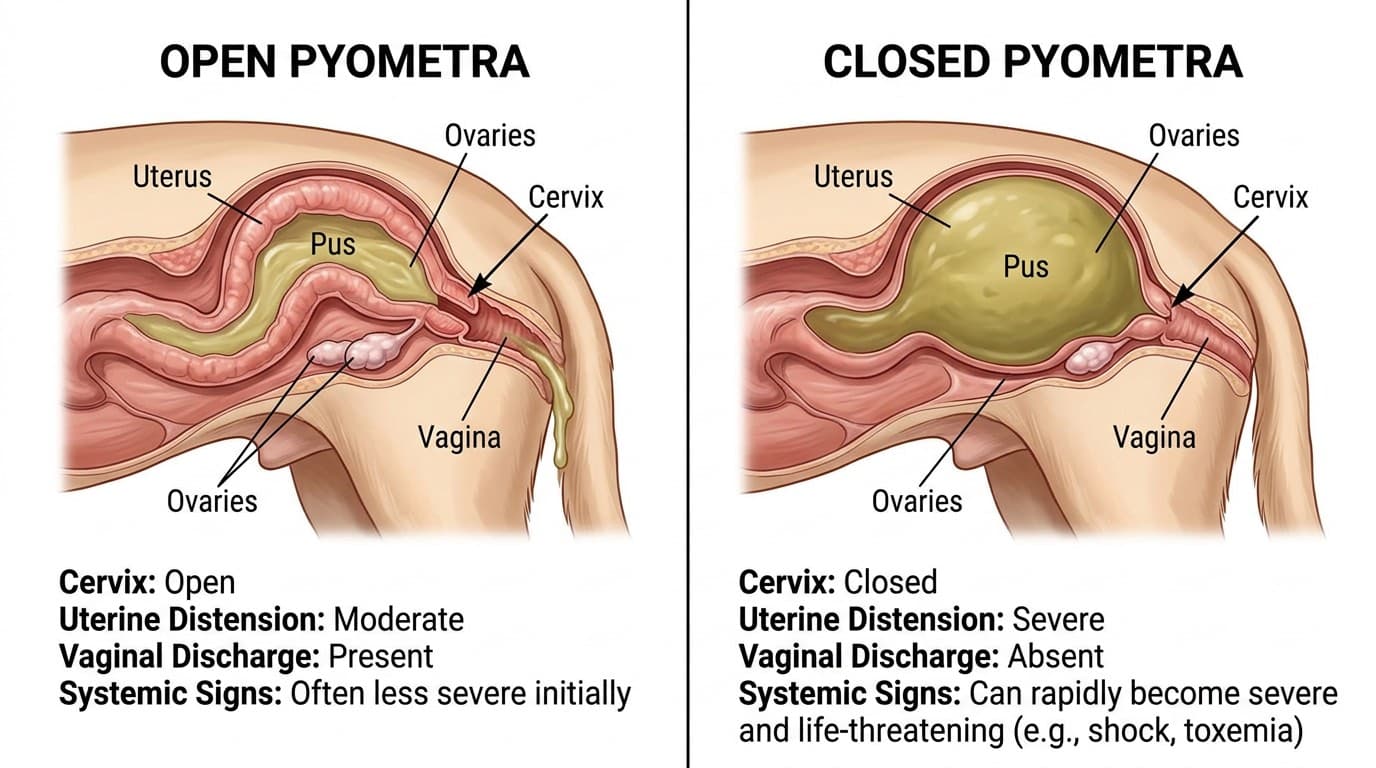
Pyometra exists in two forms distinguished by whether the cervix is open or closed, and this distinction has major implications for presentation severity and urgency. In open pyometra, the cervix remains open, allowing purulent discharge to drain from the vagina. Owners notice a foul-smelling, often brownish-grey or bloody vaginal discharge, which is the most recognizable sign. While open pyometra is still a serious emergency, the drainage provides some relief of pressure and the animal may be less critically ill at presentation.
Closed pyometra is more dangerous. The cervix is sealed shut, trapping the infected contents within the uterus. There is no external discharge — the only signs are systemic: lethargy, vomiting, dramatically increased thirst and urination (caused by bacterial toxins affecting kidney tubules), abdominal distension from the grossly enlarged uterus, and rapidly progressing deterioration. Without the alerting sign of vaginal discharge, closed pyometra can advance further before owners recognize something is wrong.
Closed pyometra carries a higher risk of uterine rupture, peritonitis (infection spreading into the abdominal cavity), and septic shock. The mortality rate for untreated or delayed closed pyometra is very high. Any intact female dog or cat showing these systemic signs — particularly if she had a heat cycle 4–8 weeks prior — should be treated as a potential pyometra emergency until proven otherwise.
Recognizing the Signs and Getting a Diagnosis
In open pyometra, the vaginal discharge is usually the primary concern that brings owners to the veterinarian — though it is sometimes mistaken for a normal late-heat discharge. Beyond discharge, affected animals show progressive lethargy, decreased appetite, and the characteristic polydipsia/polyuria (excessive drinking and urinating) from bacterial endotoxin effects on the kidneys. Fever may or may not be present.
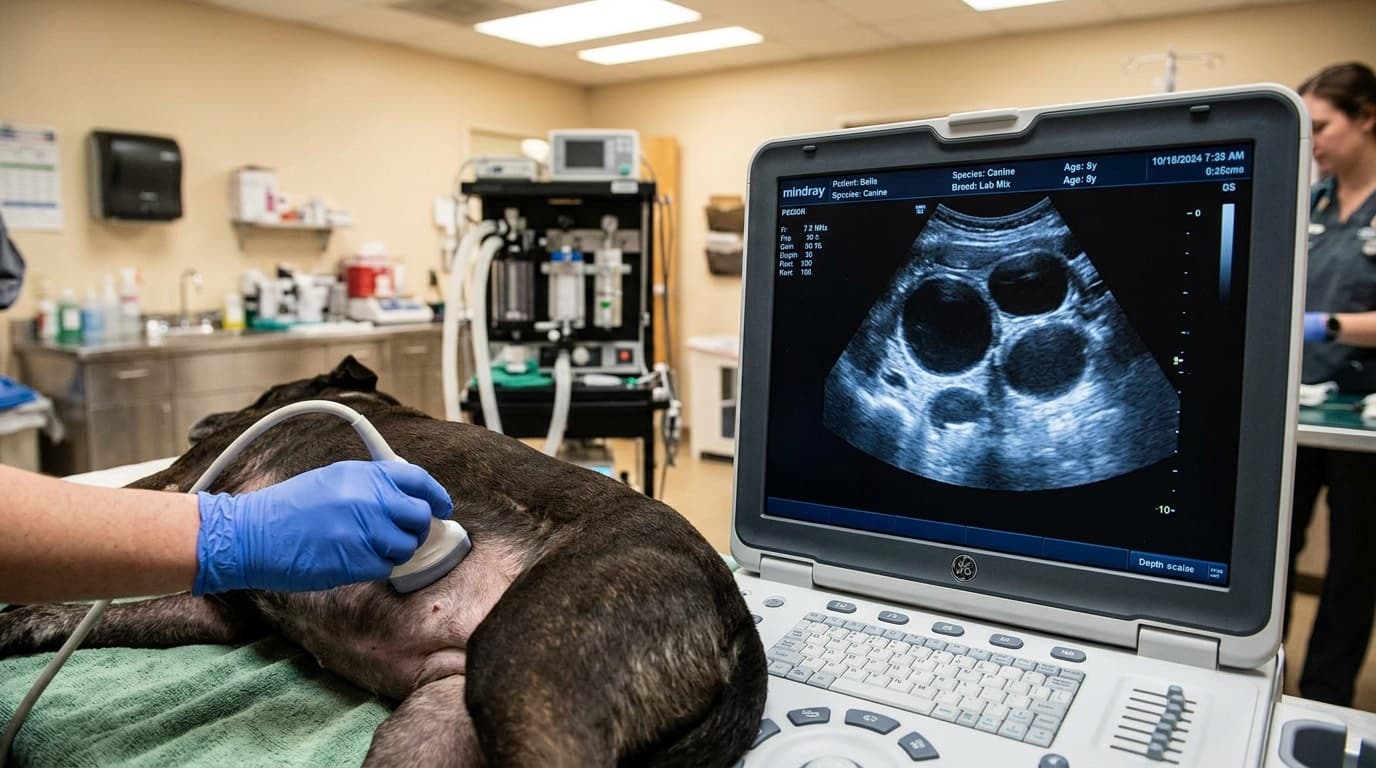
Abdominal palpation often reveals a tense, enlarged, doughy uterus, though this requires care — rough palpation of a friable, pus-filled uterus risks rupture. Diagnosis is confirmed with abdominal ultrasound, which clearly demonstrates the fluid-distended uterine horns and allows assessment of uterine wall integrity. Complete blood count typically shows a marked leukocytosis (elevated white blood cells) with a left shift, and bloodwork often reveals azotemia (elevated BUN/creatinine from the kidney effects of endotoxemia).
Radiography can demonstrate the enlarged uterus and may be useful when ultrasound is unavailable, but is less sensitive for characterizing uterine contents. The speed of diagnosis matters enormously — a dog or cat presenting in septic shock from pyometra requires immediate stabilization with IV fluids and antibiotics, followed by emergency surgery as soon as the patient is stable enough to tolerate anesthesia.
Treatment: Emergency Spay and Medical Options
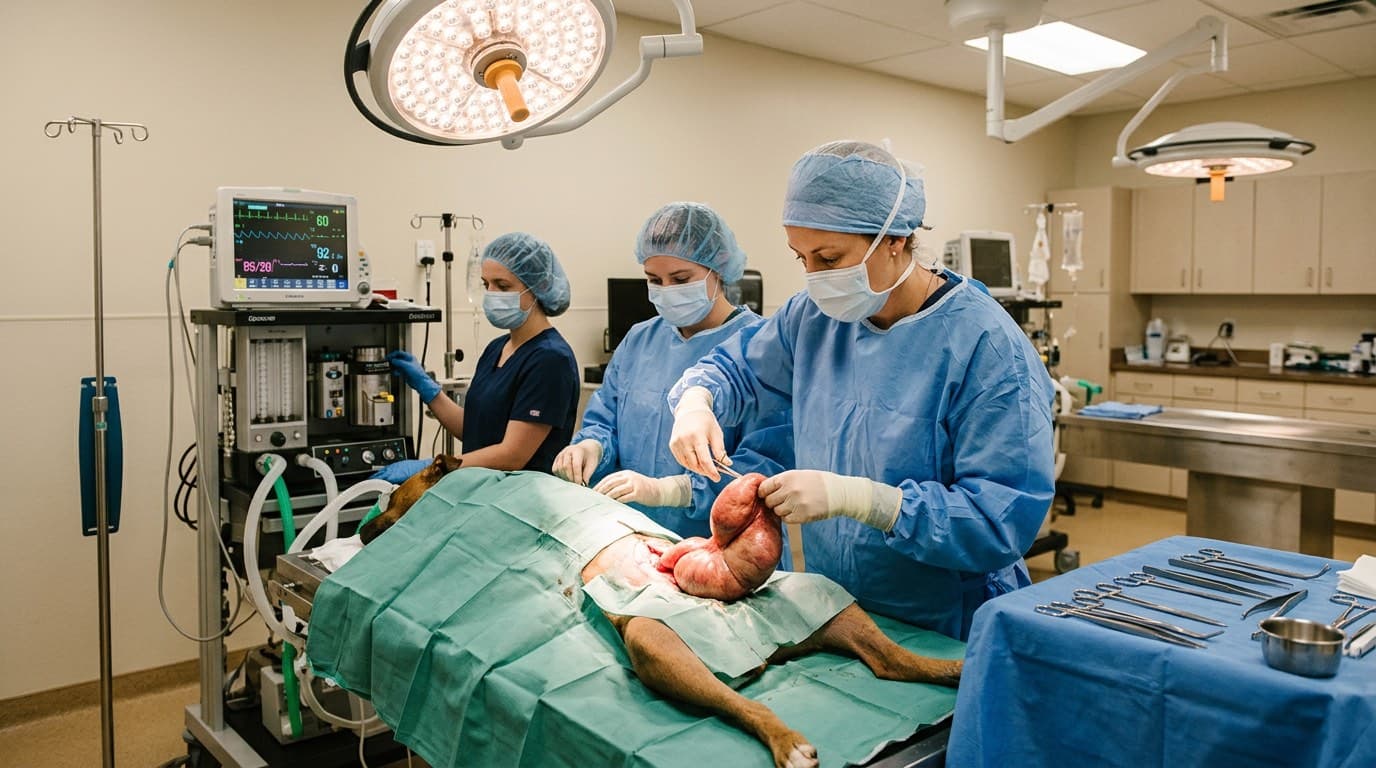
Emergency ovariohysterectomy (surgical removal of the uterus and ovaries) is the definitive and preferred treatment for pyometra in virtually all cases. It is simultaneously curative and preventive — it removes the source of infection and eliminates the possibility of recurrence. Surgery is performed as soon as the patient is sufficiently stabilized with IV fluids, antibiotics, and supportive care. Anesthetic risk is elevated in septic patients, but the risk of not operating is far greater than surgical risk in experienced hands.
Post-operative care includes continued IV antibiotics, fluid support, pain management, and close monitoring of renal function, which often improves dramatically once the endotoxin source is removed. Most dogs and cats make a full recovery within 1–2 weeks with appropriate surgical and post-operative care. Long-term prognosis is excellent when surgery is performed before uterine rupture occurs.
Medical management with prostaglandin therapy or aglepristone (a progesterone receptor blocker available in some countries) may be considered in very select cases — specifically young animals with open pyometra who are breeding prospects and whose owners are committed to intensive monitoring and re-breeding at the next cycle. Medical management carries significant risks including incomplete resolution, toxicity, uterine rupture, and high recurrence rates. It is not appropriate for closed pyometra, critically ill patients, or animals where future breeding is not planned. For most pets, spay remains the only appropriate recommendation.
Prevention: Why Spaying Young Prevents This Emergency
Pyometra is almost entirely preventable through elective ovariohysterectomy performed before the animal develops the condition. Spaying eliminates the uterus and ovaries, completely removing the anatomical and hormonal substrate needed for pyometra to develop. This is one of the most compelling medical arguments for routine spaying of female dogs and cats that are not intended for breeding.
The optimal age for spaying remains a topic of ongoing discussion, particularly in large and giant breeds where early spay may affect musculoskeletal development. Current recommendations for most dogs and cats center on spaying before the first or second heat cycle. Your veterinarian can provide breed-specific guidance on timing. What is unequivocal is that intact females who are not bred face a significant cumulative lifetime risk of pyometra — approximately 25% of intact female dogs will develop pyometra by age 10.
For intact breeding dogs, owners should remain vigilant for signs of pyometra in the 4–8 weeks following each heat cycle — the window during which the progesterone-driven hormonal environment is most permissive for infection. Any intact female showing lethargy, excessive thirst, vomiting, abdominal distension, or vaginal discharge in this post-heat window should be evaluated by a veterinarian urgently.

Frequently Asked Questions
What are the first signs of pyometra in dogs?
The most recognizable early sign of open pyometra is a foul-smelling vaginal discharge, often yellowish, grey, or blood-tinged. Both open and closed forms cause lethargy, decreased appetite, increased thirst, and increased urination. Closed pyometra, which has no discharge, may also cause visible abdominal distension. Symptoms typically appear 4–8 weeks after a heat cycle.
How quickly does pyometra progress?
Pyometra can progress from mild signs to life-threatening sepsis within days, particularly the closed form. Once recognized, it should be treated as an emergency — waiting even 24–48 hours to "see if she improves" can allow septic shock and uterine rupture to develop. If you suspect pyometra, seek veterinary care the same day.
Can pyometra be treated with antibiotics alone?
Antibiotics alone cannot cure pyometra. They can help stabilize an infected animal for surgery, but the infected uterus must be surgically removed for definitive treatment. The bacteria within the pyometra are largely inaccessible to antibiotics, and the structural and hormonal problem persists as long as the uterus remains. Medical management with prostaglandins is possible in specific cases but carries significant risk and high recurrence.
Can a dog survive pyometra without surgery?
Survival without surgery is uncommon and carries very high risk, particularly for closed pyometra. Medical management (prostaglandins or aglepristone) has success rates of around 75–80% in very select open-pyometra cases in young animals, but recurrence at the next heat cycle is common (up to 70%). For most dogs and cats, surgery is the only reliably life-saving option.
Does spaying prevent pyometra?
Yes — spaying (ovariohysterectomy) completely prevents pyometra by removing the uterus and ovaries. This is one of the primary medical reasons to spay intact female dogs and cats that are not used for breeding. Spaying before the first or second heat cycle provides the most complete protection and also reduces risks of mammary cancer.
References
- Dow C. The cystic hyperplasia-pyometra complex in the bitch. Vet Rec. 1958.
- Hagman R. Clinical and molecular characteristics of pyometra in female dogs. Reprod Domest Anim. 2012.
- Verstegen J, et al. Mucometra, cystic endometrial hyperplasia, and pyometra in the cat. Theriogenology. 2008.
- Smith FO. Canine pyometra. Theriogenology. 2006.