Quick Answer
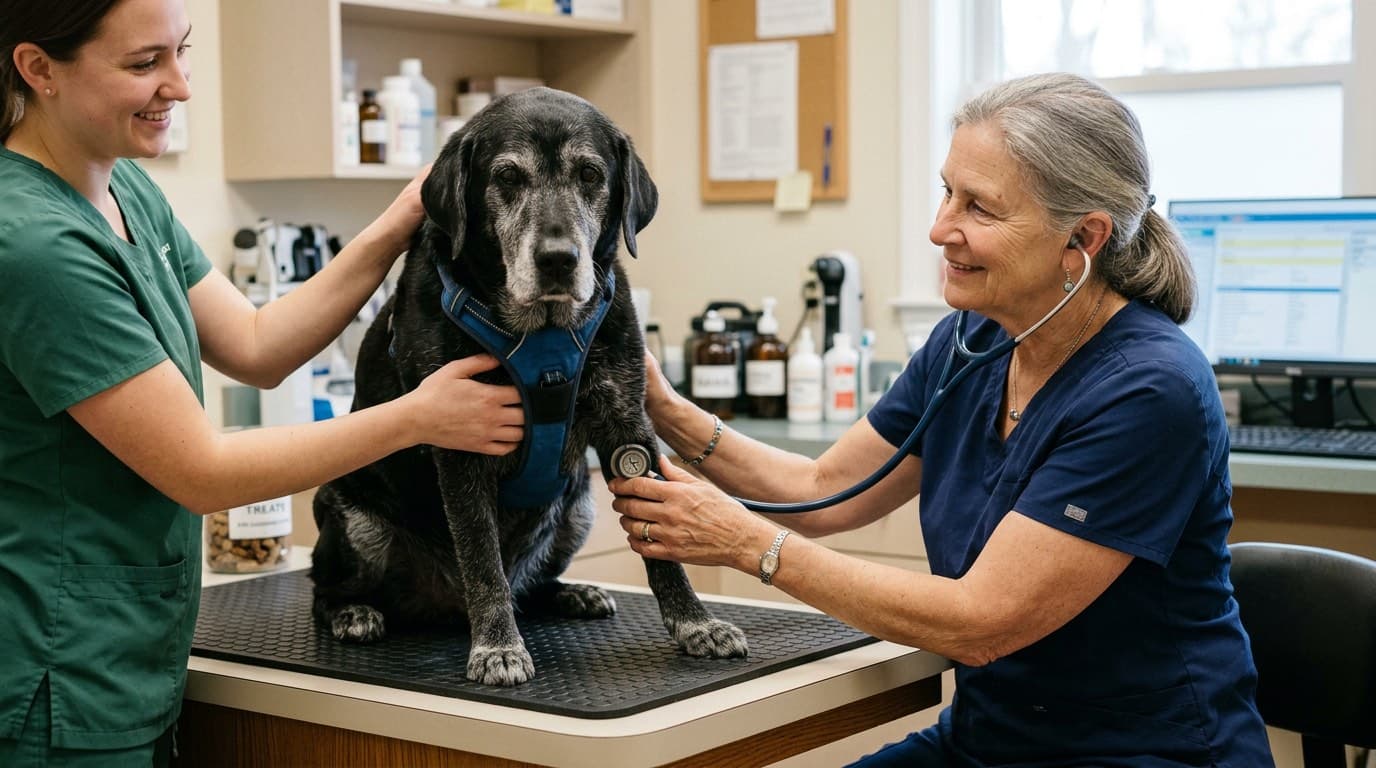
Geriatric dogs require proactive wellness monitoring to detect age-related conditions early when they are most treatable. This guide covers age-by-size definitions, biannual screening protocols, common geriatric conditions, cognitive dysfunction, and quality of life assessment.
Key Takeaways
- ✓Giant breeds become geriatric as early as 6–7 years; small breeds not until 10–12 years
- ✓Biannual wellness visits (every 6 months) are recommended for all senior dogs — annual is insufficient for aging patients
- ✓CDS affects ~28% of dogs at 11–12 years and ~68% at 15–16 years — diagnose with the DISHA acronym
- ✓Blood pressure should be measured at every senior visit; systolic >160 mmHg requires investigation
- ✓Selegiline (0.5–1 mg/kg/day) is the only FDA-approved treatment for CDS; improves ~70% of dogs
- ✓HHHHHMM scale provides a structured framework for quality-of-life assessment and end-of-life conversations
When Is a Dog Considered Geriatric?
The term "senior" or "geriatric" varies by breed size, because larger dogs age faster and have shorter lifespans.
Age thresholds by body size:
| Size | Weight | "Senior" Begins | "Geriatric" Begins |
|---|---|---|---|
| Small | <10 kg | 8–9 years | 11–12 years |
| Medium | 10–25 kg | 7–8 years | 10 years |
| Large | 25–45 kg | 6–7 years | 8–9 years |
| Giant | >45 kg | 5–6 years | 7–8 years |
Giant breed dogs (Great Danes, Irish Wolfhounds, Saint Bernards) may be considered geriatric as early as 6–7 years, while small breeds (Chihuahuas, Miniature Poodles) can remain physiologically middle-aged until 10–11 years.
The "senior" versus "geriatric" distinction: Some clinicians use "senior" for the early phase of aging (physiologic changes present, minimal clinical disease) and "geriatric" for advanced aging with multiple comorbidities and functional decline. Practically, both populations benefit from biannual wellness monitoring.
Transition from annual to biannual visits: The AAHA Senior Care Guidelines recommend biannual wellness visits (every 6 months) for dogs in the senior/geriatric life stage, as disease can progress significantly in 12 months in an aging patient.
Biannual Senior Wellness Screening Protocol
A comprehensive biannual assessment catches disease at a treatable stage. The following protocol is recommended for all senior/geriatric dogs at every 6-month visit:
Physical Examination
- Thorough auscultation (cardiac murmur grading, arrhythmia detection)
- Abdominal palpation (organomegaly, masses)
- Lymph node assessment
- Musculoskeletal evaluation (joint pain, muscle mass scoring)
- Dermatological assessment (masses, skin changes)
- Ophthalmologic examination (nuclear sclerosis vs cataract, elevated IOP screening)
- Neurological assessment (mentation, gait, reflexes)
- Body condition score (BCS 1–9) and muscle condition score (MCS)
Laboratory Screening
- CBC: Anemia (chronic disease, bone marrow disease, hemorrhagic), leukocytosis/leukopenia, thrombocytopenia
- Serum chemistry: Liver enzymes (ALP, ALT, GGT), BUN/creatinine, electrolytes, glucose, albumin, total protein, phosphorus, calcium
- Urinalysis with sediment: Specific gravity (early renal dysfunction → isosthenuria), proteinuria (if present → UPC ratio), casts, crystalluria
- UPC ratio: If any proteinuria detected on dipstick or USG <1.020
- T4 or cTSH: Consider if clinical signs suggest hypothyroidism (weight gain, lethargy, skin changes)
- Blood pressure: Measure at every senior visit (using Doppler or oscillometric); systolic >160 mmHg warrants investigation
Imaging (every 12–18 months or when indicated)
- Thoracic radiographs: cardiac size, pulmonary disease, incidental mass detection
- Abdominal ultrasound: adrenal size, splenic/hepatic nodules, urinary tract, early organ changes
Fecal examination: Annual fecal flotation and/or Giardia antigen testing
Common Geriatric Conditions by Body System
Musculoskeletal
- Osteoarthritis: affects >60% of dogs >7 years. Multimodal pain management (NSAIDs, gabapentin, physical therapy, weight management). Librela (bedinvetmab, anti-NGF monoclonal antibody) — new monthly SQ injection option.
- Intervertebral disc disease (IVDD): progressive Type II in large breeds
- Muscle wasting (sarcopenia): loss of epaxial and appendicular muscle mass with aging
Cardiovascular
- Myxomatous mitral valve disease: MMVD murmur in >50% of small/medium dogs by age 10
- Dilated cardiomyopathy: large breeds
- Arrhythmias: atrial fibrillation, ventricular premature contractions
Endocrine
- Hypothyroidism: classic presentation of weight gain, lethargy, cold intolerance, skin/coat changes. Diagnose with T4 ± TSH.
- Cushing's syndrome (hyperadrenocorticism): PU/PD, pendulous abdomen, thin skin
- Diabetes mellitus: PU/PD, cataracts (especially in dogs)
Renal
- Chronic kidney disease (CKD): common in senior and geriatric dogs. Annual creatinine, BUN, SDMA, and urinalysis. IRIS staging guides treatment.
- Protein-losing nephropathy
Oncology
- Neoplasia incidence increases dramatically with age
- Mast cell tumors, lipomas, soft tissue sarcomas, lymphoma, osteosarcoma (giant breeds), hemangiosarcoma (Golden Retrievers, German Shepherds)
Neurological
- Cognitive dysfunction syndrome (CDS): affects ~28% of dogs 11–12 years; up to 68% of dogs 15–16 years (see next section)
Cognitive Dysfunction Syndrome (CDS)
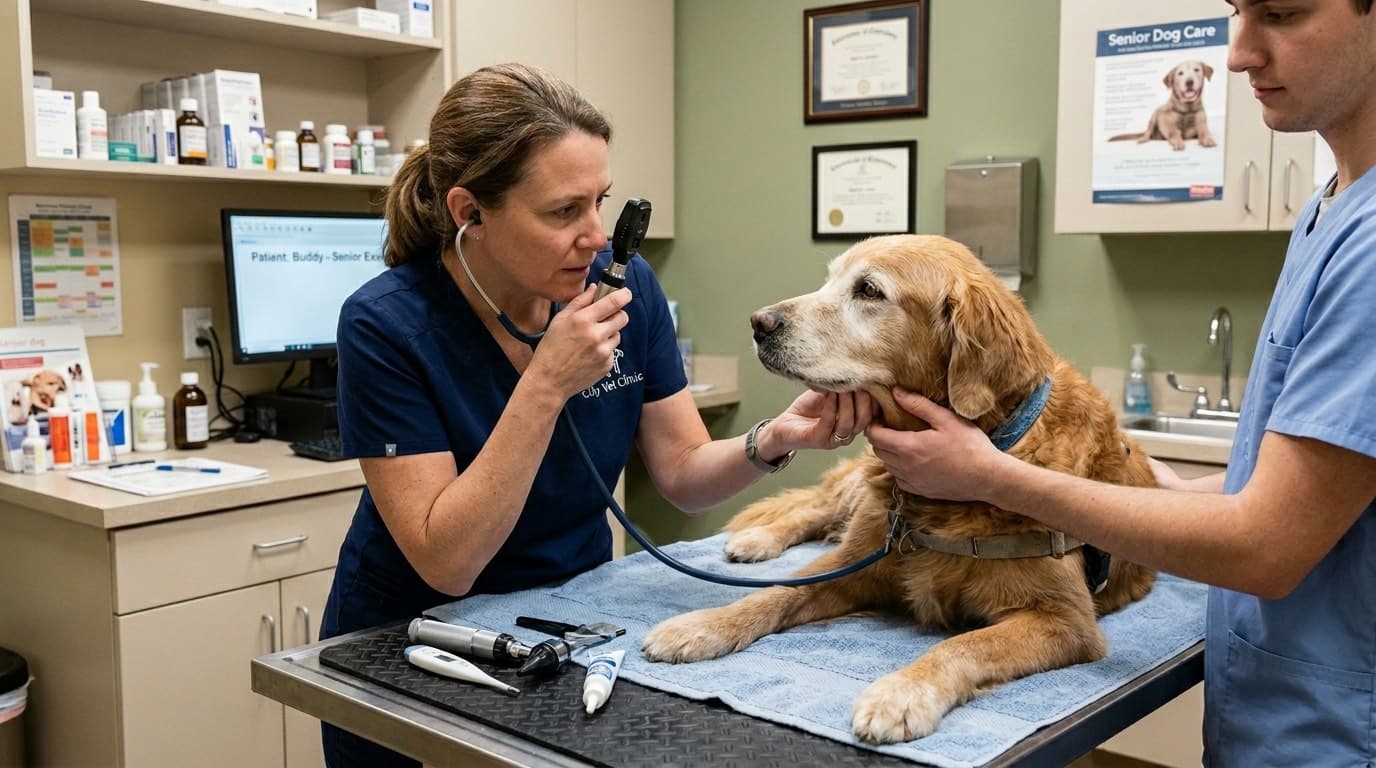
Canine cognitive dysfunction syndrome (CDS) is analogous to Alzheimer's disease in humans. Characterized by β-amyloid plaque accumulation in the brain, CDS causes progressive neurocognitive decline.
DISHA Acronym — Clinical Signs
- Disorientation: getting "stuck" in corners, staring at walls, seeming lost in familiar places, failing to recognize family members
- Interactions changed: decreased interest in play, affection, or social interaction; increased clinginess or irritability
- Sleep-wake cycle changes: waking at night, restlessness nocturnally, sleeping more during the day
- Housetraining accidents: loss of previously learned housetraining, indoor elimination
- Activity changes: decreased activity, decreased responsiveness to stimuli, increased anxiety
Prevalence: ~28% at 11–12 years; ~68% at 15–16 years. Significantly underdiagnosed — many owners attribute signs to "normal aging."
Diagnosis: Clinical diagnosis based on DISHA history and ruling out metabolic/neurological disease (CBC, chemistry, urinalysis, blood pressure, thorough neurological exam, consider MRI).
Management
- Selegiline (Anipryl): MAO-B inhibitor; first FDA-approved treatment for CDS; dose 0.5–1 mg/kg/day orally. Mild improvement in ~70% of dogs.
- Prescription diet: Hill's b/d (antioxidants, omega-3s, mitochondrial cofactors); Purina Pro Plan Bright Mind (BDNF-supporting formula)
- Environmental enrichment: mental stimulation (puzzle feeders, nose work, new commands), consistent routines, nightlight for disoriented dogs
- Melatonin: 1–3 mg at bedtime for sleep-wake disruption
- Anxiolytics: gabapentin, trazodone, fluoxetine for anxiety component
Quality of Life Assessment: The HHHHHMM Scale
The HHHHHMM Quality of Life Scale (Dr. Alice Villalobos) provides a structured framework for assessing and monitoring quality of life in senior and ill pets, and guiding end-of-life conversations.
HHHHHMM Scale — Scoring 1–10 for each category (1=poor, 10=best)
- Hurt: Is pain successfully managed? Can the pet breathe comfortably?
- Hunger: Is the pet eating enough? Can appetite be stimulated if needed?
- Hydration: Is the pet adequately hydrated? Are SQ fluids needed/feasible?
- Hygiene: Can the pet be kept clean and free of sores? Can grooming be maintained?
- Happiness: Does the pet express joy or interest? Does it respond to family/environment?
- Mobility: Can the pet move around enough to satisfy basic needs? Physical therapy available?
- More good days than bad: Is the pet having more positive experiences than negative ones?
Interpreting the score:
- Total score >35/70: Reasonable quality of life; continue comfort measures
- Total score <35/70: Quality of life is poor; euthanasia should be seriously considered
This scale facilitates objective, structured conversations with clients who are struggling with end-of-life decisions. Document it in the medical record at each senior visit to track trends over time.
Hospice and palliative care: For terminal or declining patients, focus on comfort, dignity, and family connection rather than aggressive intervention. Involve a veterinary social worker or grief counselor when available.
References
- Landsberg GM, et al. Cognitive dysfunction syndrome: a disease of canine and feline brain aging. Vet Clin North Am Small Anim Pract. 2012.
- Fortney WD. Implementing a successful senior/geriatric health care program for veterinarians, veterinary technicians, and office managers. Vet Clin North Am Small Anim Pract. 2012.
- Villalobos A, Kaplan L. Canine and Feline Geriatric Oncology: Honoring the Human-Animal Bond. Wiley-Blackwell; 2007.