Quick Answer
An evidence-based guide to canine cognitive dysfunction syndrome covering the DISHA behavioral checklist, pathophysiology, selegiline (Anipryl) therapy, melatonin, nutritional support, and environmental enrichment for aging dogs.
Key Takeaways
- ✓CDS affects an estimated 28% of dogs aged 11–12 and 68% of dogs aged 15–16, yet remains significantly underdiagnosed.
- ✓The DISHA acronym (Disorientation, Interaction changes, Sleep-wake disturbances, House-soiling, Activity changes) provides a systematic framework for recognizing cognitive decline.
- ✓Selegiline (Anipryl) is the only FDA-approved CDS medication, improving signs in approximately 70% of treated dogs within 4–8 weeks.
- ✓Multimodal management — combining medication, diet (MCTs, antioxidants), melatonin, and environmental enrichment — produces the best outcomes.
- ✓Early intervention is key: treatment is most effective when started before cognitive decline becomes severe.
What Is Canine Cognitive Dysfunction?
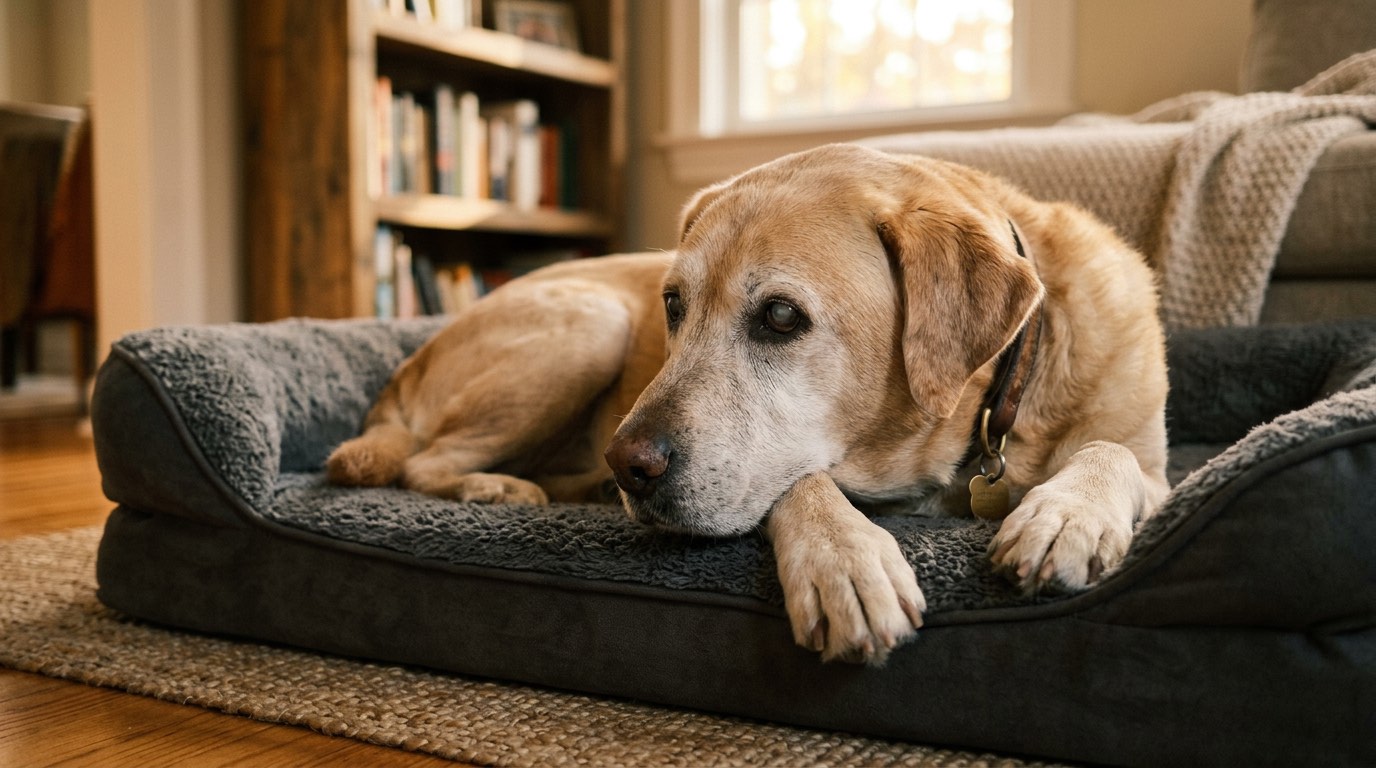
Canine cognitive dysfunction syndrome (CDS) is a progressive neurodegenerative condition in aging dogs that produces behavioral changes remarkably similar to those seen in human Alzheimer's disease. It involves the gradual deterioration of cognitive abilities — learning, memory, awareness, perception, and decision-making — as the aging brain undergoes structural and chemical changes.
CDS is far more common than most owners realize. Studies estimate that 28 percent of dogs aged 11–12 years and 68 percent of dogs aged 15–16 years show at least one sign of cognitive dysfunction. Despite this high prevalence, it remains significantly underdiagnosed because many owners and even veterinarians attribute the behavioral changes to "just getting old" rather than recognizing a treatable medical condition.
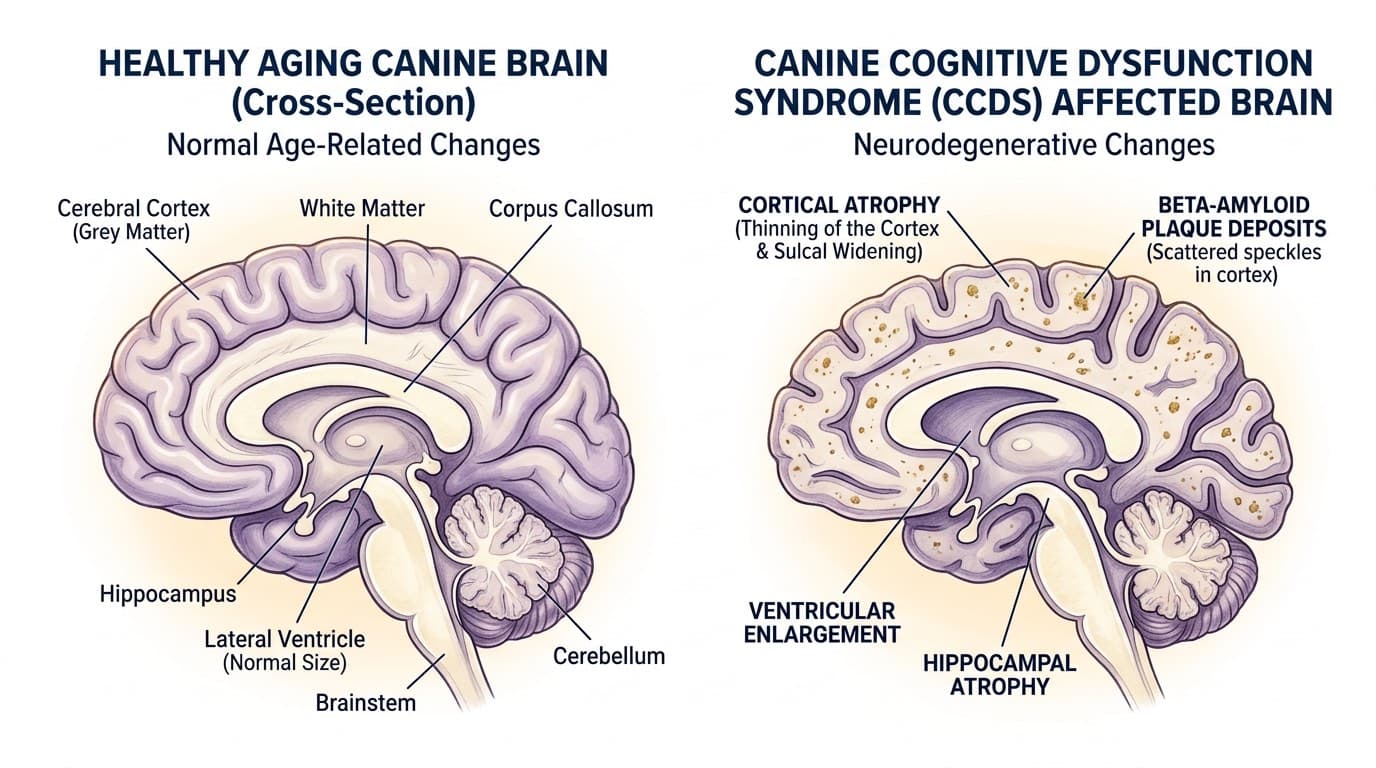
The pathological changes in CDS brains parallel those found in Alzheimer's disease and include the accumulation of beta-amyloid plaques in the brain parenchyma, oxidative damage to neurons, neuronal loss, reduced neurotransmitter production (particularly dopamine), cerebral vascular changes, and brain atrophy visible on advanced imaging. These changes are progressive, meaning the condition worsens over time, but the rate of progression can be slowed with appropriate multimodal intervention.
Early recognition and intervention are critical. Once cognitive decline becomes severe, treatment options have limited ability to reverse established damage. However, when identified early, a combination of pharmacological therapy, dietary management, and environmental enrichment can meaningfully slow progression and maintain quality of life for months to years.
Recognizing CDS: The DISHA Checklist
The clinical signs of CDS are behavioral in nature and can be systematically evaluated using the DISHA acronym, which helps owners and veterinarians identify the key categories of cognitive decline.
D — Disorientation
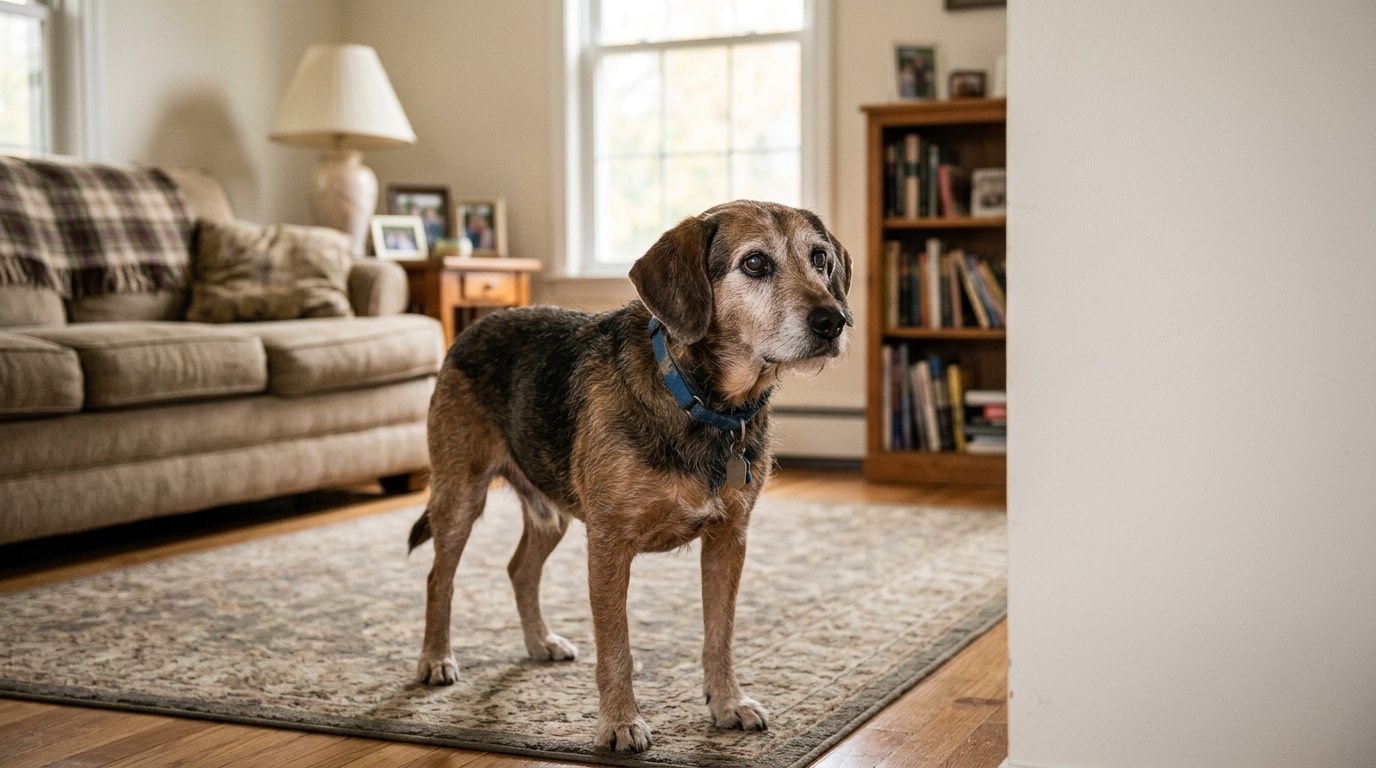
Dogs with CDS may appear lost or confused in familiar environments. They may get stuck behind furniture, stare at walls, go to the wrong side of a door (hinge side instead of opening side), or appear to forget the layout of their home. Some dogs fail to recognize familiar family members or other household pets, at least temporarily.
I — Interaction Changes
Social behavior changes are common. Previously affectionate dogs may become withdrawn, disinterested in greetings, or less responsive to petting. Conversely, some dogs develop increased clinginess and anxiety when separated from their owners. Changes in interaction with other household pets — increased irritability or loss of established social hierarchies — may also occur.
S — Sleep-Wake Cycle Disturbances
This is one of the most distressing signs for owners. Affected dogs often sleep more during the day and become restless, pace, or vocalize at night. This reversal of the normal circadian rhythm parallels "sundowning" behavior seen in human dementia patients. The nighttime restlessness can be profoundly disruptive to the entire household.
H — House-Soiling
Dogs that were previously reliably house-trained may begin having indoor accidents. This occurs not because of incontinence (involuntary urine leakage) but because the dog forgets its training, fails to signal its need to go outside, or becomes disoriented and cannot find the door. It is critical to rule out medical causes of house-soiling — urinary tract infections, kidney disease, diabetes, and mobility issues — before attributing it to cognitive decline.
A — Activity Level Changes
This encompasses changes in both directions. Some dogs show decreased interest in play, exploration, and food. Others develop repetitive, purposeless behaviors — pacing, circling, excessive licking, or staring — that can persist for extended periods. Increased anxiety, phobias that emerge for the first time in a senior dog, and separation anxiety that develops later in life can all be manifestations of CDS.
Using the Checklist
If your senior dog (over 8 years for large breeds, over 10 for smaller breeds) shows one or more DISHA signs, a veterinary evaluation is warranted. Multiple signs across different categories strongly suggest cognitive dysfunction rather than isolated age-related changes.
Diagnosis & Ruling Out Other Conditions
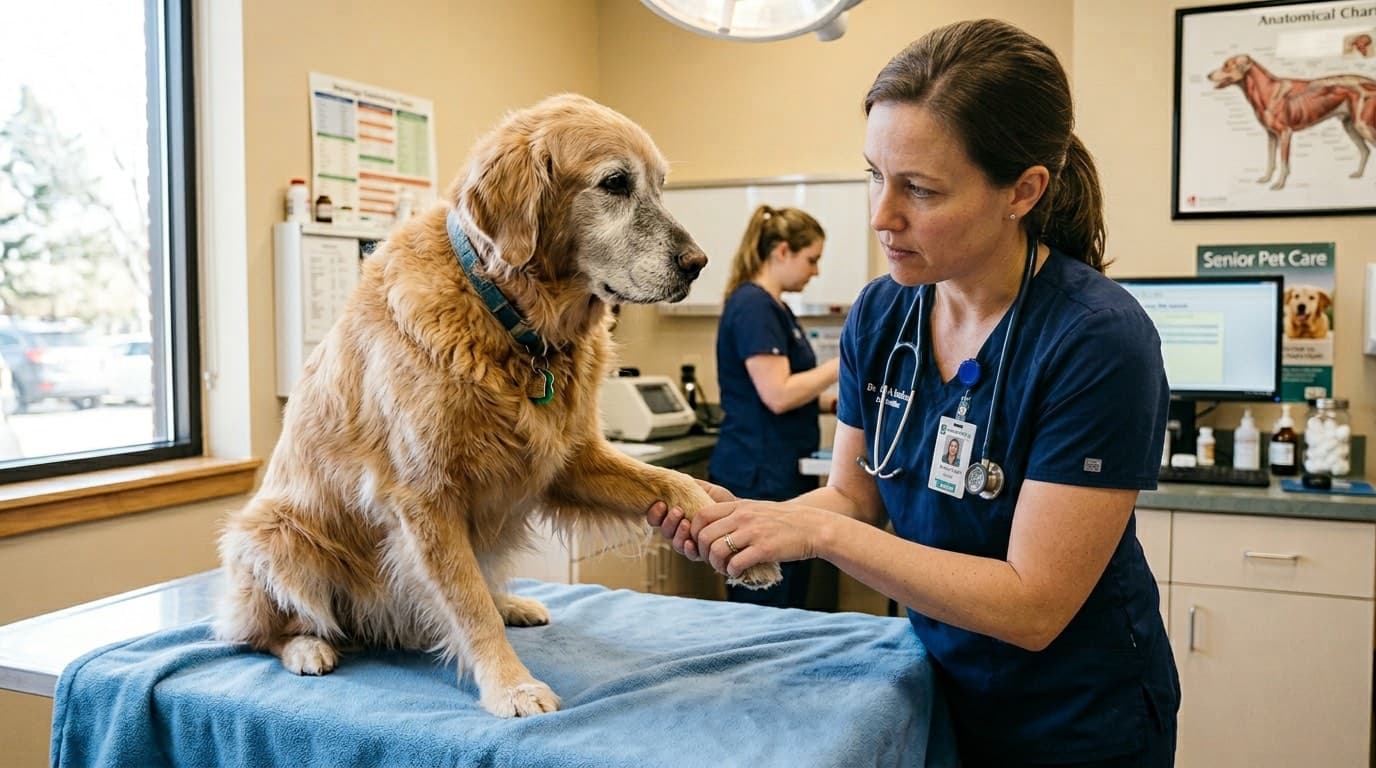
CDS is a diagnosis of exclusion — meaning medical conditions that can produce similar behavioral signs must be systematically ruled out before attributing changes to cognitive decline. Many treatable conditions can mimic CDS, and some may coexist with it.
Essential Diagnostic Workup
A thorough veterinary evaluation for a senior dog with behavioral changes should include:
- Complete physical examination — including neurological assessment, vision and hearing testing, and pain evaluation (arthritis pain is a major cause of nighttime restlessness and house-soiling)
- Comprehensive bloodwork — CBC, chemistry panel, and thyroid levels to screen for metabolic causes (hypothyroidism, liver disease, kidney disease, diabetes, electrolyte imbalances)
- Urinalysis — to rule out urinary tract infections and kidney disease as causes of house-soiling
- Blood pressure measurement — hypertension can cause neurological signs in senior dogs
- Abdominal ultrasound — if bloodwork suggests organ dysfunction
Conditions That Can Mimic CDS
Several conditions produce behavioral signs overlapping with CDS:
- Pain — particularly chronic osteoarthritis, dental disease, and abdominal pain. Dogs in pain may pace, become withdrawn, lose house-training, and have disrupted sleep
- Sensory decline — vision loss (cataracts, progressive retinal atrophy) and hearing loss can produce disorientation and apparent confusion
- Brain tumors — meningiomas and other intracranial neoplasms can cause progressive behavioral changes, circling, seizures, and personality changes
- Endocrine disease — hypothyroidism and Cushing's disease can cause lethargy, confusion, and behavioral changes
- Urinary/GI disease — kidney disease, diabetes, and gastrointestinal disorders can cause house-soiling and appetite changes
Advanced Imaging
MRI can reveal brain atrophy, ventricular enlargement, and intracranial masses. While not required for a CDS diagnosis, MRI is valuable when the clinical picture is atypical, progressing rapidly, or includes focal neurological signs (seizures, circling to one side) that suggest a structural brain lesion rather than diffuse cognitive decline.
Validated Questionnaires
Several validated clinical questionnaires exist (such as the Canine Cognitive Dysfunction Rating Scale, or CCDR) that help standardize the assessment of cognitive function and track changes over time. These tools can be useful for both initial diagnosis and monitoring treatment response.
Treatment & Medications
Optimal management of CDS requires a multimodal approach combining pharmacological therapy, dietary modification, and environmental and behavioral enrichment. No single intervention is sufficient on its own — the combination produces the best outcomes.
Selegiline (Anipryl)
Selegiline hydrochloride (brand name Anipryl) is the only FDA-approved medication for canine cognitive dysfunction. It is a selective, irreversible monoamine oxidase B (MAO-B) inhibitor that increases dopamine, norepinephrine, and phenylethylamine levels in the brain. It may also have neuroprotective effects by reducing free radical damage.
Dosing starts at 0.5–1.0 mg/kg once daily in the morning. Response may take 4–8 weeks, so owners should be counseled to allow adequate time before evaluating efficacy. Studies show improvement in approximately 70 percent of treated dogs, with benefits in activity, sleep patterns, and interactions.
Melatonin
Melatonin is a natural hormone that regulates the sleep-wake cycle. It is commonly used to address the circadian rhythm disruption (nighttime restlessness, daytime sleeping) that is one of the most distressing CDS symptoms for owners. Typical dosing is 1–6 mg given 30 minutes before bedtime, depending on the dog's size. Melatonin is generally very safe with minimal side effects and can be used alongside selegiline.
Other Medications
Additional pharmacological options include:
- Gabapentin — useful when anxiety and pain (common comorbidities in senior dogs) are contributing factors
- Trazodone — can help with nighttime restlessness and anxiety
- SAMe (S-adenosyl-L-methionine) — has both neuroprotective and hepatoprotective properties, available as the supplement Novifit or Denamarin
- Propentofylline (Karsivan) — a phosphodiesterase inhibitor that improves cerebral blood flow (available in some countries outside the US)
Nutritional Support
Diets rich in antioxidants, medium-chain triglycerides (MCTs), and omega-3 fatty acids have demonstrated cognitive benefits in aging dogs. Hill's b/d (Brain Aging Care) and Purina Pro Plan Bright Mind contain MCTs that provide an alternative energy source for aging neurons whose glucose metabolism is impaired. The supplement Senilife (containing phosphatidylserine, pyridoxine, Ginkgo biloba extract, resveratrol, and vitamin E) has shown positive effects in clinical studies on cognitive function in senior dogs.

Environmental Enrichment & Quality of Life
Environmental enrichment and behavioral strategies are powerful, non-pharmacological tools for maintaining cognitive function in aging dogs. The principle of "use it or lose it" applies to canine brains just as it does to human ones — mental stimulation helps maintain neural connections and may slow the progression of cognitive decline.
Mental Stimulation
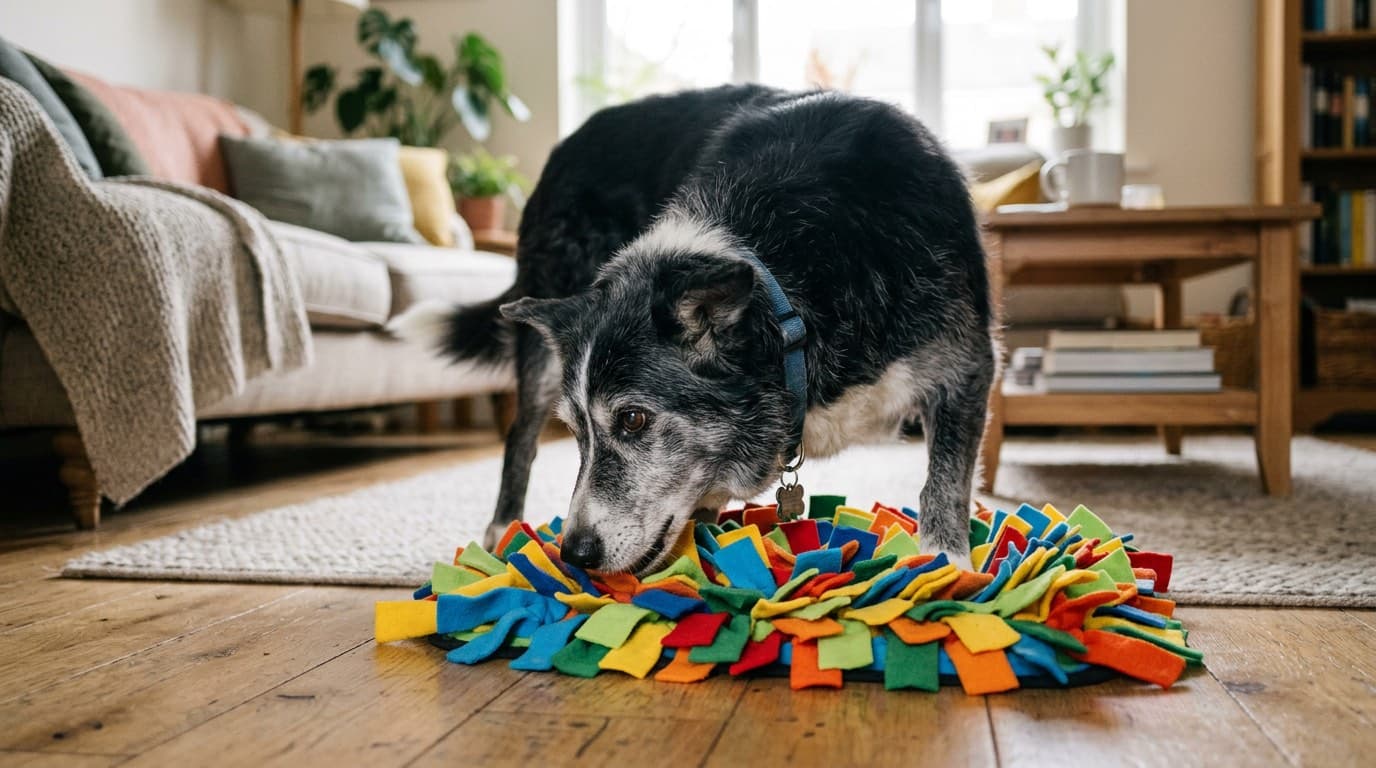
- Food puzzles and interactive feeders — Kong toys, snuffle mats, puzzle boards, and treat-dispensing toys challenge the dog to problem-solve during meals
- Training new tricks — short, positive training sessions (5–10 minutes) maintain neural pathways. Senior dogs can absolutely learn new skills with patience and positive reinforcement
- Scent work — hiding treats around the house or yard engages the dog's powerful olfactory system, providing both mental stimulation and physical activity
- Novel experiences — gentle walks in new environments, exposure to new safe surfaces and sounds (at a level that doesn't cause stress), and rotating toys keep the brain engaged
Environmental Modifications
- Night lighting — plug-in night lights along hallways and in rooms where the dog sleeps can reduce nighttime disorientation and anxiety
- Consistent environment — avoid rearranging furniture or making major household changes that can increase confusion
- Non-slip surfaces — rugs and mats on slippery floors reduce anxiety about falling, which can worsen reluctance to move and contribute to social withdrawal
- Easy access — ramps for getting on furniture or into cars, elevated food and water bowls for arthritic dogs, and ensuring the route to the door for outdoor elimination is clear and well-lit
Establishing Predictable Routines
Dogs with CDS benefit enormously from consistent daily routines. Feeding, walking, and sleep times should be as predictable as possible. A structured daily routine provides cognitive scaffolding that helps compensate for declining memory and orientation.
Supporting Owner Wellbeing
Caring for a dog with CDS can be emotionally and physically exhausting, particularly when nighttime restlessness disrupts the owner's sleep. Veterinary teams should proactively address owner wellbeing, validate the emotional difficulty of watching a beloved pet decline, and discuss quality of life benchmarks honestly. Resources like the HHHHHMM quality of life scale (Hurt, Hunger, Hydration, Hygiene, Happiness, Mobility, More good days than bad) can help owners objectively assess their dog's wellbeing over time and make compassionate end-of-life decisions when the time comes.
Frequently Asked Questions
At what age do dogs start showing signs of dementia?
Signs of canine cognitive dysfunction typically begin appearing in dogs over 8 years of age for large breeds and over 10 years for smaller breeds. However, the condition often develops gradually over months to years, and early signs may be subtle enough that owners attribute them to normal aging. Any behavioral change in a senior dog warrants veterinary discussion.
Is there a test for canine cognitive dysfunction?
There is no single definitive test for CDS. Diagnosis is based on recognizing characteristic behavioral changes (using the DISHA checklist), ruling out medical conditions that can produce similar signs (through bloodwork, urinalysis, and physical examination), and validated cognitive assessment questionnaires. MRI can support the diagnosis by showing brain atrophy but is not required.
How long can a dog live with cognitive dysfunction?
With appropriate multimodal management (medication, diet, enrichment), many dogs with CDS maintain acceptable quality of life for 1–2 years or more after diagnosis. The rate of progression varies significantly between individuals. Quality of life assessment should be performed regularly to guide ongoing care decisions.
Can dog dementia be reversed?
CDS cannot be reversed because the underlying brain changes (amyloid deposits, neuronal loss) are permanent. However, treatment can significantly slow progression and improve quality of life. Some dogs show meaningful improvement in behavior and cognitive function with selegiline, dietary changes, and enrichment, particularly when treatment is started early.
Why does my senior dog pace and bark at night?
Nighttime restlessness, pacing, and vocalization are classic signs of sleep-wake cycle disruption in CDS, similar to "sundowning" in human Alzheimer's patients. However, nighttime disturbance can also be caused by pain (arthritis, dental disease), urinary urgency, anxiety, or sensory loss. A veterinary evaluation is important to identify treatable contributing factors. Melatonin given before bedtime can help restore normal sleep patterns.
References
- Landsberg GM, et al. Cognitive dysfunction in cats: a syndrome we used to dismiss as old age. Journal of Feline Medicine and Surgery. 2010;12(11):837-848.
- Neilson JC, et al. Prevalence of behavioral changes associated with age-related cognitive impairment in dogs. Journal of the American Veterinary Medical Association. 2001;218(11):1787-1791.
- Head E, et al. A canine model of human aging and Alzheimer's disease. Biochimica et Biophysica Acta. 2013;1832(9):1384-1389.
- Ruehl WW, et al. Treatment with L-deprenyl prolongs life in elderly dogs. Life Sciences. 1997;61(11):1037-1044.