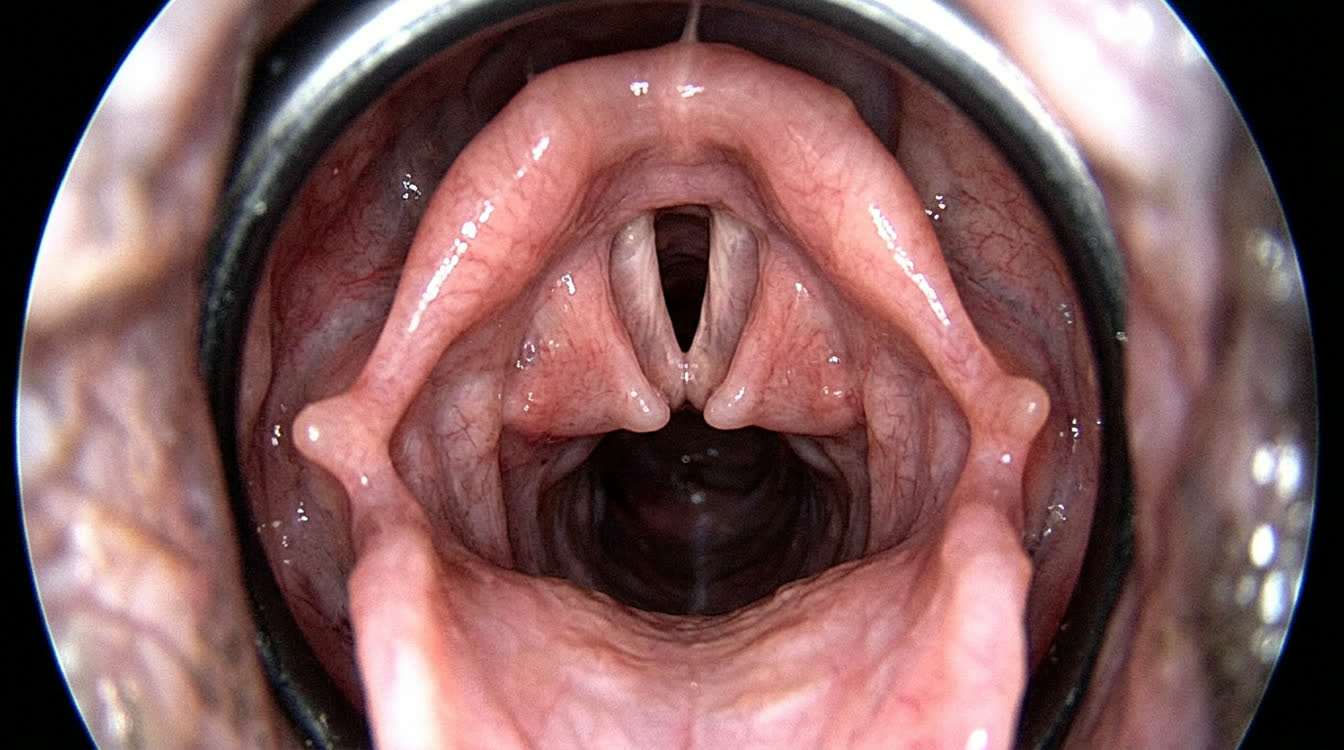
Quick Answer
Laryngeal paralysis is progressive failure of arytenoid cartilage abduction during inspiration, causing airway obstruction. This guide covers GOLPP pathophysiology, laryngoscopic diagnosis, unilateral tieback surgery, aspiration pneumonia prevention, and long-term prognosis including GOLPP polyneuropathy progression.
Key Takeaways
- ✓GOLPP is a progressive polyneuropathy -- LP is the earliest sign; hind limb weakness follows over months/years
- ✓Diagnose with laryngoscopy under light sedation to observe arytenoid movement during inspiration
- ✓Hyperthermia is a critical risk -- actively cool all acute crisis patients immediately
- ✓Unilateral tieback preferred over bilateral to reduce aspiration pneumonia risk
- ✓Soft food only and no swimming permanently after tieback surgery
GOLPP Pathophysiology and Diagnosis
GOLPP -- Geriatric Onset Laryngeal Paralysis Polyneuropathy LP in older large breeds is part of a progressive generalized polyneuropathy -- not an isolated condition.
*GOLPP features:*
- Age: typically 9-14 years
- Breeds: Labrador Retriever (most common), Golden Retriever, Bouvier des Flandres
- Signs progress: laryngeal paralysis -> hind limb weakness/ataxia -> generalized weakness
- >50% have detectable hind limb deficits at LP diagnosis
- Progressive over 1-3 years after diagnosis
Other Causes of LP
- Congenital: Siberian Husky, Bull Terrier, Dalmatian puppies
- Acquired: neck trauma, thyroid surgery damage, thymoma, hypothyroidism
- Idiopathic: young-to-middle-aged dogs
Clinical Signs
- Inspiratory stridor (harsh inspiratory noise) -- classic sign
- Exercise intolerance, heat intolerance
- Voice change (altered bark)
- Coughing, gagging
- Hyperthermia -- critical risk; unable to pant effectively
- Late GOLPP: hind limb weakness, proprioceptive deficits
Diagnosis 1. Laryngoscopy under light sedation -- gold standard - Propofol 2-4 mg/kg IV to effect - Normal: arytenoids abduct with each inspiration; LP: no abduction - Doxapram 1.1 mg/kg IV to stimulate breathing if too deep 2. Thoracic radiographs: aspiration pneumonia, megaesophagus 3. Neurological exam: hind limb proprioception, muscle atrophy 4. T4: rule out hypothyroidism
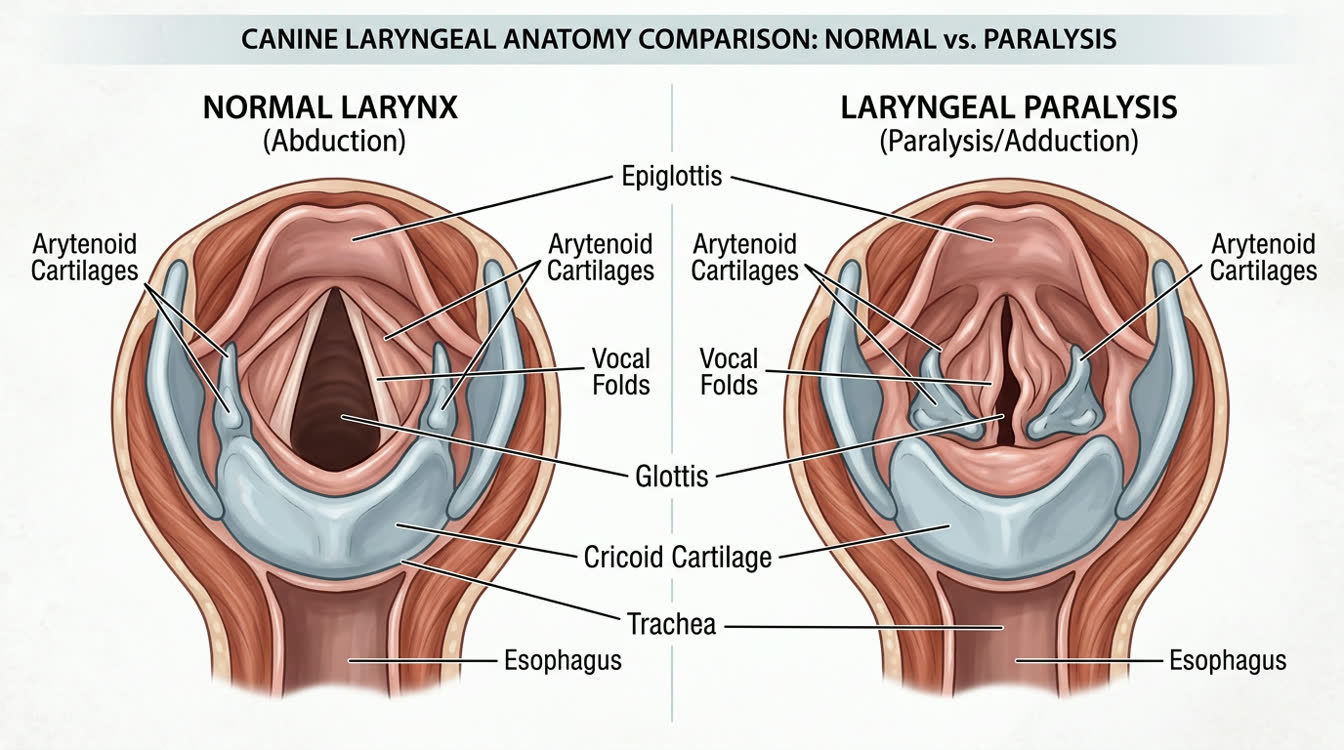
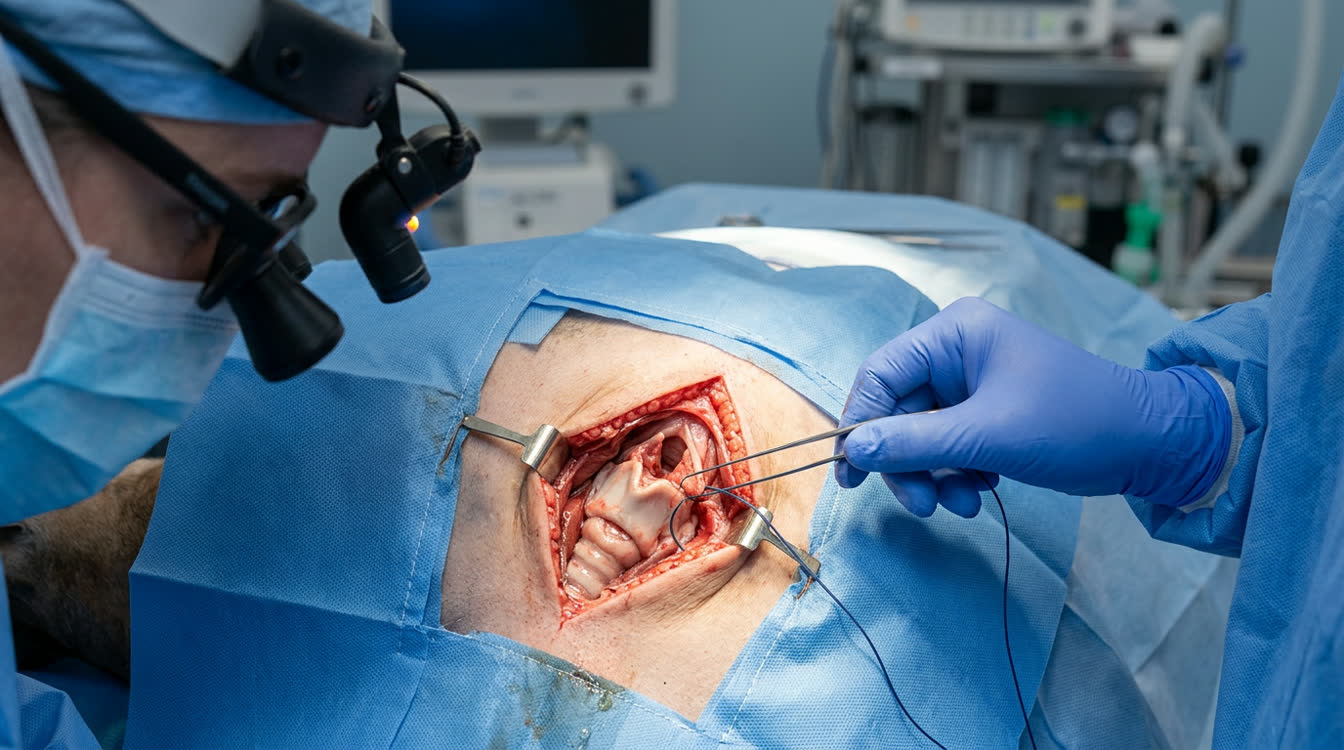
Unilateral Arytenoid Lateralization (Tieback Surgery)
Surgical Treatment -- Only Effective Long-term Option Medical management addresses acute crises but does not resolve obstruction.
Unilateral (Recommended) vs Bilateral
- Unilateral: RECOMMENDED; improves airway while preserving laryngeal protection
- 8-20% aspiration pneumonia vs >30% with bilateral
- Opens glottis sufficiently in most patients
Surgical Technique 1. Lateral cervical approach to larynx 2. Expose cricoarytenoid joint 3. Heavy non-absorbable suture (0 or 1 PDS/nylon): muscular process of arytenoid to cricoid cartilage 4. Holds arytenoid in permanent abducted position 5. Confirm opening with intraoperative laryngoscopy
Post-operative Care
- NPO 4-6 hours post-extubation; elevated food and water bowls
- Feed soft, meatball-consistency food (avoid dry kibble long-term)
- No swimming; no deep water bowls (permanent restriction)
- Restrict exercise; avoid heat stress
Medical Management of Acute Crises (Pre-surgery) 1. Oxygen supplementation 2. Active cooling: fans, ice packs, cool IV fluids (if hyperthermic >40.5 degrees C) 3. Dexamethasone SP 0.1-0.2 mg/kg IV (reduces laryngeal edema) 4. Acepromazine 0.01-0.05 mg/kg IM/IV (reduces anxiety, vasodilation aids cooling) 5. Butorphanol 0.2-0.4 mg/kg IV (mild sedation) 6. If not stabilizing: emergency tracheostomy
Aspiration Risk, GOLPP Progression, and Prognosis
Aspiration Pneumonia Management
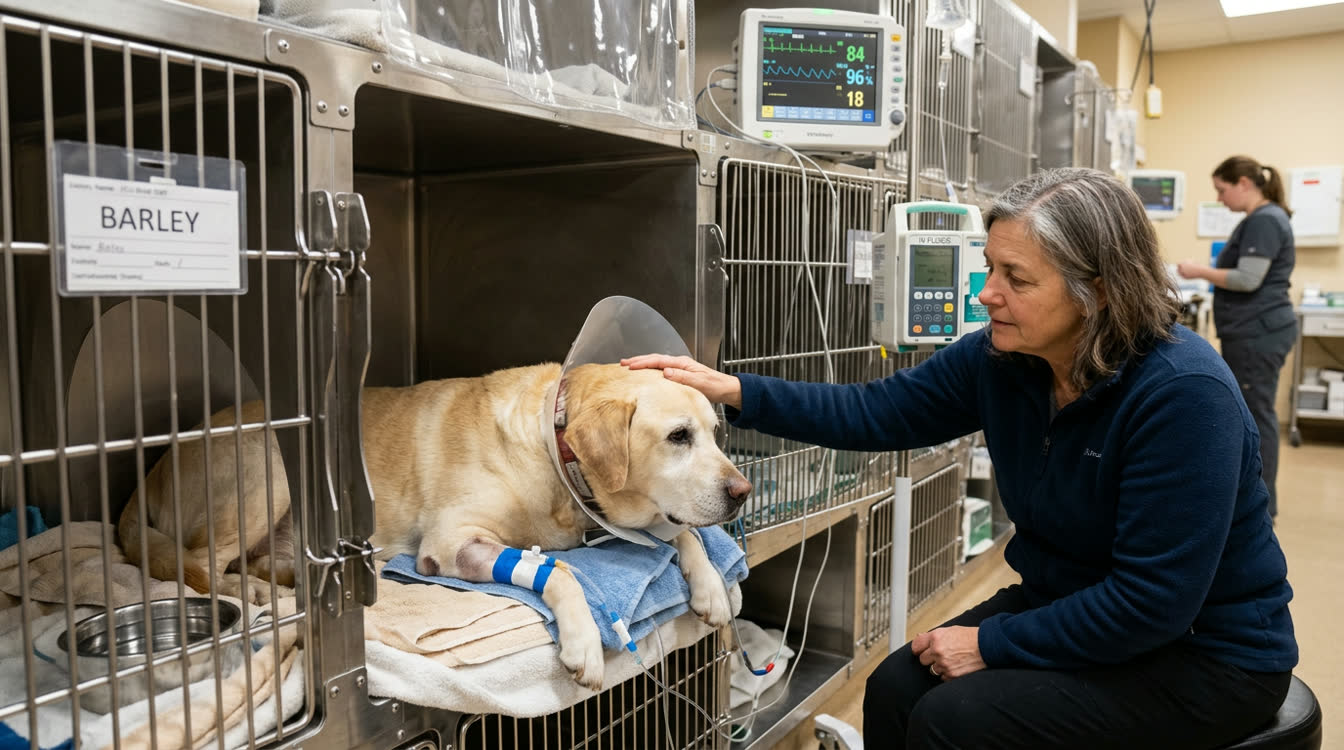
- Feed only soft or moist food permanently
- Restrict swimming permanently
- Monitor body temperature monthly (early aspiration indicator)
- Treatment: amoxicillin-clavulanate 13.75 mg/kg PO q12h x 3-4 weeks
Long-term Outcomes
| Outcome | Percentage |
|---|---|
| Good to excellent airway function | 85-90% |
| Lifetime aspiration pneumonia | 8-20% |
| GOLPP hind limb weakness at 1 year | 50-70% |
| Median survival after surgery | 18-24 months |
GOLPP Progression Management
- Anti-slip flooring, ramps, activity modification
- NSAIDs for neuropathic pain
- Physiotherapy/rehabilitation
Related Articles:
- [Pleural Effusion in Dogs and Cats](/articles/pleural-effusion-dogs-cats)
- [Pneumothorax in Dogs and Cats](/articles/pneumothorax-dogs-cats)
Frequently Asked Questions
What is GOLPP and how is it different from regular laryngeal paralysis?
GOLPP (Geriatric Onset Laryngeal Paralysis Polyneuropathy) describes what was previously called "idiopathic laryngeal paralysis" in older large dogs. Research showed these dogs have a progressive generalized polyneuropathy affecting multiple nerves. Laryngeal paralysis is the earliest and most visible sign, followed by hind limb weakness over months to years.
How urgent is tieback surgery?
Schedule within 1-4 weeks of diagnosis in symptomatic dogs. Delay increases the risk of hyperthermia complications and progressive muscle deconditioning.
Will my dog always be at risk for aspiration after tieback surgery?
Yes -- lifelong aspiration risk (8-20% incidence). Feed only soft moist food, avoid deep water bowls, prevent swimming. Most dogs tolerate these restrictions well.
Can hypothyroidism cause laryngeal paralysis?
The relationship is controversial. Test T4 in all LP dogs and treat confirmed hypothyroidism for overall health, but LP is unlikely to fully resolve with levothyroxine alone in most GOLPP cases.
References
- Stanley BJ, et al. Results of unilateral arytenoid lateralization in 140 dogs. J Am Vet Med Assoc. 2010;237(10):1154-1159.
- Thieman KM, et al. Histopathological confirmation of polyneuropathy in 11 dogs with LP. J Am Anim Hosp Assoc. 2010;46(3):161-167.