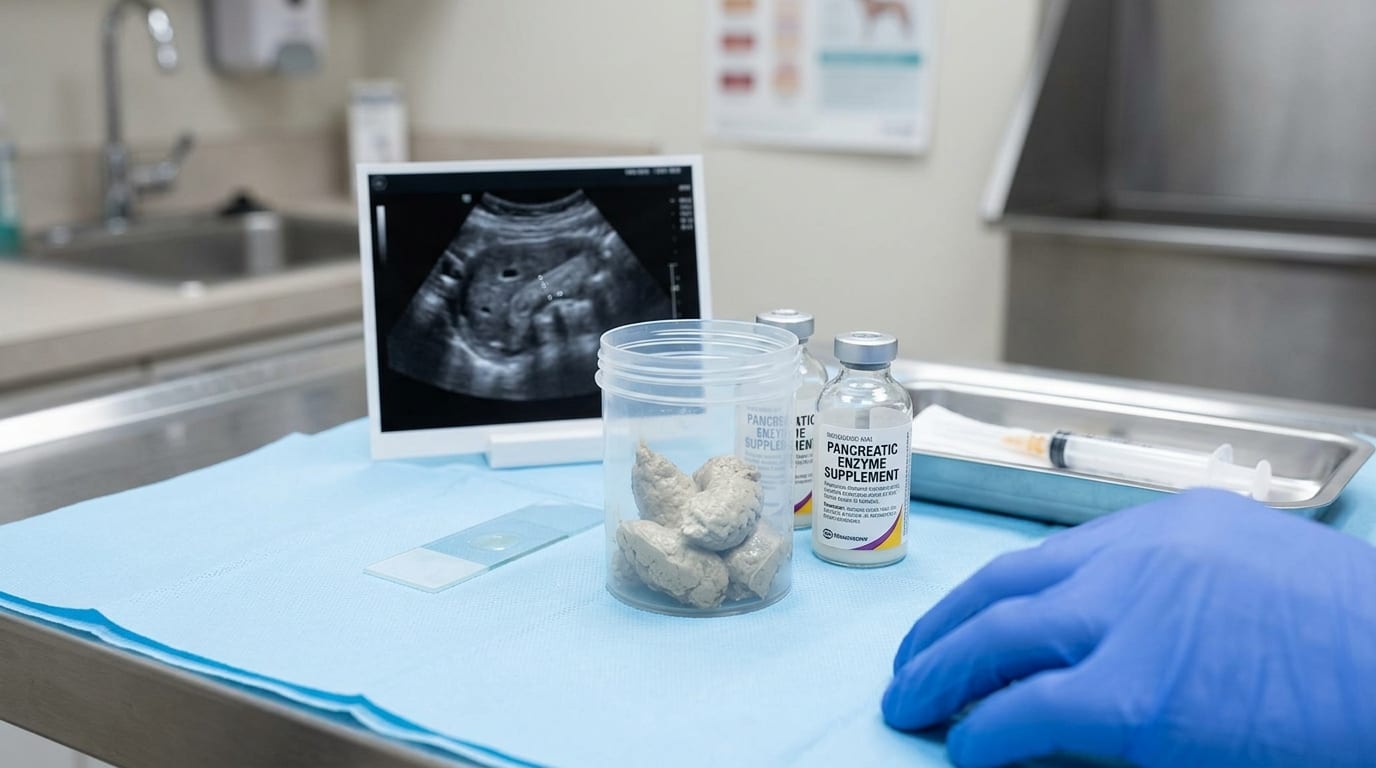
Quick Answer
Exocrine pancreatic insufficiency (EPI) results from loss of pancreatic acinar cells causing maldigestion and severe weight loss despite polyphagia. This guide covers serum cTLI testing, pancreatic enzyme replacement dosing, cobalamin deficiency management, and dietary recommendations.
Key Takeaways
- ✓EPI diagnosis: serum cTLI <2.5 mcg/L after 12-hour fast -- not lipase or amylase
- ✓German Shepherd polyphagia + severe weight loss + voluminous pale stools = EPI until proven otherwise
- ✓Viokace pancreatic enzyme powder 1 tsp/10 kg/meal is lifelong treatment
- ✓Check serum cobalamin in all EPI dogs -- >80% deficient; weekly SC injections x 6 weeks
- ✓Concurrent SIBO common; trial tylosin or metronidazole if inadequate response to enzymes alone
Clinical Presentation and TLI Diagnosis
Classic Presentation
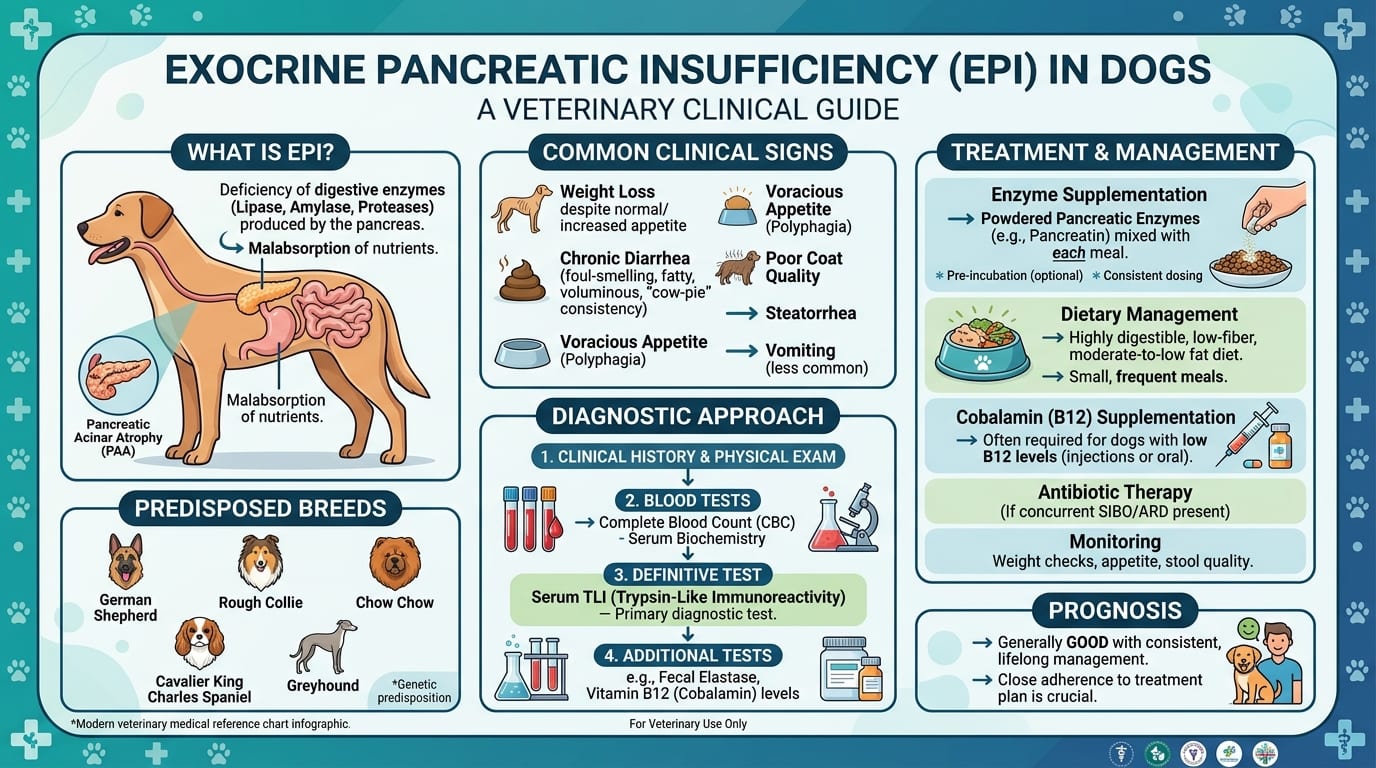
- Ravenous appetite (polyphagia) -- hallmark; coprophagia common
- Severe weight loss despite good appetite
- Voluminous, pale, greasy, malodorous stools (steatorrhea)
- Flatulence, borborygmi
- Breed: German Shepherd (~70% of canine EPI)
Causes
| Cause | Details |
|---|---|
| Pancreatic acinar atrophy (PAA) | Hereditary; immune-mediated; German Shepherd |
| Chronic pancreatitis | Progressive acinar destruction |
| Pancreatic hypoplasia | Rare congenital |
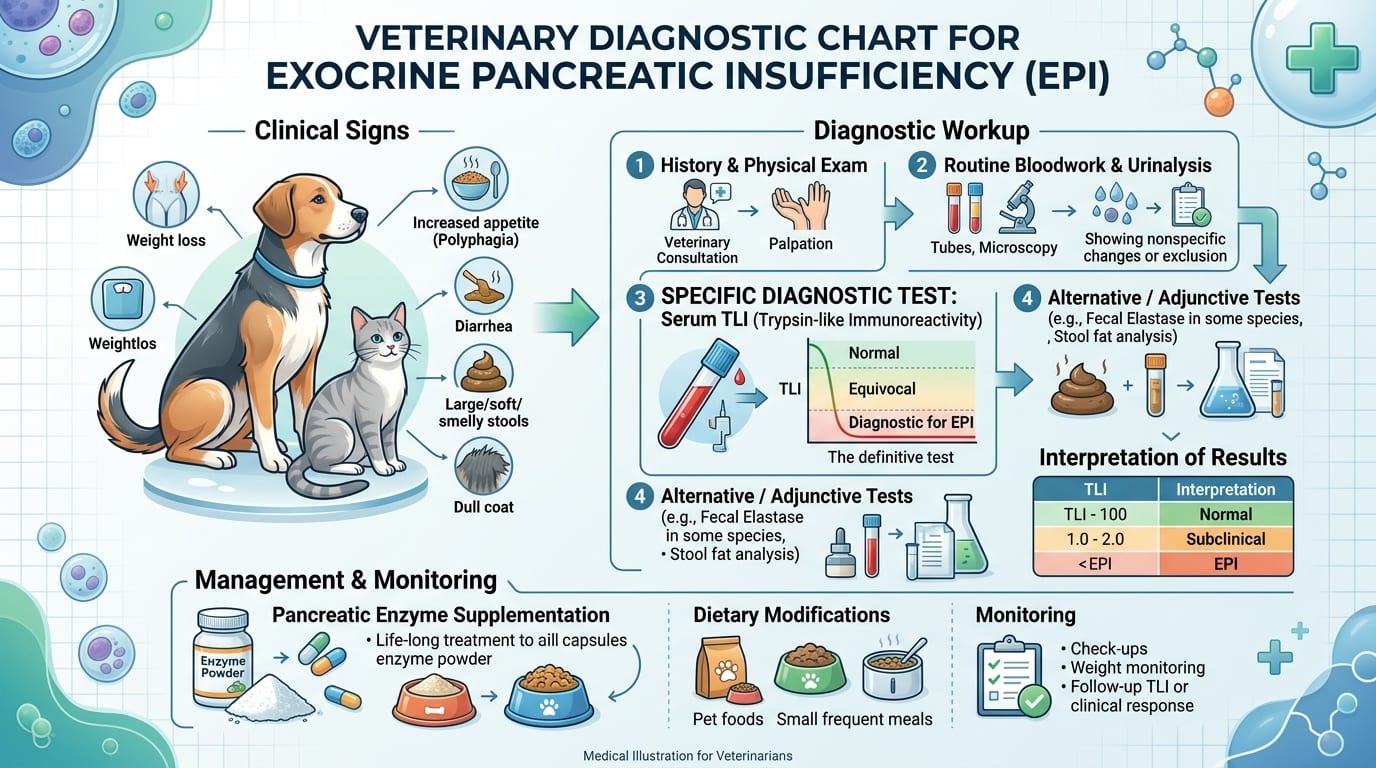
Serum cTLI -- Gold Standard Test
- Normal: 5.0-35.0 mcg/L
- EPI diagnosis: cTLI <2.5 mcg/L (sensitivity/specificity ~95%)
- Borderline: 2.5-5.0 mcg/L -- retest after 3-4 weeks fasting
- 12-hour fast required before blood draw
- Texas A&M GI Lab is the preferred laboratory
- Important: serum lipase (Spec cPL) is normal or low in EPI -- NOT elevated
Additional Tests
- Serum cobalamin (B12): often severely deficient
- Serum folate: often elevated (SIBO indicator)
- Abdominal ultrasound: pancreas may appear small or absent
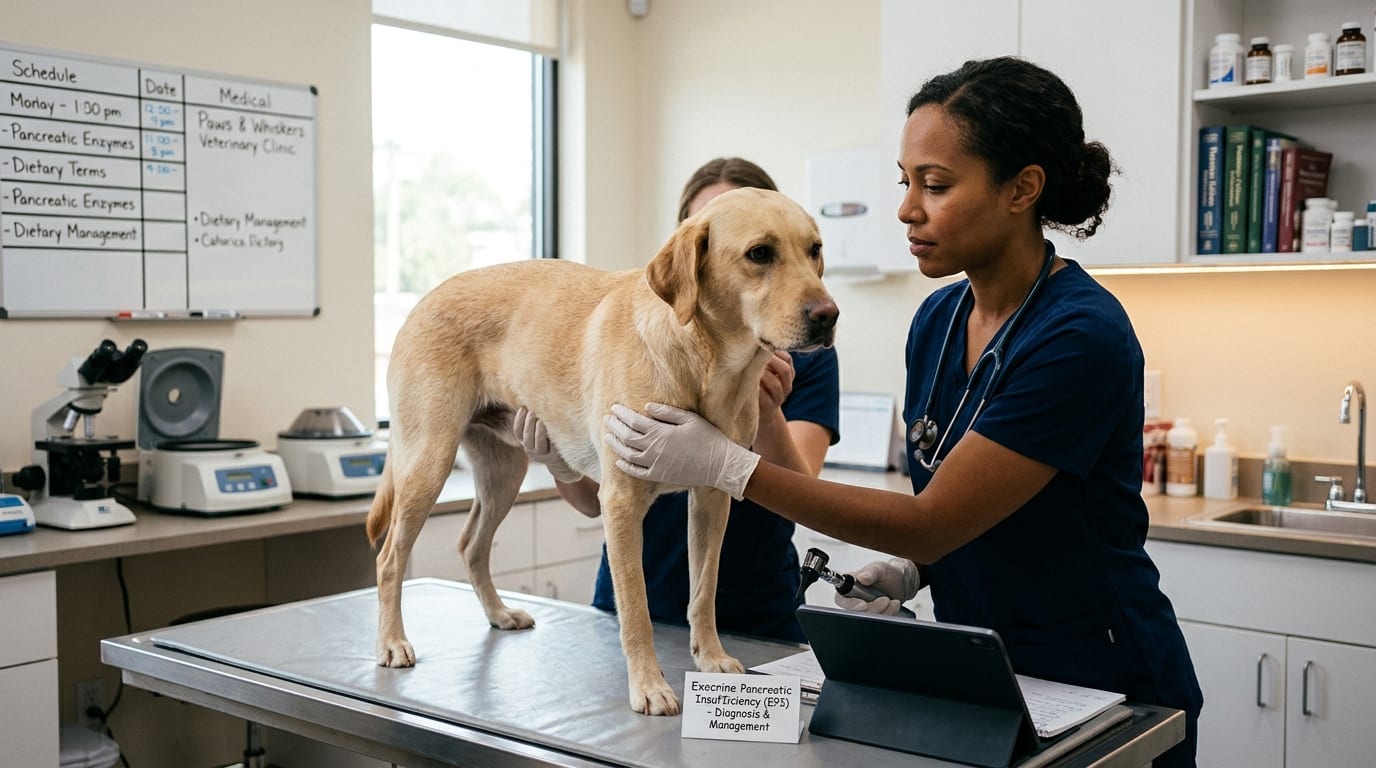
Pancreatic Enzyme Replacement and Diet
Enzyme Replacement -- Cornerstone
| Product | Form | Dose | Notes |
|---|---|---|---|
| Viokace (pancrelipase) | Powder | 1 tsp/10 kg/meal | Most cost-effective; prescription |
| Creon (pancrelipase) | Capsules (size 12) | Open 2-4 capsules/meal | Higher cost |
| Raw porcine pancreas | Frozen | 30-90 g/meal | Effective; spoilage risk |
Dosing Principles
- Starting: 1 tsp powder per 10 kg, mixed into food
- Pre-incubation (20-30 min): NOT necessary
- Reduce to lowest effective dose
- Feed 2-3 small meals/day
Dietary Recommendations
- Highly digestible, low-fiber: Hill's i/d, Royal Canin Gastrointestinal
- Low fat reduces steatorrhea
- Avoid high-fiber diets (bind enzymes)
Response Timeline
- Stool improvement: 3-7 days
- Weight gain: 2-4 weeks
- Full resolution: 4-8 weeks
Poor Response Causes 1. Insufficient enzyme dose -- increase 2. Cobalamin deficiency -- supplement B12 3. Concurrent IBD/SIBO -- tylosin 7.5-15 mg/kg PO q8h x 28 days or metronidazole 10-15 mg/kg PO q12h 4. Wrong diagnosis -- recheck cTLI
Cobalamin (B12) Deficiency and Long-term Prognosis
Why B12 Deficiency Is Common EPI eliminates pancreatic intrinsic factor (needed for ileal B12 absorption). SIBO further depletes B12. >80% of EPI dogs have cobalamin deficiency.
Cobalamin Supplementation Protocol
| Dog Weight | Cyanocobalamin Dose | Route | Frequency |
|---|---|---|---|
| <10 kg | 250 mcg | SC | Weekly x 6 weeks |
| 10-20 kg | 500 mcg | SC | Weekly x 6 weeks |
| 20-45 kg | 1000 mcg (1 mg) | SC | Weekly x 6 weeks |
| >45 kg | 1500 mcg | SC | Weekly x 6 weeks |
- After 6 weekly injections: monthly maintenance if deficiency recurs
- Recheck serum cobalamin 4 weeks after initial 6-dose course
- Oral cyanocobalamin 250-1000 mcg/day: effective alternative
Long-term Prognosis
- With enzyme supplementation and cobalamin management: excellent quality of life and normal life expectancy
- Regular rechecks: body weight monthly; cobalamin q3-6 months
Related Articles:
- [Megaesophagus in Dogs](/articles/megaesophagus-dogs)
- [Protein-Losing Enteropathy in Dogs](/articles/protein-losing-enteropathy-dogs)
Frequently Asked Questions
How is EPI diagnosed in dogs?
The gold standard is serum cTLI (trypsin-like immunoreactivity). A cTLI <2.5 mcg/L after a 12-hour fast confirms EPI with >95% sensitivity and specificity. Send to Texas A&M GI Lab. A normal serum lipase (Spec cPL) does NOT rule out EPI.
What food should I feed a dog with EPI?
Start with a highly digestible, low-fiber diet such as Hill's i/d or Royal Canin Gastrointestinal. Feed 2-3 small meals per day with enzyme powder mixed in. Avoid high-fiber diets as fiber binds pancreatic enzymes.
Does my EPI dog need B12 supplementation?
Yes -- over 80% of EPI dogs have significant cobalamin deficiency. Test serum cobalamin at diagnosis. Deficient dogs need weekly SC cyanocobalamin injections for 6 weeks, then monthly maintenance. Untreated B12 deficiency impairs response to enzyme therapy.
How long until my EPI dog improves?
Stool consistency improves within 3-7 days of starting enzymes. Weight gain begins within 2-4 weeks. Full resolution takes 4-8 weeks. If no improvement after 4-6 weeks, check cobalamin, consider SIBO/IBD, and reassess the diagnosis.
References
- Westermarck E, Wiberg M. Exocrine pancreatic insufficiency in dogs. Vet Clin North Am Small Anim Pract. 2003;33(5):1165-1179.
- Batchelor DJ, et al. Prevalence of cobalamin deficiency in dogs with gastrointestinal disease. J Vet Intern Med. 2007;21(6):1293-1298.