Quick Answer
Pheochromocytoma is a catecholamine-secreting adrenal medullary tumor that causes episodic or sustained hypertension. This guide covers clinical signs, the adrenal mass workup, phenoxybenzamine pre-operative alpha-blockade, surgical risks, and post-operative hypotension management.
Key Takeaways
- ✓Phenoxybenzamine 0.25-0.5 mg/kg q12h PO, titrated over 2-3 weeks, is mandatory before adrenalectomy for pheochromocytoma.
- ✓Never start beta-blockers before alpha-blockers in pheochromocytoma — beta-blockade alone causes paradoxical severe hypertension.
- ✓Urinary normetanephrine:creatinine ratio is the most specific diagnostic test; CT scan is preferred over ultrasound for surgical planning.
- ✓Post-operative hypotension occurs after tumor removal — have norepinephrine CRI prepared; IV fluids and vasopressors needed.
- ✓Perioperative mortality 5-20% depending on vascular invasion — specialist surgery center required for large or invasive tumors.
Clinical Signs, Diagnosis, and Adrenal Mass Workup
Pheochromocytoma Overview Pheochromocytoma (pheo) arises from chromaffin cells of the adrenal medulla and secretes excess catecholamines (epinephrine, norepinephrine, dopamine) either continuously or episodically.
Clinical Signs — "Crises" and Chronic Hypertension
- Sudden restlessness, anxiety, panting, vocalization
- Muscle tremors, acute weakness or collapse
- Vomiting, acute abdominal pain
- Tachycardia, cardiac arrhythmia
- Acute blindness or neurological signs (hypertensive retinopathy)
*Chronic signs:*
- Polyuria/polydipsia
- Weight loss, muscle wasting
- Weakness, exercise intolerance
- Sustained hypertension (systolic BP >180 mmHg)
*Incidental finding:*
- Many pheos discovered incidentally on abdominal ultrasound during workup for other conditions
Adrenal Mass Workup — Rule Out Pheochromocytoma vs Adrenocortical Tumor
| Feature | Pheochromocytoma | Adrenocortical Tumor |
|---|---|---|
| Origin | Adrenal medulla | Adrenal cortex |
| Hormone | Catecholamines (epi, norepi) | Cortisol, aldosterone, sex hormones |
| LDDS/HDDS test | Normal | Abnormal (if Cushing's) |
| Urine catecholamines/metanephrines | Elevated | Normal |
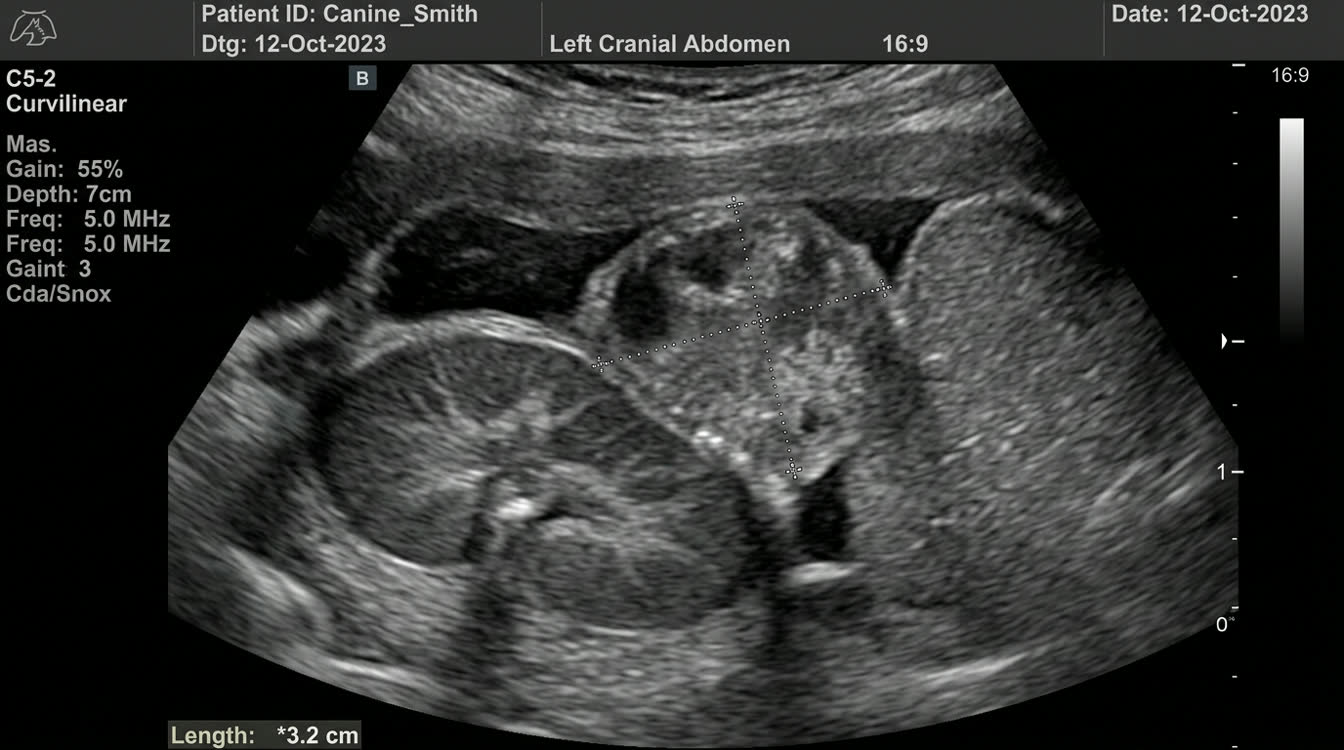
| Ultrasound | Heterogeneous, vascular | Variable |
| Hypertension | Prominent feature | Variable |
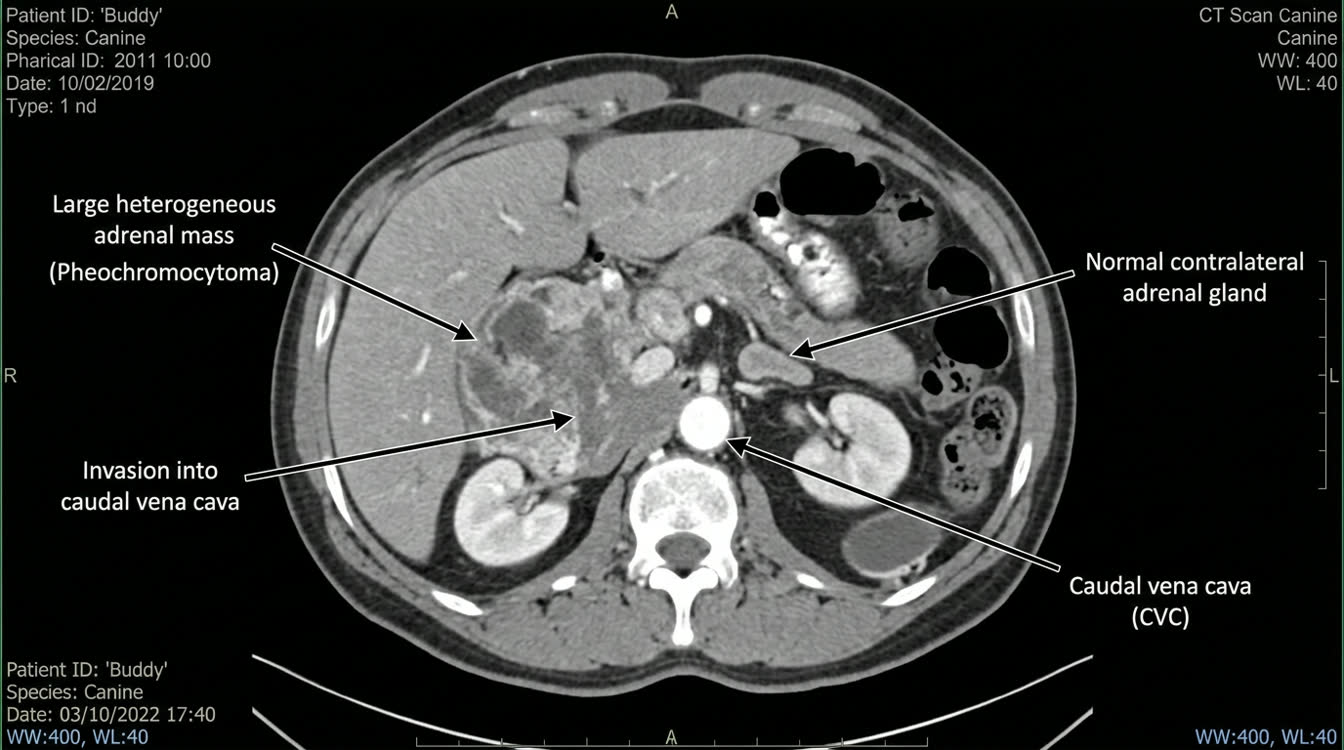
Diagnostic Tests 1. Blood pressure: systolic >160 mmHg on multiple measurements; crisis: >200-220 mmHg 2. CBC, chemistry panel: often non-specific; may show elevated creatinine if hypertensive nephropathy 3. Urinary catecholamines and metanephrines: most specific test; normetanephrine:creatinine ratio elevated in pheo; requires timed or random urine sample sent to specialized lab 4. Abdominal ultrasound: adrenal mass >2 cm, heterogeneous, often vascular; look for venous invasion (adrenal vein, caudal vena cava) 5. CT scan (preferred for surgery planning): better than ultrasound for vascular invasion, surgical margins, and distant metastasis 6. LDDS (Low-dose dexamethasone suppression test): if adrenocortical tumor suspected; normal in pheo 7. Aldosterone: if hypertension + hypokalemia → primary hyperaldosteronism (cats), possible in dogs
Pre-operative Phenoxybenzamine Protocol and Hypertensive Crisis Management
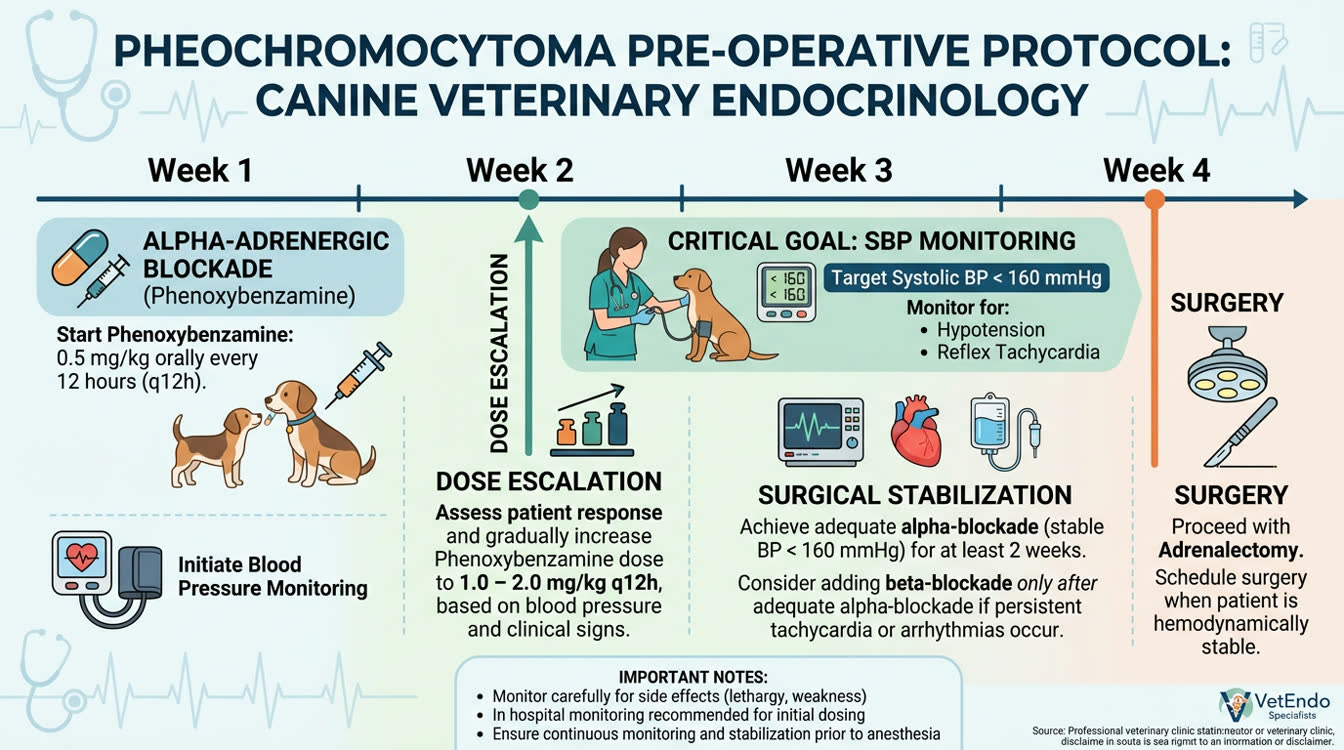
Pre-operative Alpha-Blockade — CRITICAL Without pre-operative alpha-adrenergic blockade, surgical manipulation of the tumor during adrenalectomy releases massive catecholamine surges causing life-threatening hypertensive crises (BP >300 mmHg), arrhythmias, and cardiovascular collapse.
Phenoxybenzamine (Dibenzyline)
- Drug class: non-selective, non-competitive alpha-1 and alpha-2 adrenergic blocker
- Starting dose: 0.25-0.5 mg/kg PO q12-24h
- Titration: increase by 0.5 mg/kg every 3-5 days until BP controlled (systolic <160 mmHg, ideally <140 mmHg) or side effects limit further increase
- Typical maintenance: 1-2 mg/kg PO q12h
- Duration before surgery: minimum 2-3 weeks of effective alpha-blockade required
- Side effects: hypotension (orthostatic), sedation, increased appetite (alpha-2 blockade reduces satiety); monitor BP at each visit
- UK note: phenoxybenzamine is the gold standard and preferred agent
*Alternative if phenoxybenzamine unavailable:*
- Prazosin 0.05-0.1 mg/kg PO q8-12h (alpha-1 selective; less complete blockade)
- Doxazosin 0.5-2 mg/dog PO q24h (alpha-1 selective, longer acting)
Beta-Blockade (ONLY After Alpha-blockade)
- Add atenolol 6.25-25 mg/dog PO q12h (or propranolol 0.5-1 mg/kg PO q8h)
- NEVER start beta-blocker before alpha-blocker — beta-blockade alone leaves alpha receptors unopposed, causing paradoxical severe hypertension
Hypertensive Crisis Management
- Nitroprusside (sodium nitroprusside) 1-5 mcg/kg/min IV CRI: ultra-short-acting vasodilator; titrate to effect; requires continuous BP monitoring
- Phentolamine 0.02-0.1 mg/kg IV bolus then 0.01-0.1 mg/kg/min CRI: short-acting alpha blocker; ideal for intraoperative surges
- Magnesium sulfate 30-60 mg/kg IV loading over 10 min: inhibits catecholamine release; adjunct
Fluid Loading Pre-operatively
- Administer crystalloids 10 mL/kg/h in the 2-4 hours before surgery to expand vascular volume
- This prevents profound hypotension when alpha blockade is achieved and vasoconstriction relieved
Adrenalectomy: Surgical Risks and Post-operative Care
Surgical Approach
- Unilateral adrenalectomy: standard for unilateral pheo
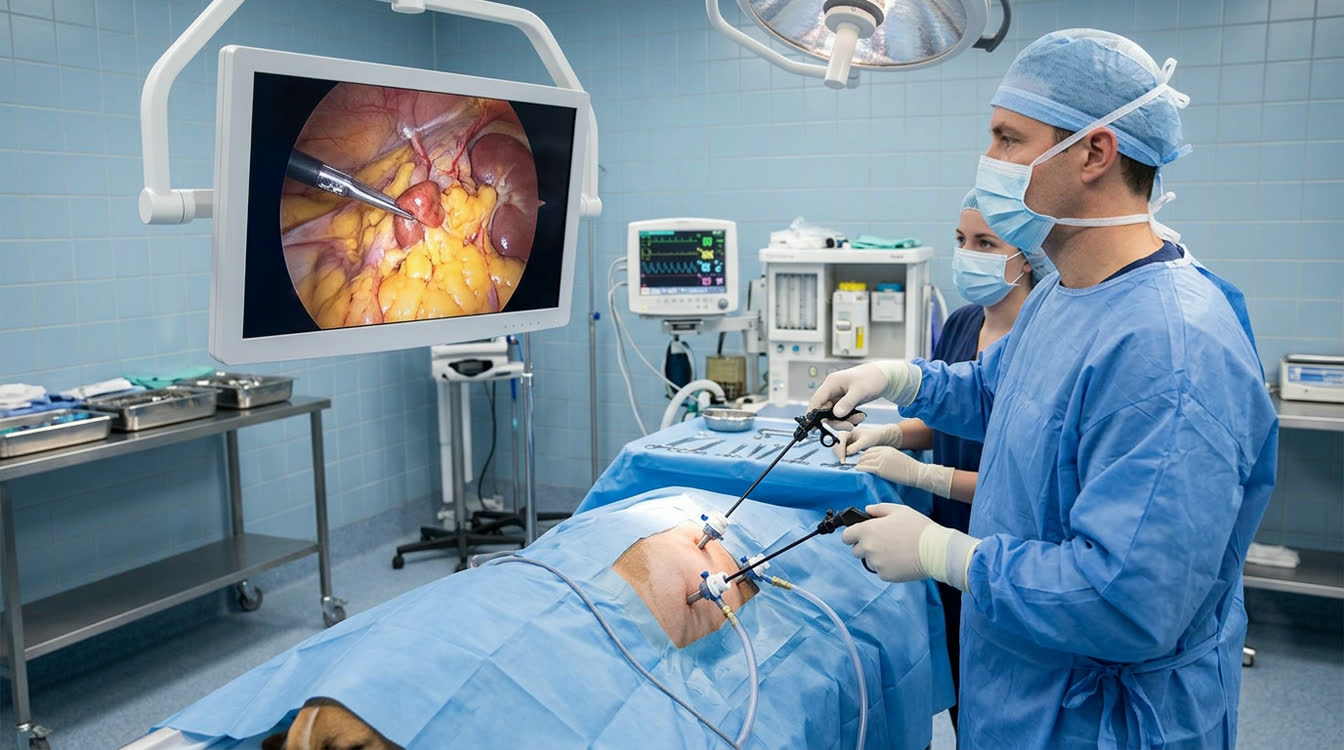
- Open vs laparoscopic: both described; laparoscopic preferred for tumors <5 cm without vascular invasion
- Large tumors with vascular invasion (caudal vena cava, adrenal vein): require specialist surgery team; high-risk procedure with potential for vena cava resection
Intraoperative Monitoring Required
- Continuous invasive arterial BP monitoring (arterial line)
- Continuous ECG monitoring for arrhythmias
- Central venous pressure monitoring for volume guidance
- End-tidal CO2 monitoring
Intraoperative Risks
- Hypertensive surge during tumor manipulation (treat with phentolamine or nitroprusside)
- Ventricular arrhythmias (treat with lidocaine 2 mg/kg IV bolus)
- Hemorrhage (pheo are highly vascular; cava invasion risk)
- Hypotension after ligation of adrenal vessels (catecholamine levels drop precipitously)
Post-operative Hypotension
- IV fluids: LRS 5-10 mL/kg/h; titrate to BP
- Vasopressors if refractory: norepinephrine 0.1-0.5 mcg/kg/min IV CRI
- Dopamine 5-10 mcg/kg/min IV CRI (dopaminergic dose)
- Typically resolves within 24-48h as vascular tone normalizes
Bilateral Adrenal Disease
- If both adrenal glands removed: permanent hypo-adrenocorticism (Addison's disease)
- Lifelong mineralocorticoid replacement (fludrocortisone or DOCP) + glucocorticoid required
Prognosis
- Benign pheochromocytoma, completely resected: median survival >2 years
- Malignant pheo with metastasis: palliative; alpha-blockade for BP control; chemotherapy (rarely effective)
- Perioperative mortality rate: 5-20% depending on tumor size and vascular invasion
Related Articles:
- [Hyperparathyroidism in Dogs](/articles/hyperparathyroidism-dogs)
- [Hypercalcemia in Dogs and Cats](/articles/hypercalcemia-dogs-cats)
Frequently Asked Questions
Why must phenoxybenzamine be given for 2-3 weeks before surgery?
Phenoxybenzamine takes 2-3 weeks to achieve full alpha-adrenergic receptor blockade and to allow intravascular volume to normalize. Patients with pheochromocytoma are chronically vasoconstricted and volume-depleted. Without adequate pre-treatment, tumor manipulation during surgery triggers massive catecholamine release causing BP spikes >300 mmHg, potentially fatal arrhythmias, and cardiovascular collapse. Rushing to surgery without adequate preparation significantly increases perioperative mortality.
Can pheochromocytoma cause Cushing's disease-like signs?
No — pheochromocytoma produces catecholamines (epinephrine/norepinephrine), not cortisol. Cushing's signs (PU/PD, pot belly, skin changes, alopecia) come from excess cortisol produced by adrenocortical tumors. However, both adrenocortical tumors and pheochromocytoma can appear as adrenal masses on ultrasound. A low-dose dexamethasone suppression test and urinary catecholamine/metanephrine testing help distinguish them.
What is a hypertensive crisis and how serious is it?
A hypertensive crisis in pheochromocytoma occurs when a sudden catecholamine surge raises systolic BP to >220-300 mmHg. This can cause acute blindness (hypertensive retinopathy), stroke, aortic dissection, acute renal failure, and sudden death. These crises can be triggered by stress, physical examination, or pressure on the tumor. Emergency treatment requires IV nitroprusside or phentolamine in a hospital setting.
What happens to blood pressure after the adrenal tumor is removed?
Blood pressure typically normalizes within 24-72 hours after complete adrenalectomy. However, immediately after ligation of the adrenal blood supply, catecholamine levels drop suddenly, causing paradoxical hypotension. This is managed with IV fluids and vasopressors (norepinephrine CRI). Dogs are monitored closely for 24-48 hours post-operatively for this expected complication.
References
- Barthez PY, et al. Pheochromocytoma in dogs: 61 cases. J Vet Intern Med. 1997;11(5):272-278.
- Twedt DC, Wheeler SL. Pheochromocytoma in the dog. Vet Clin North Am Small Anim Pract. 1984;14(4):767-782.
- Feldman EC, Nelson RW. Canine and Feline Endocrinology and Reproduction. 3rd ed. Saunders; 2004.