
Quick Answer
Hypercalcemia is a common finding in small animal medicine with a broad differential diagnosis. This guide covers the CHEW TOP mnemonic for differential diagnosis, the diagnostic workup including ionized calcium and PTH/PTHrP, acute and chronic treatment with IV fluids, furosemide, and bisphosphonate therapy including pamidronate.
Key Takeaways
- ✓Cancer (lymphoma, anal sac ADC) is the most common cause of significant hypercalcemia in dogs; measure PTHrP to screen for HHM.
- ✓Always use ionized calcium for definitive diagnosis — correct total calcium for albumin (corrected Ca = Ca - albumin + 3.5).
- ✓Acute treatment: 0.9% NaCl (NOT Lactated Ringer's) 2-3x maintenance rate; then furosemide 2-4 mg/kg q8-12h after hydration.
- ✓Pamidronate 1-2 mg/kg IV over 2-4 hours in saline reduces calcium within 24-72 hours; repeat q3-4 weeks as needed.
- ✓Do not start prednisolone before a diagnosis is confirmed — steroids can cause lymphoma cell lysis and obscure biopsy cytology.
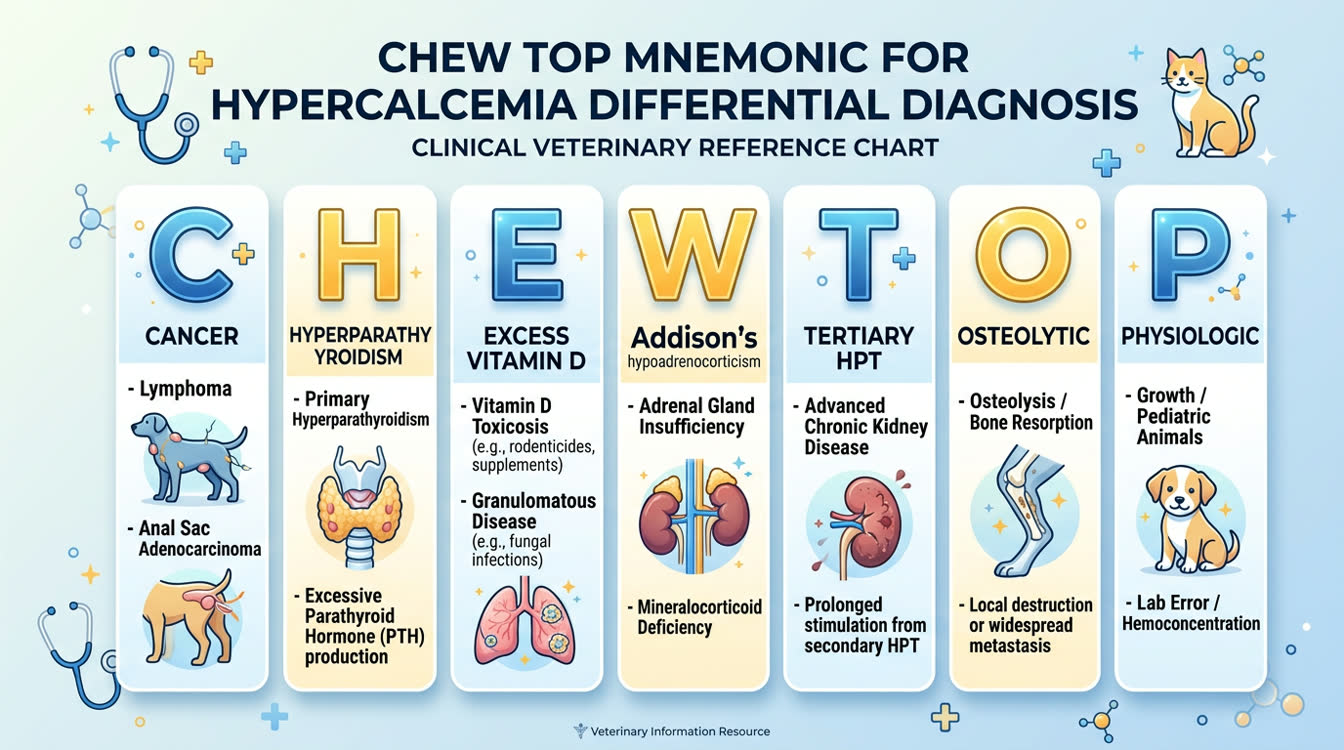
Differential Diagnosis: CHEW TOP Mnemonic
Normal Calcium Values
- Total calcium (dogs): 8.9-11.4 mg/dL
- Total calcium (cats): 8.1-10.9 mg/dL
- Ionized calcium (dogs and cats): 1.12-1.40 mmol/L
- Hypercalcemia: ionized Ca >1.45 mmol/L (clinical) or >1.6 mmol/L (significant)
Correcting Total Calcium for Albumin
- Corrected Ca (mg/dL) = measured Ca - albumin (g/dL) + 3.5
- Always measure ionized calcium directly for accuracy (preferred)
CHEW TOP Mnemonic — Causes of Hypercalcemia in Dogs
- C — Cancer: #1 cause in dogs
- H — Hyperparathyroidism (Primary): parathyroid adenoma; elevated PTH; second most common non-neoplastic cause
- E — Excess Vitamin D:
- W — Whipworm/Addison's (Hypoadrenocorticism): Addison's causes hypercalcemia in ~10% of dogs
- T — Tertiary Hyperparathyroidism: chronic renal failure leading to autonomous PTH secretion
- O — Osteolytic lesions: bone tumors, aggressive bone metastasis
- P — Physiologic: young dogs may have slightly elevated calcium (upper limit of normal)
(Extended: also remember)
- M — Mycoses: blastomycosis, histoplasmosis, coccidioidomycosis (granuloma-mediated calcitriol production)
- U — Unknown/Idiopathic hypercalcemia of cats (see below)
- D — Dehydration: mild artifact; true total Ca rarely >12 mg/dL
Idiopathic Hypercalcemia of Cats
- Ionized Ca elevated; total Ca 11-14 mg/dL typically
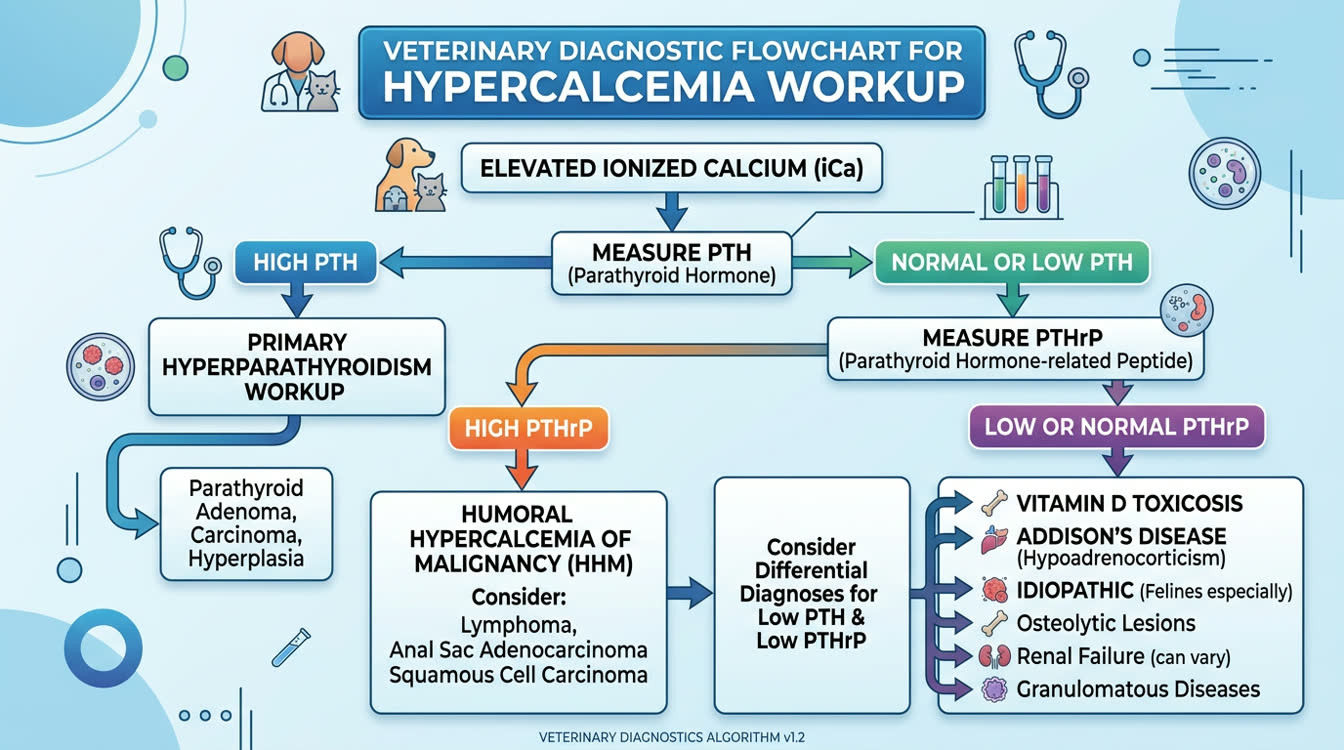
- PTH: normal or low; PTHrP: negative; no identifiable cause
- Mechanism: uncertain — possibly excessive intestinal calcium absorption, altered vitamin D metabolism
- Treatment: low-calcium diet (Royal Canin SO, Hill's Kidney diet); prednisolone 1-2 mg/kg q24h
- Prognosis: often manageable; renal complications possible with chronic hypercalcemia
Diagnostic Workup: PTH, PTHrP, and Imaging
Step-by-step Hypercalcemia Workup
Step 1: Confirm true hypercalcemia
- Measure ionized calcium (not just total Ca)
- Correct total Ca for albumin
- Repeat if borderline — confirm on 2 separate days
Step 2: Rule out most common causes first
| Test | Purpose |
|---|---|
| CBC with differential | Lymphoma (circulating lymphoblasts), bone marrow evaluation |
| Serum chemistry panel | Renal function (CKD-related), albumin, BUN |
| Urinalysis + culture | UTI from hypercalciuria; isosthenuria from renal impairment |
| Blood pressure | Hypertensive end-organ damage |
| Thoracic radiographs | Mediastinal mass (T-cell lymphoma), pulmonary metastasis |
| Abdominal ultrasound | Lymphadenopathy, adrenal mass, abdominal masses |
| Rectal examination | Anal sac mass (firm masses bilaterally in perineal area) |
Step 3: Targeted endocrine testing
| Test | Interpretation |
|---|---|
| Intact PTH | Elevated = primary HPT; suppressed = HHM or vitamin D toxicosis |
| PTHrP | Elevated = humoral hypercalcemia of malignancy (HHM) |
| 25-OH Vitamin D | Elevated = vitamin D toxicosis |
| 1,25-(OH)2 Vitamin D (calcitriol) | Elevated = granulomatous disease; vitamin D rodenticide |
| ACTH stimulation test | Rule out hypoadrenocorticism if no other cause found |
| Urine cortisol:creatinine ratio | Screen for hypoadrenocorticism |
Step 4: Advanced diagnostics if still undiagnosed
- Bone marrow aspirate/biopsy: multiple myeloma, lymphoma
- FNA of lymph nodes or masses: cytology
- Serum protein electrophoresis (SPEP): M-spike = myeloma
- Sestamibi scintigraphy: parathyroid adenoma if PTH elevated and ultrasound negative
Vitamin D Rodenticide Emergency
- Hypercalcemia typically develops 24-48h after ingestion
- Check calcium q24h for 5 days after ingestion
- Decontaminate (emesis if <2-4h post-ingestion)
- Pre-emptive bisphosphonate therapy for confirmed large ingestion even if Ca normal
Acute and Chronic Treatment: Fluids, Furosemide, and Pamidronate
Acute Treatment — Moderate to Severe Hypercalcemia (iCa >1.6 mmol/L or symptomatic)
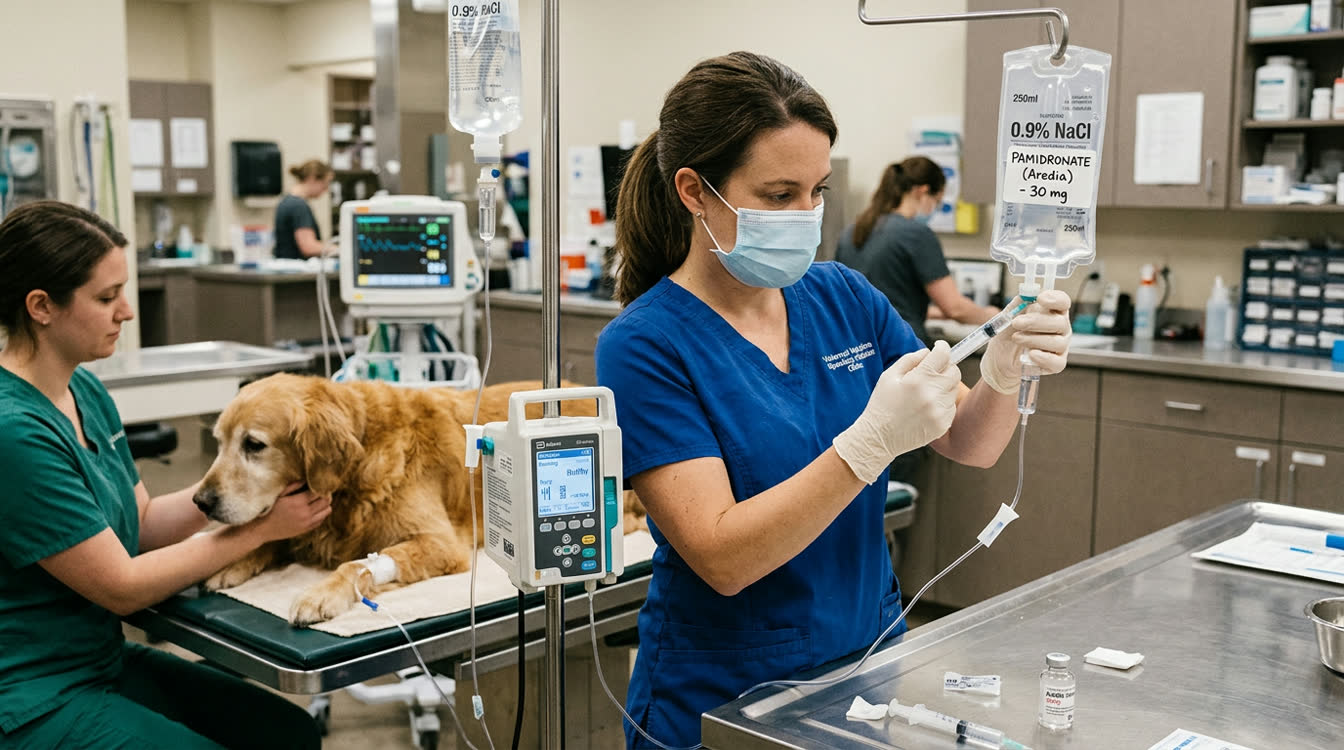
Step 1: IV 0.9% NaCl (Most Important)
- Saline promotes renal excretion of calcium (calciuresis)
- Rate: 2-3x maintenance (approximately 5-8 mL/kg/hour)
- Do NOT use lactated Ringer's — calcium-containing fluids worsen hypercalcemia
- Duration: until calcium normalizes; typically 24-48h
Step 2: Furosemide (After Rehydration)
- Never give furosemide to a dehydrated patient — worsens pre-renal azotemia
- Once hydrated: furosemide 2-4 mg/kg IV or IM q8-12h
- Enhances calciuresis by blocking calcium reabsorption in Loop of Henle
- Monitor K+ and creatinine
Step 3: Glucocorticoids (When Diagnosis Is Known)
- Indicated for: lymphoma, multiple myeloma, hypoadrenocorticism, vitamin D toxicosis, granulomatous disease
- Prednisolone 1-2 mg/kg PO q24h: reduces intestinal calcium absorption, promotes renal excretion, anti-tumor effect for lymphoma
- DO NOT start before diagnosis — glucocorticoids can cause tumor cell lysis, obscuring cytology, and making lymphoma diagnosis difficult
Step 4: Bisphosphonates (Refractory or Prolonged Hypercalcemia)
*Pamidronate (Aredia) — IV infusion*
- Most commonly used veterinary bisphosphonate
- Mechanism: inhibits osteoclast-mediated bone resorption; reduces calcium release from bone
- Dose: 1-2 mg/kg IV infusion in 0.9% NaCl over 2-4 hours
- Onset: 24-72 hours; duration 3-4 weeks
- Repeat q3-4 weeks as needed
- Side effects: renal toxicity if given too rapidly; ensure adequate hydration before infusion; monitor creatinine
*Zoledronate (Zometa) — more potent alternative*
- 0.1-0.25 mg/kg IV over 15 min (with pre-hydration)
- Longer duration (4-6 weeks); more potent than pamidronate
- Used in oncology settings for hypercalcemia of malignancy
*Alendronate (Fosamax) — oral bisphosphonate*
- Cats: 10 mg PO q7-14 days (idiopathic hypercalcemia of cats)
- Dogs: limited evidence; oral absorption poor in dogs
- Esophageal stricture risk if not given with adequate water and owner education
Calcitonin (Salmon Calcitonin) — Rapid but Short-acting
- 4-6 IU/kg SQ q8-12h: reduces calcium within 2-4 hours
- Tachyphylaxis develops within 48-72h (becomes ineffective)
- Useful as bridge to bisphosphonate or surgery for severe symptomatic hypercalcemia
Treatment Summary by Cause
| Cause | Primary Treatment | Adjuncts |
|---|---|---|
| Lymphoma (HHM) | Prednisolone 2 mg/kg + CHOP chemo | IV saline, furosemide |
| Primary HPT | Parathyroid surgery | IV saline pre-op; calcitonin if acute |
| Vitamin D toxicosis | IV saline, prednisolone, furosemide | Pamidronate for severe cases |
| Addison's | DOCP/fludrocortisone replacement | IV saline + prednisolone |
| Idiopathic (cats) | Low-Ca diet, prednisolone | Alendronate if refractory |
| Anal sac ADC | Surgery + chemotherapy | Pamidronate |
Related Articles:
- [Hyperparathyroidism in Dogs](/articles/hyperparathyroidism-dogs)
- [Pheochromocytoma in Dogs](/articles/pheochromocytoma-dogs)
Frequently Asked Questions
What is the most common cause of hypercalcemia in dogs?
Cancer is the most common cause of significant hypercalcemia in dogs, particularly lymphoma and anal sac adenocarcinoma. These tumors produce PTHrP (parathyroid hormone-related protein), causing humoral hypercalcemia of malignancy (HHM). Primary hyperparathyroidism (parathyroid adenoma) is the second most common non-neoplastic cause. A thorough tumor search should always be the first priority.
Why should I not use lactated Ringer's for hypercalcemia?
Lactated Ringer's solution contains calcium (2-3 mEq/L of calcium gluconate). While the amount is small, adding exogenous calcium to a patient with hypercalcemia can worsen the condition. Use 0.9% NaCl (normal saline) exclusively for hypercalcemia — the sodium promotes calciuresis (calcium excretion by the kidney), and the solution contains no calcium.
How quickly does pamidronate work for hypercalcemia?
Pamidronate begins working within 24-72 hours, with maximum effect at 3-7 days. The calcium-lowering effect typically lasts 3-4 weeks after a single infusion. For hypercalcemia of malignancy or vitamin D toxicosis, pamidronate can be very effective when combined with IV saline and furosemide. It is not a substitute for treating the underlying cause (e.g., tumor treatment).
Can hypercalcemia cause kidney failure?
Yes — sustained hypercalcemia causes nephrocalcinosis (calcium deposition in renal tubules), reduces renal blood flow via vasoconstriction, and impairs urine concentration. Chronic hypercalcemia can progress to irreversible CKD. This is why prompt diagnosis and treatment are important, and why urinalysis (isosthenuria = impaired concentrating ability) and creatinine monitoring are part of the hypercalcemia workup.
What is idiopathic hypercalcemia of cats and how is it treated?
Idiopathic hypercalcemia is a common condition in middle-aged cats where ionized calcium is elevated without an identifiable cause. The mechanism likely involves excessive intestinal calcium absorption or altered vitamin D metabolism. First-line treatment is a low-calcium commercial diet (renal or urinary diets) and prednisolone 1-2 mg/kg q24h. For refractory cases, alendronate 10 mg PO every 7-14 days can reduce calcium absorption. Monitor for urolithiasis (calcium oxalate stones).
References
- Chew DJ, Nagode LA, Carothers M. Disorders of calcium: hypercalcemia and hypocalcemia. In: DiBartola SP, ed. Fluid, Electrolyte, and Acid-Base Disorders. 3rd ed. Saunders; 2006.
- Rosol TJ, et al. Calciotropic hormones in humoral hypercalcemia of malignancy in dogs. Am J Vet Res. 1992;53(7):1154-1160.
- Hardy RM. Hypercalcemia. Vet Clin North Am Small Anim Pract. 1984;14(4):891-910.