Quick Answer
A comprehensive guide to ringworm (dermatophytosis) in dogs and cats, including identification, diagnosis, treatment protocols, environmental management, and zoonotic considerations.
Key Takeaways
- ✓Ringworm is a fungal infection (not a worm) caused by dermatophytes, most commonly Microsporum canis
- ✓Classic signs include circular hair loss with scaling, but presentations vary widely
- ✓Fungal culture is the gold standard for diagnosis; Wood's lamp only detects ~50% of cases
- ✓Treatment requires both topical (lime sulfur dips, antifungal shampoos) and systemic (itraconazole, terbinafine) therapy
- ✓Environmental decontamination with dilute bleach is critical to prevent reinfection
- ✓Treatment continues until two consecutive negative fungal cultures are obtained
- ✓Ringworm is zoonotic—proper precautions protect humans from infection
What is Ringworm?
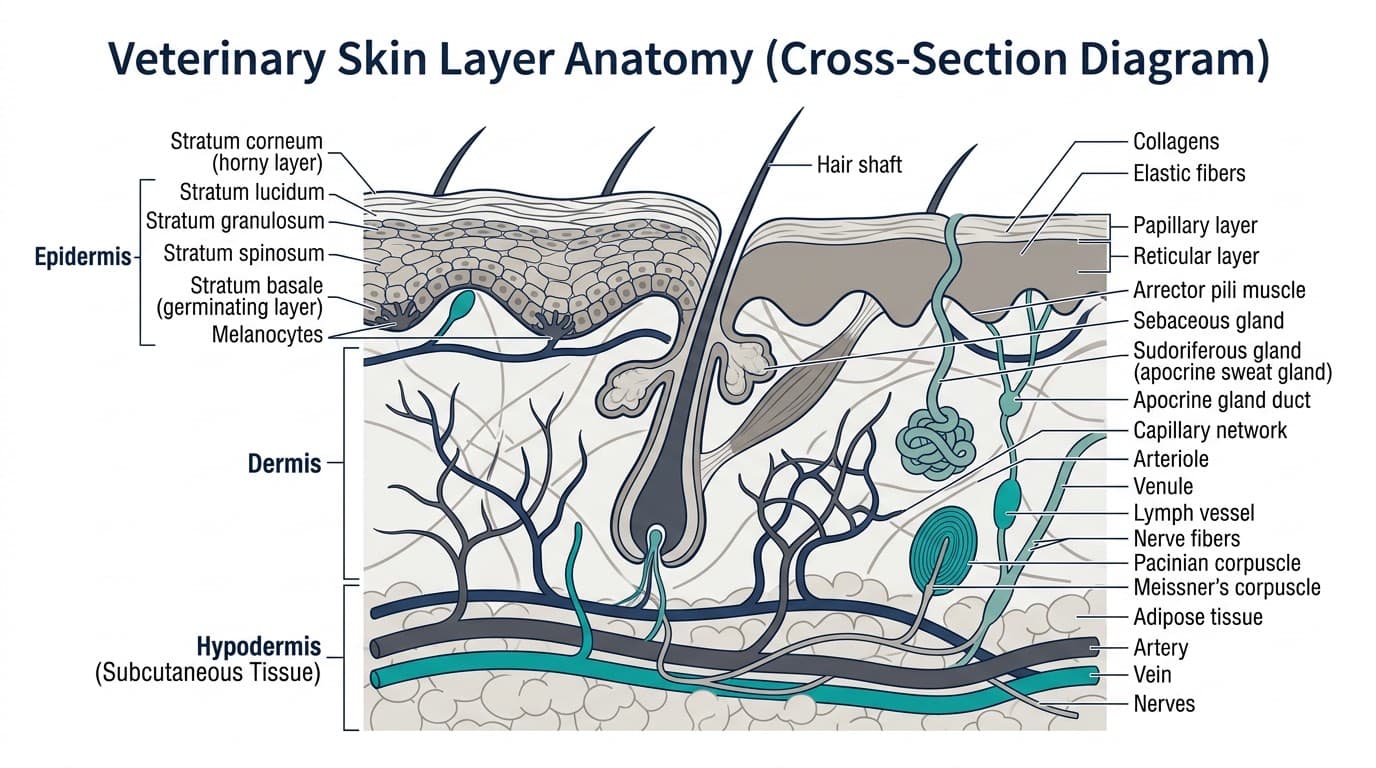
Despite its name, ringworm is not caused by a worm at all. Ringworm, or dermatophytosis, is a fungal infection of the skin, hair, and sometimes nails caused by a group of fungi called dermatophytes.
Common Dermatophyte Species
The three main species affecting dogs and cats:
- Microsporum canis: Most common cause in cats (90%+) and dogs (70%+)
- Microsporum gypseum: A soil-dwelling fungus; more common in dogs
- Trichophyton mentagrophytes: Less common; often from rodent exposure
How It Spreads
Dermatophytes spread through:
- Direct contact with infected animals
- Contact with contaminated objects (fomites): brushes, bedding, collars
- Environmental contamination from infected hair and spores
- Spores can remain viable in the environment for 18+ months
Zoonotic Concern
Ringworm is zoonotic, meaning it can spread from animals to humans. This makes proper identification, treatment, and prevention particularly important. Children, elderly individuals, and immunocompromised people are at higher risk.
Clinical Signs
Classic Presentation
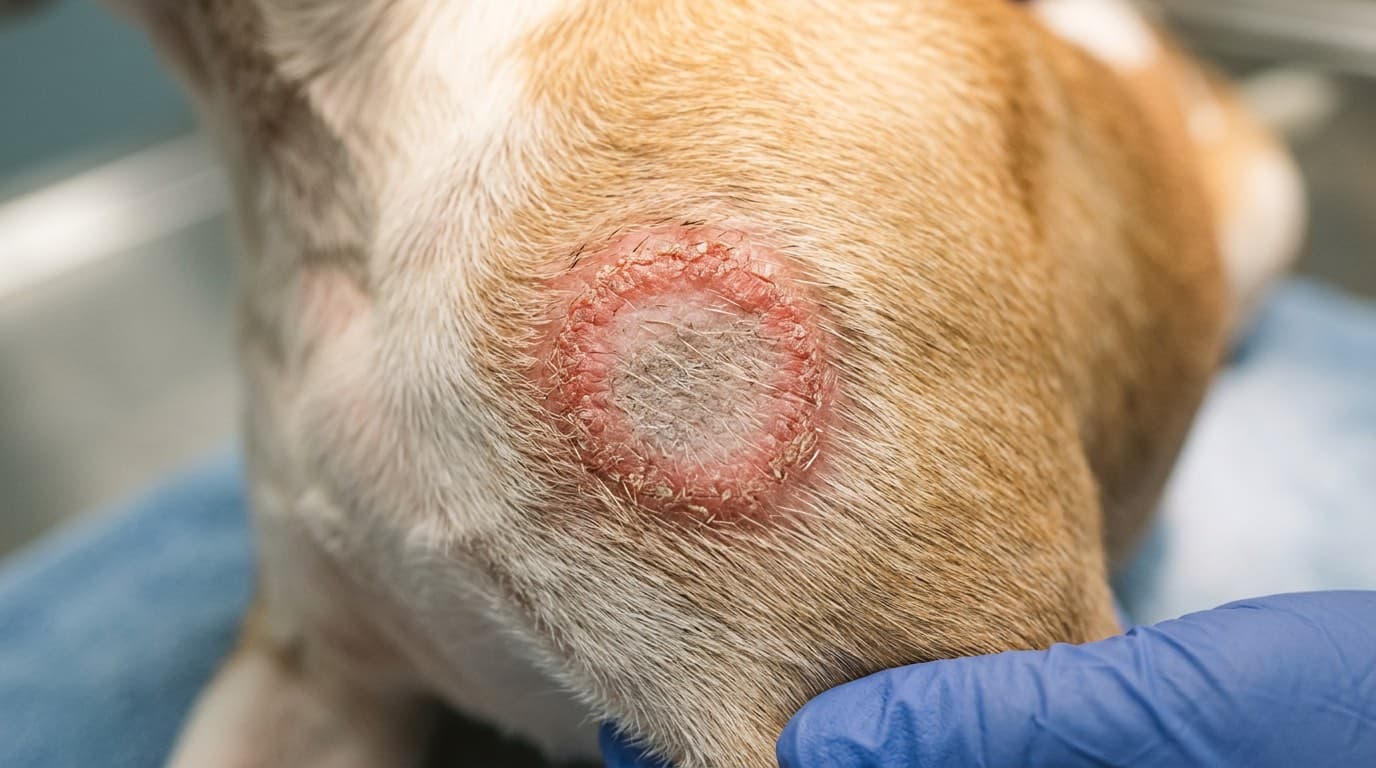
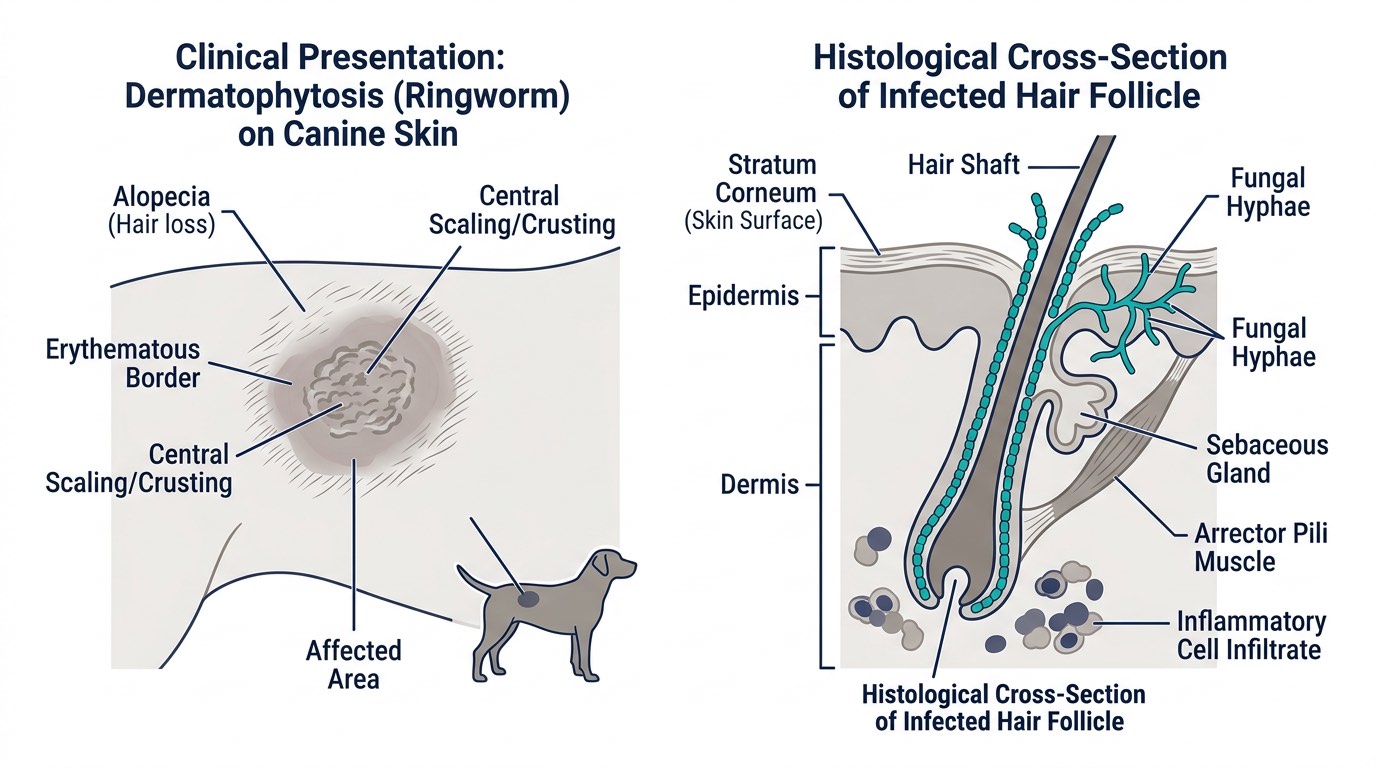
The "classic" ringworm lesion is a circular area of hair loss with scaling, but presentations can vary widely.
In Cats
Cats may show:
- Circular patches of hair loss (alopecia)
- Scaling, crusting, or flaking skin
- Broken hair shafts giving a "stubbled" appearance
- Red, irritated skin margins
- Occasionally, nodular lesions (kerions)
- Some cats are asymptomatic carriers showing no lesions
Common locations:
- Face and ears
- Paws
- Tail
- Can spread to entire body
In Dogs
Dogs typically show:
- Circular to irregular patches of hair loss
- Scaling and crusting
- Folliculitis (inflammation of hair follicles)
- Red, inflamed skin
- Kerions (nodular, oozing lesions)
- Onychomycosis (nail bed infection) in some cases
Common locations:
- Face and muzzle
- Ears
- Front legs and paws
- Can become generalized
Atypical Presentations
Not all ringworm looks "classic":
- May mimic bacterial skin infections
- Can look like allergic dermatitis
- May cause only mild scaling without obvious hair loss
- Kerions can look like tumors or abscesses
- Some animals have subclinical infections
Predisposing Factors
Animals more susceptible to infection:
- Young animals (immature immune system)
- Immunocompromised animals
- Animals in shelters or crowded environments
- Long-haired breeds
- Animals with concurrent skin disease
- Dogs: Yorkshire Terriers, Jack Russell Terriers
- Cats: Persians, Himalayans
Diagnosis
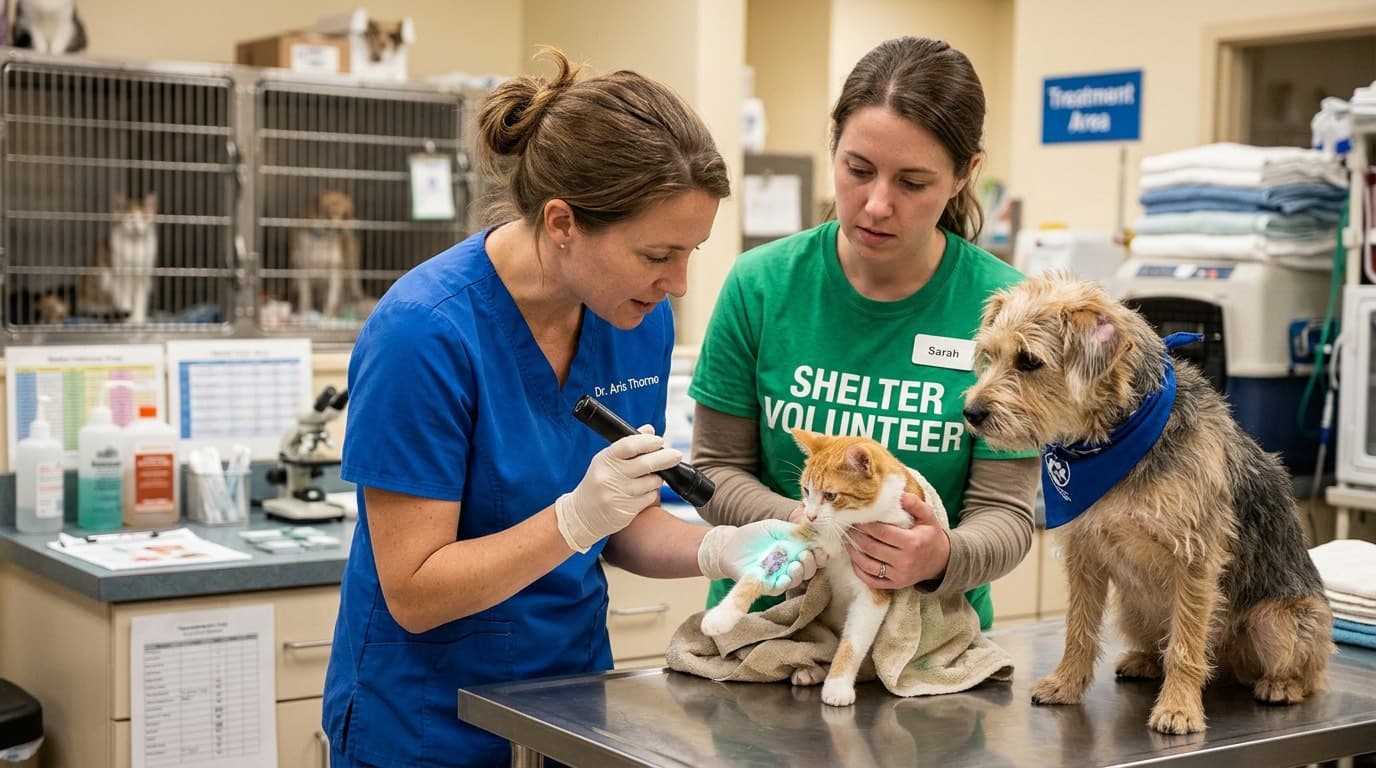
Wood's Lamp Examination
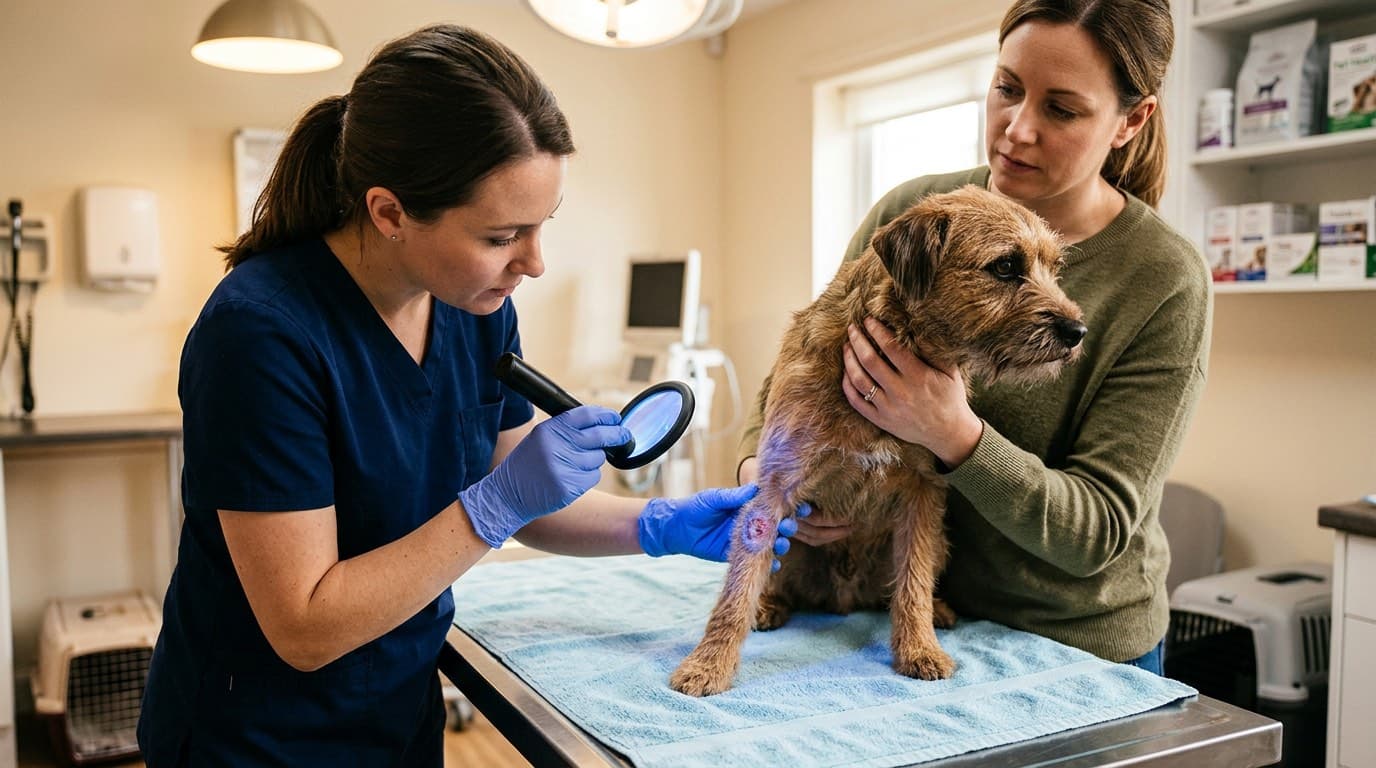
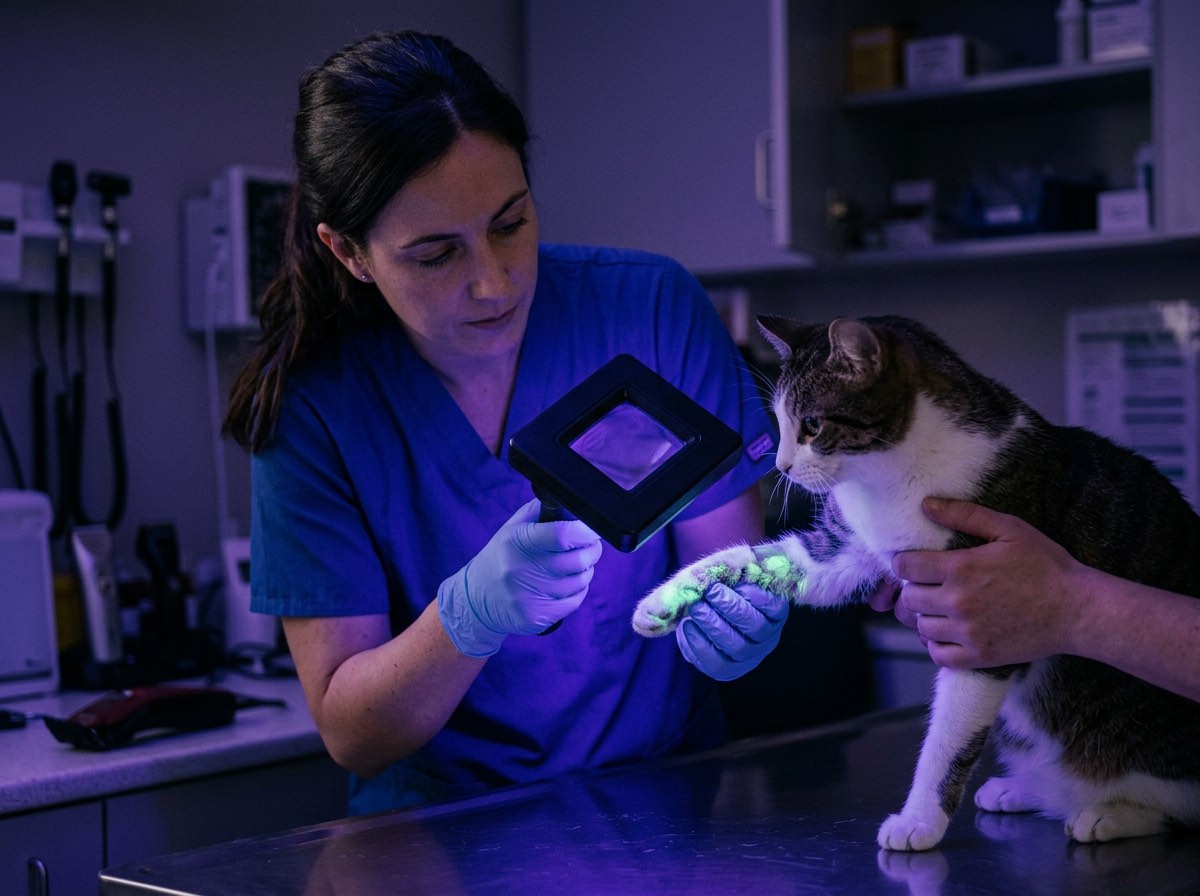
- Uses ultraviolet light to detect fluorescence
- Positive: Apple-green fluorescence on infected hairs
- Only ~50% of M. canis strains fluoresce
- Other species typically don't fluoresce
- False positives from medications, debris, bacteria
- Useful screening tool but NOT diagnostic alone
Microscopic Examination (Trichogram)
- Pluck hairs from lesion margins
- Clear with potassium hydroxide (KOH) or use chlorphenolac
- Look for fungal spores (ectothrix or endothrix patterns) around hair shafts
- Sensitivity: 40-70% depending on technique
- Quick results but requires experience to interpret
Fungal Culture (Gold Standard)
- Dermatophyte Test Medium (DTM) or Sabouraud's agar
- Samples: plucked hairs, scale, toothbrush sample
- Color change on DTM (yellow to red) with white cottony growth
- Takes 7-21 days for results (usually 7-14 days)
- Allows species identification
- Most reliable diagnostic method
Toothbrush Technique
- New toothbrush brushed over entire coat for 2-3 minutes
- Excellent for screening cats (especially asymptomatic carriers)
- Toothbrush bristles cultured on fungal media
- Standard method for shelter screening
PCR Testing
- Rapid results (same day or next day)
- Very sensitive
- Can detect dead fungal elements (may remain positive after cure)
- Available at reference laboratories
- Useful for confirming negative culture results
Skin Biopsy
- May be needed for atypical presentations
- Shows fungal elements in hair follicles
- Special stains (PAS, GMS) help visualization
- Helps rule out other skin conditions
Treatment
Treatment of dermatophytosis typically requires a combination of topical and systemic therapy, along with environmental decontamination.
Treatment Goals
- Eliminate infection from the animal
- Prevent spread to other animals and humans
- Eliminate environmental contamination
- Reduce treatment duration
Topical Therapy
Topical treatment is essential and reduces environmental contamination:
Lime Sulfur Dip (2-4%)
- Very effective; gold standard topical treatment
- Dip or sponge on entire body twice weekly
- Leave on—do not rinse
- Disadvantages: strong odor, stains light fur/fabric
Miconazole/Chlorhexidine Shampoo
- Effective combination therapy
- Use 2-3 times weekly
- Leave on for 10 minutes before rinsing
- Less effective than lime sulfur but easier to use
Enilconazole
- 0.2% rinse/dip every 3-4 days
- Not available in all countries
- Very effective
Topical Antifungal Creams
- Miconazole, clotrimazole, terbinafine creams
- Use only for localized lesions
- Not sufficient as sole treatment
- Apply to lesions 2-3 times daily
Systemic Therapy
Oral antifungal medication is typically required:
Itraconazole
- Drug of choice for many veterinarians
- Cats: 5-10 mg/kg once daily
- Dogs: 5-10 mg/kg once daily
- Pulse therapy: 1 week on, 1 week off (cats)
- Give with fatty food for absorption
Terbinafine
- Excellent efficacy; fungicidal
- Cats: 30-40 mg/kg once daily
- Dogs: 30-40 mg/kg once daily
- Can be given with or without food
Fluconazole
- Alternative option
- Good tissue penetration
- Less effective than itraconazole or terbinafine
Griseofulvin
- Older drug, still effective
- Higher side effect potential
- Not recommended in pregnant animals or breeding animals
- Avoid in FIV+ cats (bone marrow suppression)
Duration of Treatment
- Minimum 6-8 weeks of systemic therapy
- Continue until clinical cure PLUS negative fungal cultures
- Typically need two consecutive negative cultures 2-4 weeks apart
- Stopping early leads to relapse
Environmental Management
Environmental decontamination is critical for resolving ringworm infections and preventing reinfection.
Why It Matters
- Dermatophyte spores can survive in the environment for 18+ months
- Reinfection from contaminated environment is common
- Environmental treatment reduces treatment duration
- Prevents spread to other animals and humans
Cleaning Protocol
Step 1: Remove Organic Material
- Vacuum thoroughly (dispose of bags/empty canisters outdoors)
- Remove all pet hair from surfaces
- Wash all bedding, blankets, and fabric items
- Dispose of heavily contaminated items that can't be cleaned
Step 2: Disinfection
Effective disinfectants:
- Dilute bleach (1:10 to 1:32): Most accessible and effective
- Accelerated hydrogen peroxide: Excellent efficacy
- Enilconazole: Environmental antifungal spray
- F10 disinfectant: Veterinary-grade option
Areas to Treat
- Floors, especially cracks and crevices
- Furniture
- Cat trees and scratching posts (consider disposal)
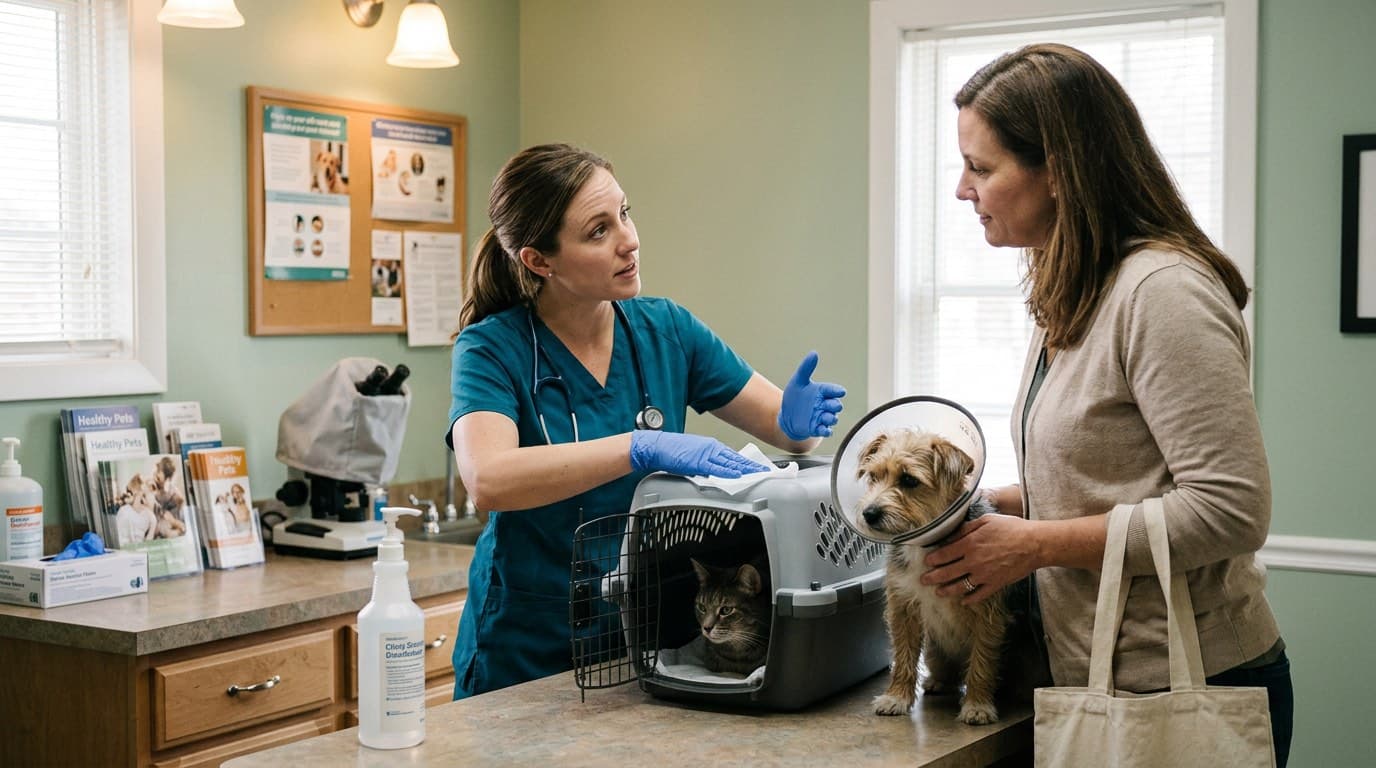
- Carriers, crates, and cages
- Grooming tools (replace brushes and combs)
- HVAC filters
- Vehicles if pet travels in them
Frequency
- Clean and disinfect at least twice weekly during treatment
- More frequently in multi-animal households
- Continue until pet is culture-negative
Isolation
- Confine infected animals to one easily cleaned room
- Use hard, non-porous surfaces when possible
- Limit contact between infected and non-infected animals
- Wear protective clothing when handling infected animals
- Wash hands thoroughly after contact
Monitoring and Cure Criteria
When is Ringworm Cured?
Clinical cure and mycological cure are both required:
Clinical Cure
- Resolution of all skin lesions
- Hair regrowth in affected areas
- No new lesions appearing
Mycological Cure
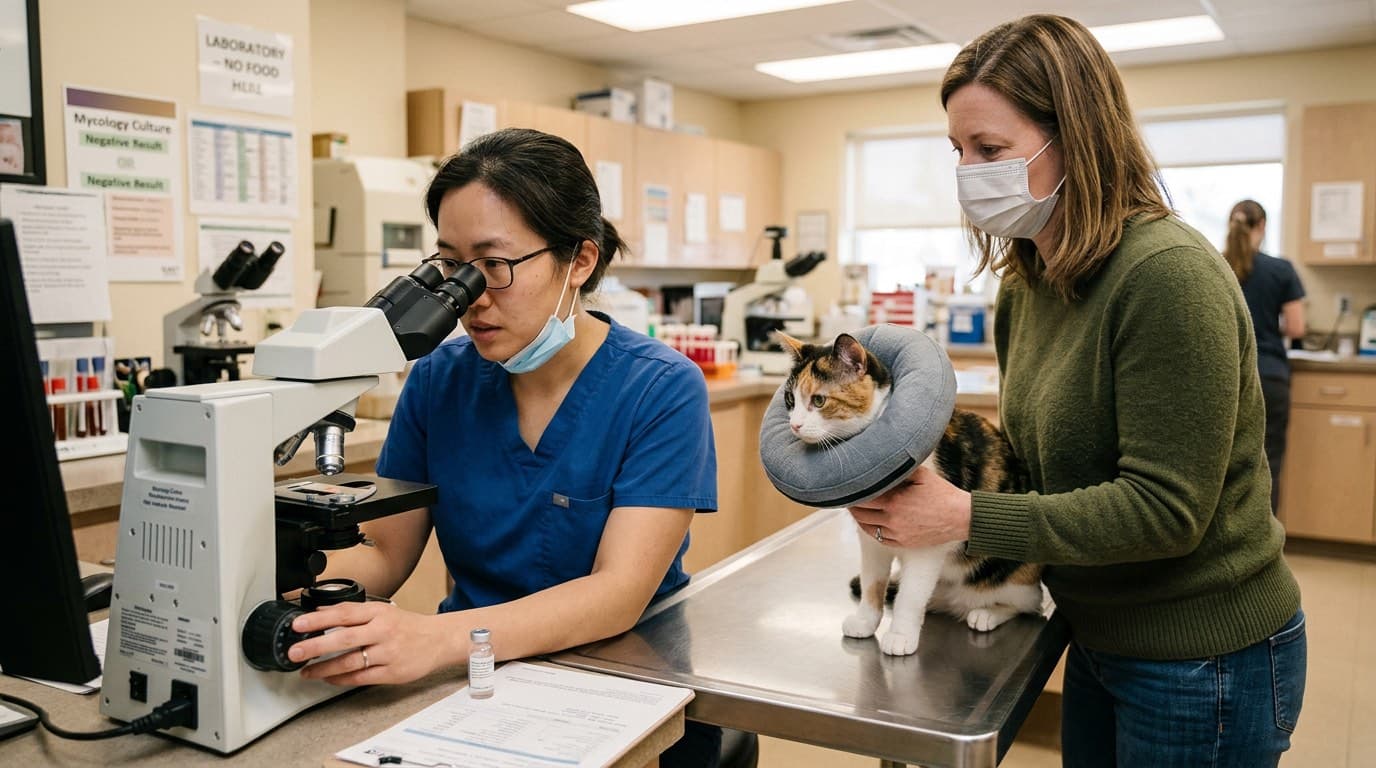
- Two consecutive negative fungal cultures
- Cultures taken 2-4 weeks apart
- Clinical signs may resolve before cultures become negative
Monitoring Protocol
- Re-culture every 2-4 weeks during treatment
- Continue treatment until negative culture obtained
- Repeat culture 2 weeks after first negative
- Two consecutive negative cultures = cure
- Total treatment typically 8-12+ weeks
Common Mistakes
- Stopping treatment when lesions resolve (cultures may still be positive)
- Not treating the environment
- Not treating all animals in household
- Using topical therapy alone
- Inadequate treatment duration
Recurrence
If ringworm recurs:
- Re-evaluate for resistant strains
- Check for underlying immunocompromise
- Ensure all in-contact animals were treated
- Intensify environmental decontamination
- Consider underlying disease workup
Zoonotic Considerations
Human Infection
Ringworm from pets typically causes:
- Circular, red, scaly lesions on skin (tinea corporis)
- Intensely itchy patches
- Can affect any body area, commonly arms, face
- Usually responds well to treatment
High-Risk Groups
More susceptible to infection:
- Children
- Elderly individuals
- Immunocompromised people (HIV/AIDS, chemotherapy, transplant recipients)
- People with damaged skin
Prevention for Humans
- Wash hands after handling infected animals
- Wear gloves and long sleeves when treating
- Change and wash clothes after contact
- Don't allow infected animals on beds/furniture
- Keep infected animals away from high-risk individuals
- Seek medical attention if skin lesions develop
If Humans Are Infected
- Consult a physician or dermatologist
- Treatment usually involves topical antifungal cream
- Severe or widespread cases may need oral medication
- Treat all infected family members simultaneously
- Continue treating the pet to prevent reinfection
Communication
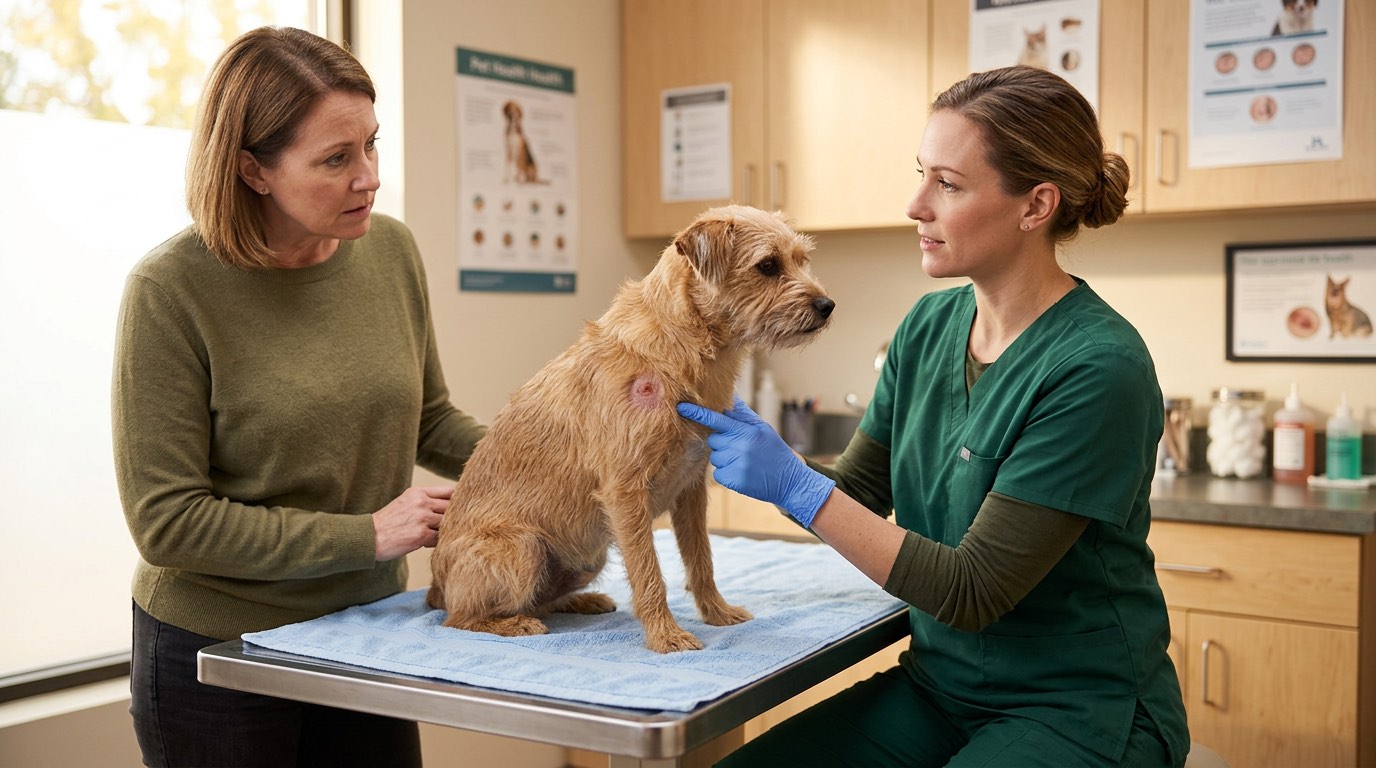
- Inform owners of zoonotic risk at diagnosis
- Provide written instructions for protection
- Recommend handwashing and protective measures
- Advise seeking medical care if lesions develop
Special Considerations: Shelters and Catteries
Shelter Challenges
Shelters face unique challenges:
- High animal turnover
- Crowded conditions
- Stressed, immunocompromised animals
- Limited resources for treatment
- Risk of outbreak spread
Screening Protocols
- Screen all incoming cats (especially long-haired breeds)
- Toothbrush culture technique for all new arrivals
- Quarantine until culture results available
- Wood's lamp screening (but remember 50% false negative rate)
Outbreak Management
If ringworm is detected:
- Immediately isolate affected animals
- Identify all potentially exposed animals
- Culture all exposed animals
- Implement intensive cleaning protocols
- Establish dedicated ringworm treatment area
Treatment Considerations
- Treat affected animals in designated area
- Use dedicated staff or volunteers for ringworm room
- Ensure adequate training for staff
- Document all treatments and culture results
- Consider foster placement for treatment
Adoption
- Can adopt out with informed consent
- Provide treatment supplies and instructions
- Schedule follow-up cultures
- Ensure adopters understand commitment
- Written contract about treatment completion
Prevention in Multi-Cat Environments
- Adequate space per animal
- Good ventilation
- Regular screening of new arrivals
- Prompt isolation of suspicious cases
- Routine environmental cleaning
- Stress reduction measures
Frequently Asked Questions
Is ringworm in pets contagious to humans?
Yes, ringworm is zoonotic and can spread from pets to humans. Children, elderly, and immunocompromised individuals are at higher risk. Practice good hygiene, wash hands after handling infected pets, and seek medical attention if you develop skin lesions.
How long does it take to cure ringworm in dogs and cats?
Treatment typically takes 6-12 weeks or longer. Pets must be treated until they have two consecutive negative fungal cultures taken 2-4 weeks apart. Stopping treatment early leads to relapse.
How do I disinfect my home from ringworm?
Use dilute bleach (1:10 to 1:32) with 10-minute contact time on hard surfaces. Vacuum frequently and dispose of bags outdoors. Wash all bedding in hot water weekly. Consider disposing of heavily contaminated items like cat trees.
Can indoor cats get ringworm?
Yes, indoor cats can get ringworm from contaminated objects, spores brought in on clothing or shoes, or from new pets introduced to the home. Ringworm spores can survive in the environment for 18+ months.
References
- Moriello, K.A. et al. "Diagnosis and treatment of dermatophytosis in dogs and cats." Veterinary Dermatology, 2017.
- World Association for Veterinary Dermatology Guidelines for Dermatophytosis.
- Miller, W.H. et al. "Muller and Kirk's Small Animal Dermatology." 7th Edition, Elsevier, 2013.
- Newbury, S. "Ringworm in Shelter Cats." Journal of Feline Medicine and Surgery, 2018.