Quick Answer
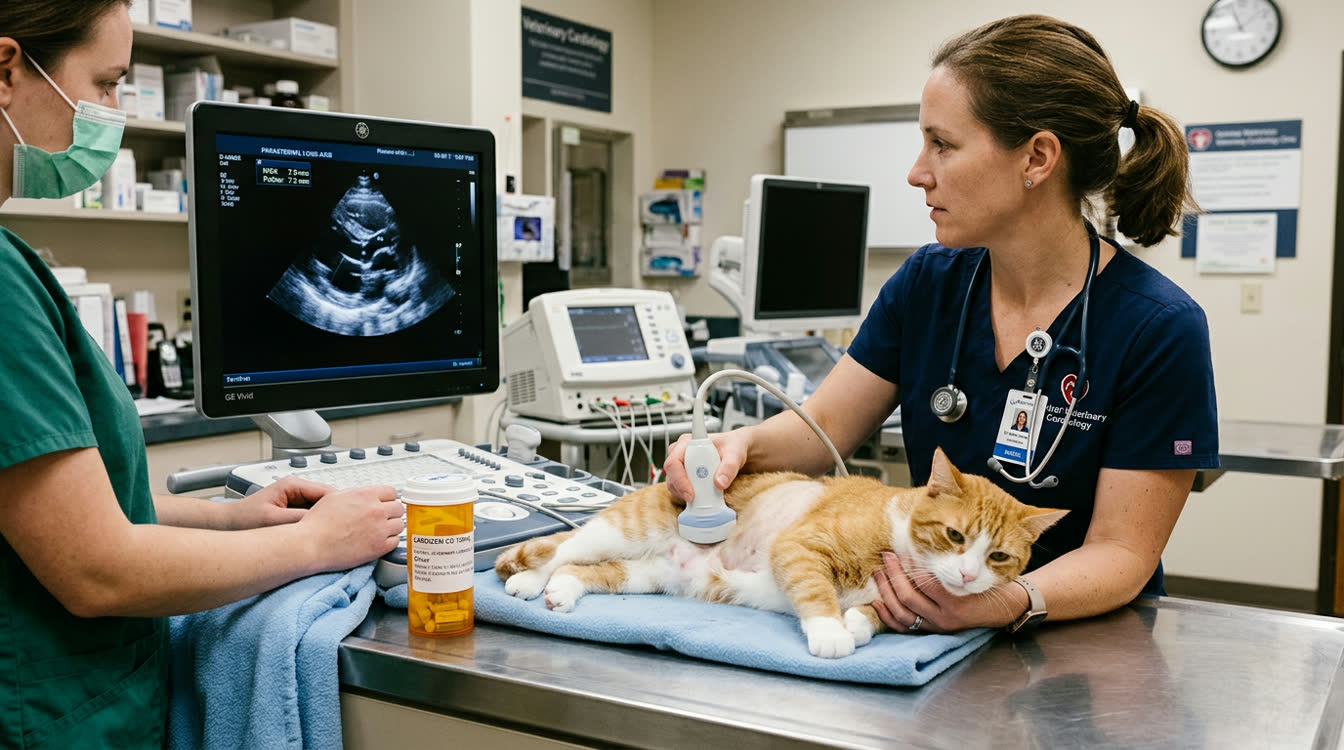
Diltiazem is a calcium channel blocker for heart rate control in cats with HCM, particularly for supraventricular tachyarrhythmias and atrial fibrillation. This guide covers immediate-release and Cardizem CD formulations, dosing, monitoring, and comparison with atenolol.
Key Takeaways
- ✓Diltiazem indicated for feline HCM with tachyarrhythmias -- not routine for all HCM cats
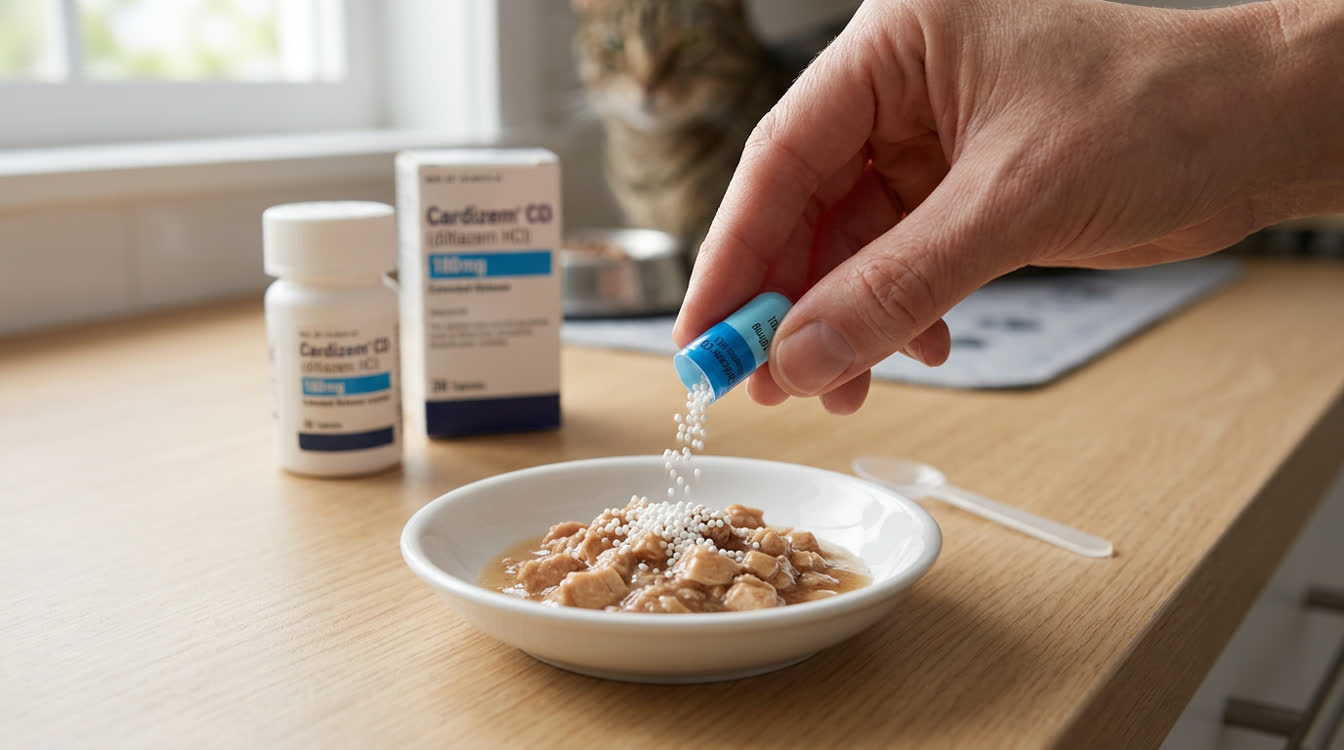
- ✓Cardizem CD 30 mg/cat q24h: open capsule, mix beads into food -- do NOT crush beads
- ✓Immediate-release: 1.75-2.5 mg/kg PO q8h -- compounding required for feline sizes
- ✓Diltiazem has vasodilatory effects; never combine with atenolol without cardiologist supervision
- ✓Furosemide is primary for HCM CHF; add rate control only for documented tachyarrhythmia
HCM in Cats and Indications for Diltiazem
HCM Overview HCM is the most common feline cardiac disease -- inappropriate LV hypertrophy causing diastolic dysfunction. Risks: CHF, aortic thromboembolism (ATE), sudden death.
- Maine Coon and Ragdoll: hereditary MyBPC3 mutations
- Prevalence: 10-15% of domestic cats
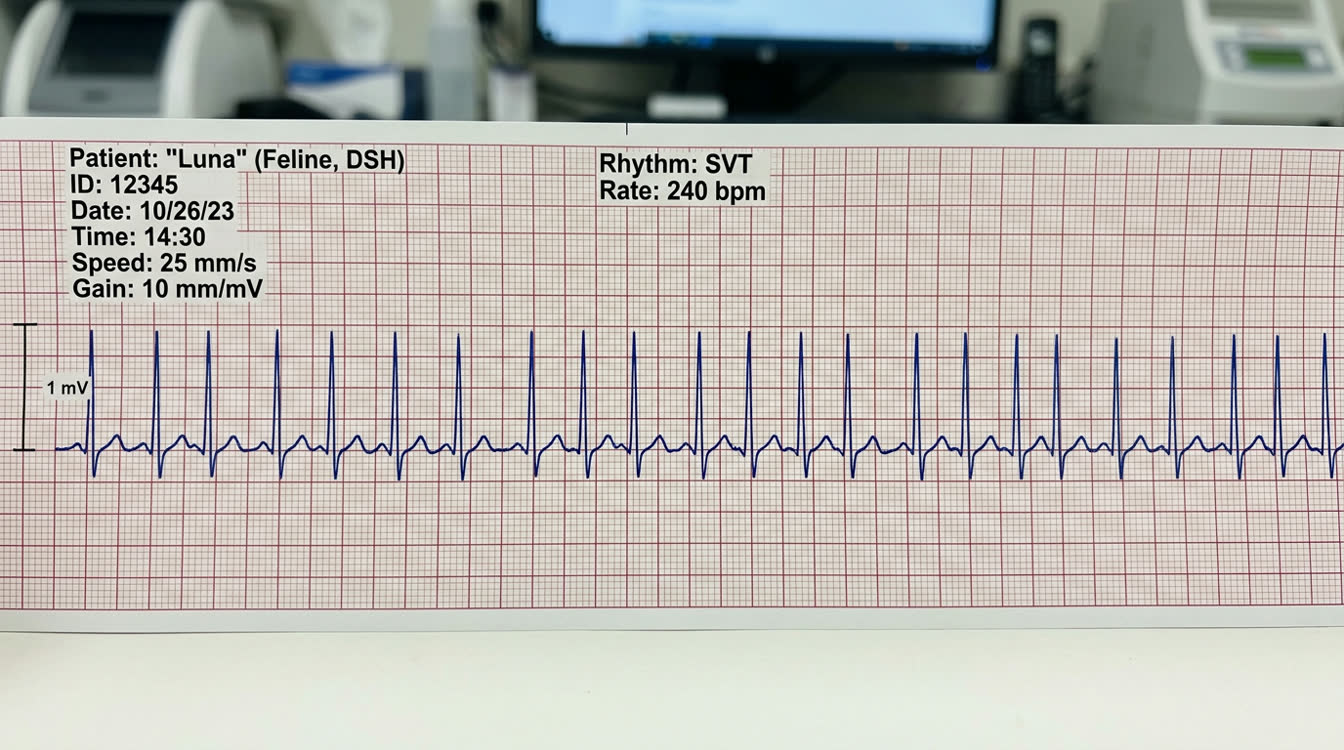
When Is Rate Control Needed? Diltiazem or atenolol indicated when: 1. Sustained SVT -- heart rate >240 bpm 2. Atrial fibrillation -- target rate <180 bpm 3. Paroxysmal tachycardia reducing cardiac output 4. Obstructive HCM with LVOTO (some cardiologists)
*Routine diltiazem for all HCM cats in normal sinus rhythm is NOT standard of care.*
Diltiazem Mechanism
- L-type calcium channel blocker
- Negative chronotrope: slows heart rate (SA node depression)
- Negative inotrope: reduces myocardial contraction force
- Peripheral vasodilation: reduces afterload
- Possible improved diastolic relaxation (lusitropy benefit in HCM)
Contraindications
- Severe systolic dysfunction (myocardial failure)
- AV block (2nd or 3rd degree)
- Bradycardia (<120 bpm baseline)
- Severe hypotension
Dosing: Immediate-Release vs Cardizem CD
Formulations
| Formulation | Trade Name | Cat Dose | Frequency |
|---|---|---|---|
| Immediate-release | Cardizem, generic | 1.75-2.5 mg/kg | PO q8h |
| Extended-release | Cardizem CD, Dilacor XR | 30-60 mg/cat | PO q24h |
| IV bolus (emergency) | Cardizem IV | 0.25 mg/kg | IV over 2 min |
| IV CRI | Cardizem IV | 0.1-0.2 mg/kg/hour | Continuous |
Cardizem CD -- Preferred for Home Use
- 30 mg/cat q24h for most 3-5 kg cats
- Open capsule; mix beads into small amount of food -- do NOT crush
- 60 mg/cat q24h if inadequate response
- Onset 2-4 hours; peak 6-8 hours
Immediate-Release
- 1.75-2.5 mg/kg PO q8h
- Typical 4 kg cat: 7.5-10 mg q8h; compounding usually required
IV Emergency Rate Control 1. 0.25 mg/kg IV over 2 min; ECG monitoring 2. If inadequate after 15 min: repeat 0.25 mg/kg 3. Then CRI at 0.1 mg/kg/hour; transition to oral when stable
Monitoring
- Heart rate goal: resting <160-180 bpm for AF; NSR conversion for SVT
- ECG: baseline, 2 weeks, q3-6 months
- Blood pressure: watch for hypotension
- Echocardiogram: q6-12 months
- Renal function: BUN, creatinine q6 months
Diltiazem vs Atenolol and HCM Management
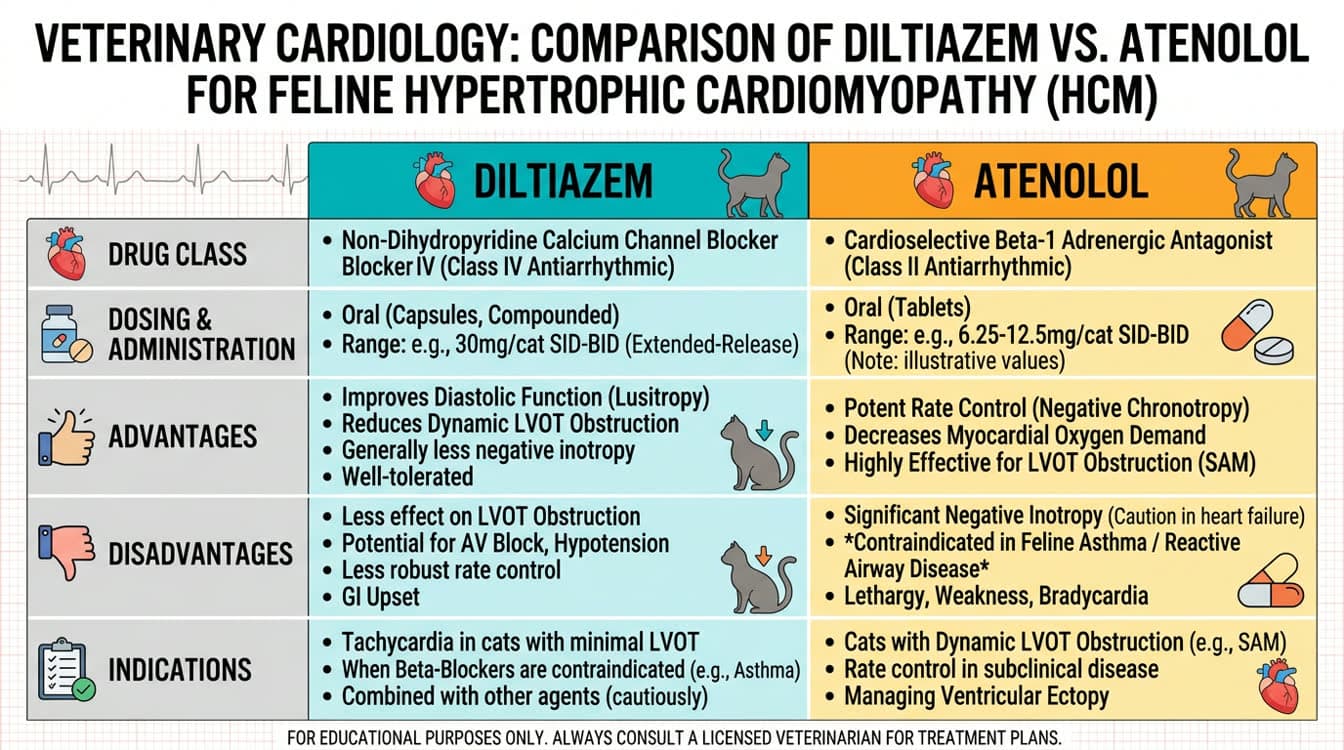
Diltiazem vs Atenolol
| Feature | Diltiazem | Atenolol |
|---|---|---|
| Drug class | Calcium channel blocker | Beta-1 selective blocker |
| Rate reduction | Moderate | Moderate to strong |
| Vasodilation | Yes | No |
| Feline dose | 1.75-2.5 mg/kg q8h OR 30 mg q24h CD | 6.25-12.5 mg/cat q12-24h |
| Bronchospasm risk | No | Yes |
| LVOTO reduction | Yes | Yes |
Choosing the Right Drug
- Use diltiazem: SVT or AF, concurrent hypertension, asthma history
- Use atenolol: hypotension precludes diltiazem, dynamic LVOTO
- NEVER combine both without cardiologist supervision (additive bradycardia/negative inotropy risk)
CHF in HCM Cats
- Furosemide 1-2 mg/kg PO q12h is PRIMARY treatment for CHF
- Rate control (diltiazem/atenolol) ONLY if documented tachyarrhythmia
- Clopidogrel 18.75 mg/cat q24h for ATE prevention (FATCAT trial)
Prognosis
- Subclinical HCM (Stage B): many years without treatment possible
- Stage C CHF: median 300-500 days on furosemide-based therapy
- ATE event: ~33% survival to discharge; 50% re-embolize within 6 months
- Maine Coon/Ragdoll: genetic testing of all breeding cats recommended
Related Articles:
- [Spironolactone in Dogs and Cats](/articles/spironolactone-dogs-cats)
- [Mast Cell Tumor Treatment in Dogs](/articles/mast-cell-tumor-dogs-treatment)
Frequently Asked Questions
Do all cats with HCM need diltiazem?
No -- routine diltiazem for all HCM cats in normal sinus rhythm is not standard of care. It is specifically indicated when there is documented tachyarrhythmia (SVT, AF) or persistently elevated heart rate. Many HCM cats do not need rate-control drugs.
How do I give Cardizem CD to my cat?
Open the Cardizem CD capsule carefully and mix the small beads into a small amount of wet food. Do NOT crush the beads -- this destroys the extended-release mechanism. Usual dose is 30 mg per cat once daily.
When should I choose diltiazem vs atenolol?
Diltiazem when vasodilation is beneficial (hypertension) or asthma is a concern. Atenolol when hypotension precludes diltiazem. Never combine both without direct cardiologist supervision due to the risk of severe bradycardia.
What is the target heart rate for a cat on diltiazem?
For atrial fibrillation: resting rate below 180 bpm. For SVT: aim for conversion to normal sinus rhythm. Normal resting feline rate is 100-140 bpm. Rate >220-240 bpm consistently at rest indicates arrhythmia requiring attention.
References
- Payne JR, et al. Prognostic indicators in cats with hypertrophic cardiomyopathy. J Vet Intern Med. 2010;24(3):542-549.
- Smith SA, et al. Efficacy of clopidogrel in preventing ATE in cats (FATCAT trial). J Vet Cardiol. 2003;5(2):25-37.
- Kittleson MD, Kienle RD. Small Animal Cardiovascular Medicine. Mosby; 1998.